
Netherlands reopens asset tax overhaul after Box 3 backlash
Court rulings force shift from fictional to real returns, Treasury insists revenue cannot fall
Images
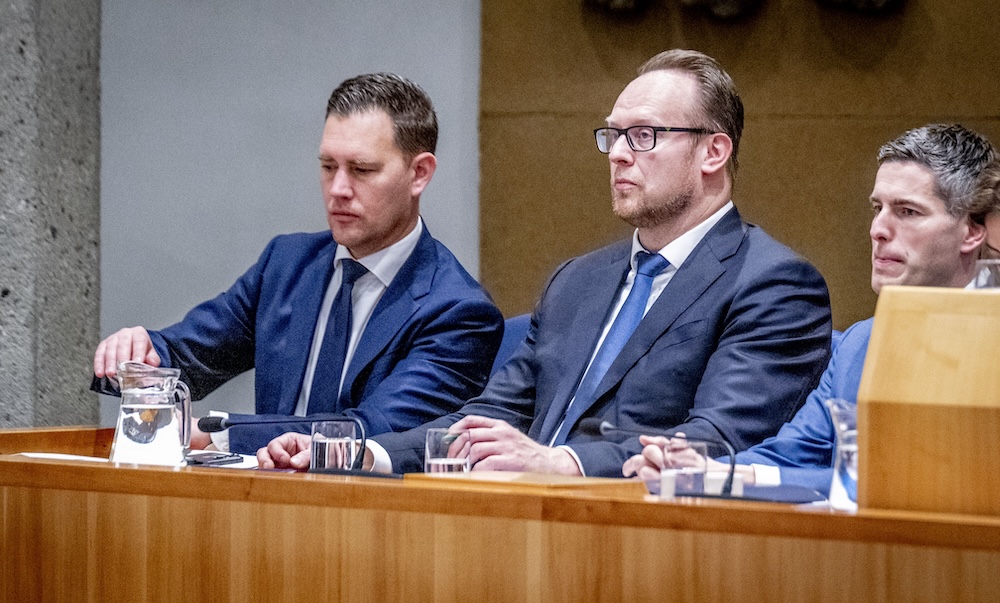 Eelco Heinen pouring water during Wednesday's debate. Photo: Robin Utrecht ANP
Robin Utrecht ANP
Eelco Heinen pouring water during Wednesday's debate. Photo: Robin Utrecht ANP
Robin Utrecht ANP
Dutch finance minister Eelco Heinen told parliament this week that the Netherlands will revisit its planned overhaul of “Box 3”, the system that taxes savings and investments, after a wave of protests and growing doubts about whether the new rules are workable. The revision was due to reach the Senate after passing the lower house earlier this month, according to DutchNews.nl.
The immediate problem is that Box 3 has been in court for years. In 2021, the Dutch Supreme Court ruled that taxing people based on assumed returns rather than what they actually earned breached EU law; a revised version was struck down again in June 2024, DutchNews.nl reports. The government’s answer was a new model scheduled for 2028: tax “real returns” such as interest and investment income each year, but only tax capital gains on property and start-up holdings when the asset is sold.
That hybrid design shifts the pain rather than removing it. For the tax office, “real returns” means estimating what people earned and forcing households to keep detailed records—an administrative load that scales with the number of small investors, not with the size of the tax take. For investors, the political fight is about timing and asymmetry: annual taxation of income can arrive even when liquidity does not, while losses may not be treated symmetrically across years. Critics argue the rules can force sales to pay tax, particularly when portfolios are volatile or concentrated.
Heinen’s stated constraint is the one that usually decides these debates: the treasury cannot afford to collect less. “We are talking about billions and that needs to be paid,” he told MPs, according to DutchNews.nl. That leaves a narrow corridor for reform—changes must reduce legal risk and implementation friction without shrinking revenue. In practice, that tends to push governments back toward simplified assumptions, which is exactly what the courts have been rejecting.
The politics are also tightening. The VVD, a coalition party and Heinen’s own, signalled it wants more time because the legislation is “complicated”, hinting at serious resistance in the Senate. The coalition has already described the 2028 plan as an interim step and promised a broader overhaul later.
For now, the Netherlands is attempting to build a tax on wealth that behaves like a tax on income, without inheriting income tax’s volatility—or wealth tax’s legal and liquidity problems.
Heinen’s message to MPs was blunt: the law is moving forward as a placeholder, but “won’t work” as written.