
US seeks deportation judges via social media
1,700 apply as immigration backlog tops 3.6 million cases, executive-run courts expand capacity under political branding
Images
 About 1,700 people have applied to be immigration judges in response to a recent Trump administration campaign for new recruits (DHS)
DHS
About 1,700 people have applied to be immigration judges in response to a recent Trump administration campaign for new recruits (DHS)
DHS
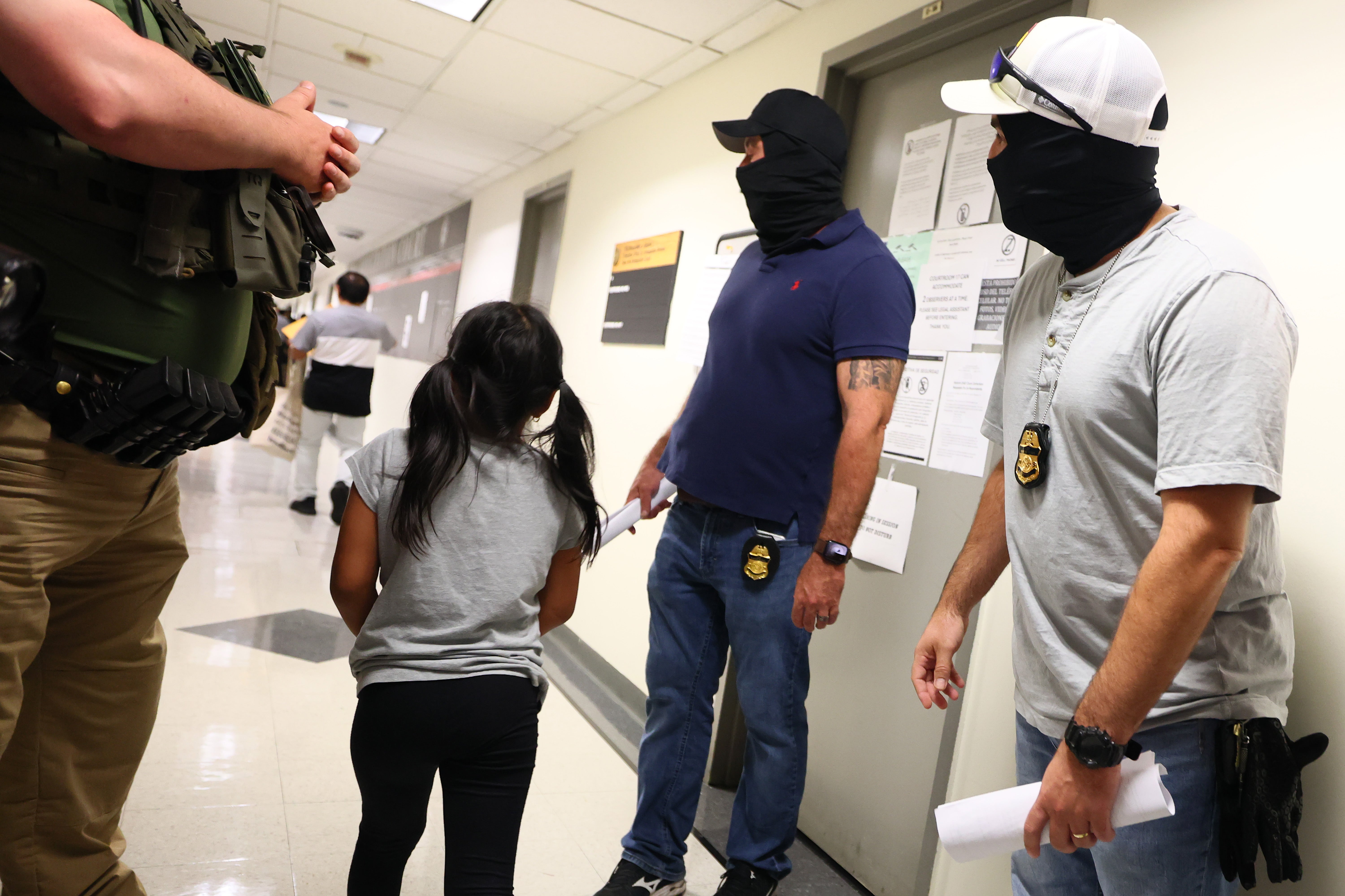 The U.S. immigration court system has long been criticized because of the unusual control the president and political appointees have over its operations compared to other court systems in the country (Getty Images)
Getty Images
The U.S. immigration court system has long been criticized because of the unusual control the president and political appointees have over its operations compared to other court systems in the country (Getty Images)
Getty Images
 The Trump administration has also made a practice of arresting people who show up for regular check-ins with immigration authorities (Getty)
Getty
The Trump administration has also made a practice of arresting people who show up for regular check-ins with immigration authorities (Getty)
Getty
The Trump administration says around 1,700 people have applied to become US immigration judges after the Justice Department and Department of Homeland Security ran social media ads recruiting “deportation judges,” including imagery drawn from the Judge Dredd franchise. The Independent reports the push is meant to speed up a system with roughly 3.6 million pending cases.
Immigration courts in the US sit inside the executive branch, not the judiciary: judges are employees of the Justice Department, and the attorney general can hire and fire them. That structure has long made the system sensitive to political direction, but the administration’s language is unusually explicit. Calling the role “deportation judge” publicly narrows what is supposed to be an adjudicative job—one that includes granting asylum or other relief—into an outcome.
The hiring drive comes alongside attrition. The report says at least 135 immigration judges have been fired or have retired since Trump took office, while asylum denial rates have reached unprecedented levels. When a backlog becomes large enough, it stops being a queue and becomes policy: delayed hearings can translate into years of de facto residence, while rapid processing can become a mass-removal pipeline. Either way, the bottleneck is capacity, and capacity decisions are political.
The ads promise six‑figure salaries and 25% bonuses, suggesting the administration is trying to buy speed in a system where legal complexity does not scale. Unlike criminal courts, immigrants are not guaranteed counsel, evidentiary rules are looser, and the same department that prosecutes also employs the judges. That makes volume targets tempting: you can move numbers without building the safeguards that slow things down.
The first cohort of new hires is expected to begin work this month. The 3.6 million cases will still be waiting when they arrive.