
Somalia faces 6.5 million in crisis-level hunger by March
Aid cuts and insecurity choke delivery chains, Drought becomes a toll road
Images
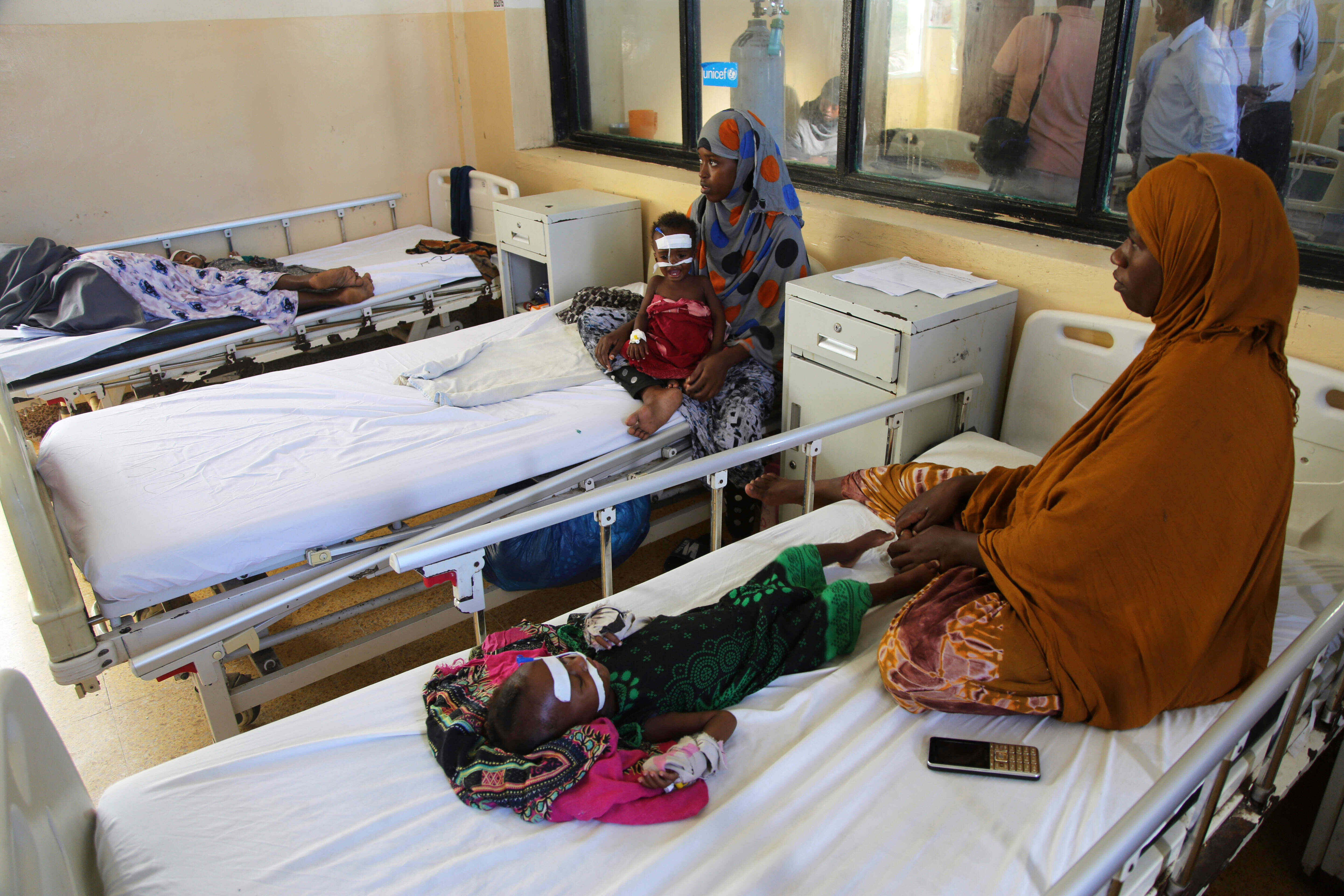 Women sit with malnourished children at Banadir Hospital in Mogadishu, Somalia (Photo/Farah Abdi Warsameh, File)
Farah Abdi Warsameh, File)
Women sit with malnourished children at Banadir Hospital in Mogadishu, Somalia (Photo/Farah Abdi Warsameh, File)
Farah Abdi Warsameh, File)
Somalia is heading into another hunger season with less cash, fewer trucks and more checkpoints. New figures from the Integrated Food Security Phase Classification (IPC), cited by the Associated Press via the Independent, project 6.5 million people will face “crisis or worse” food insecurity by the end of March. The same assessment forecasts 1.84 million children under five will suffer acute malnutrition in 2026, including nearly 500,000 severe cases.
The immediate drivers are familiar: drought conditions from below-average rainfall, conflict and insecurity that restrict movement, and the steady erosion of humanitarian budgets. UN and Somali officials told AP that water shortages are intensifying in southern and central regions, while crop failures and livestock losses are pushing up prices and displacing families. About 278,000 people were displaced between July and December by drought and conflict, disrupting agricultural production, market access and aid delivery.
What changes this year is the financing. The UN’s humanitarian coordinator for Somalia, George Conway, said “very little humanitarian funding” is available as global aid is cut back. When food and water become scarce, the cost of moving them rises, and the value of controlling routes rises with it. In practice, that means the price of survival is set not only by rainfall but by who can tax transport, sell protection, and decide which convoys pass.
Aid is often described as a flow from donors to households. On the ground it is a chain of services—security, storage, transport, distribution—each one vulnerable to monopoly. When insecurity is high, armed actors can charge for access; when roads are unsafe, fewer operators bid for contracts; when funding is uncertain, suppliers demand cash up front. The result is that the same dollar buys less food at the end of the chain, while the actors best positioned to extract fees are the ones least exposed to the consequences of hunger.
Officials warned that even if the main rainy season from April to June is average, 5.5 million people are expected to remain in crisis or worse later in 2026. Recovery, they said, will take time.
For now, Somalia’s drought calendar is clear enough to plan around: the next rains are still weeks away, and the relief budget has already been cut.