
Google backs Minnesota data center with 1.9GW renewables
Form Energy iron-air battery promises 100-hour discharge, Clean transition tariff shifts risk off ratepayers on paper
Images
 Tim De Chant
techcrunch.com
Tim De Chant
techcrunch.com
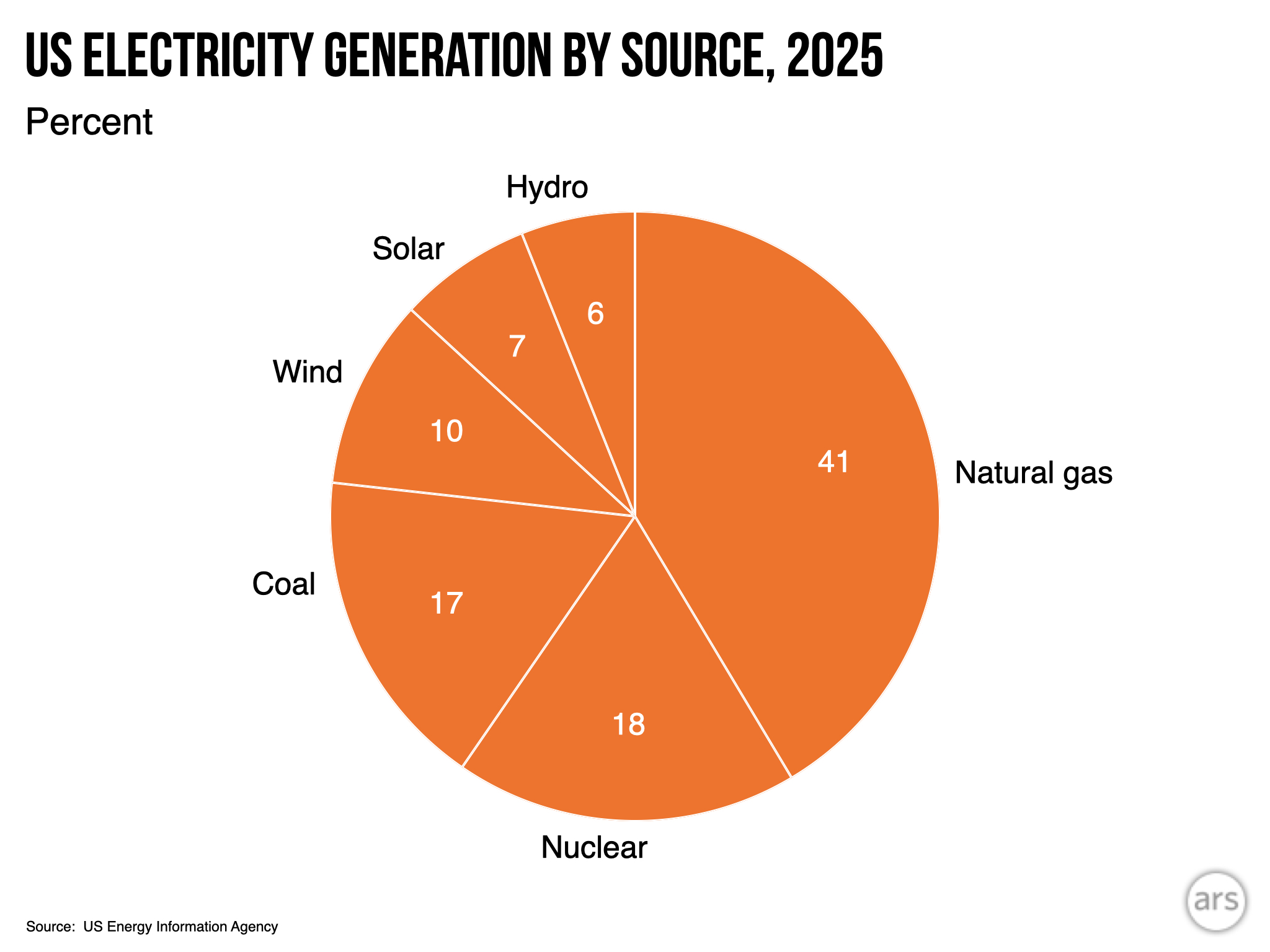 An orange pie chart, with similarly sized slices for wind, solar, and hydro, larger ones for coal and nuclear, and a massive one for natural gas.
Credit:
John Timmer
An orange pie chart, with similarly sized slices for wind, solar, and hydro, larger ones for coal and nuclear, and a massive one for natural gas.
Credit:
John Timmer
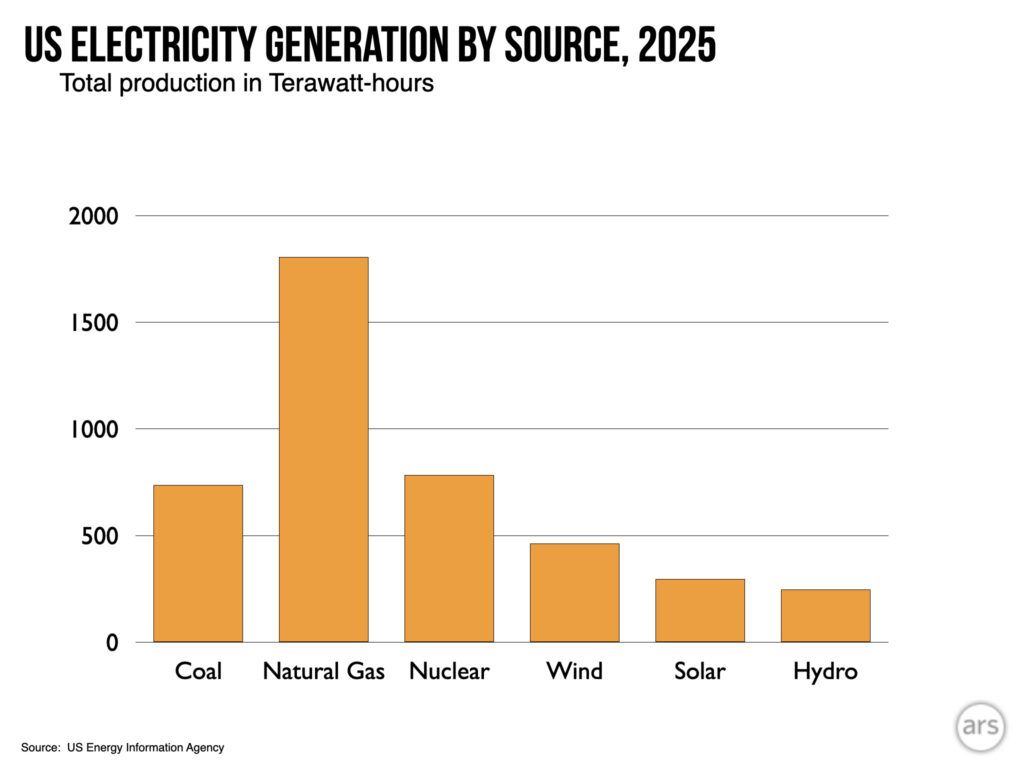 A bar chart, with most of the bars being moderate sized, and natural gas being at over twice as large as anything else.
arstechnica.com
A bar chart, with most of the bars being moderate sized, and natural gas being at over twice as large as anything else.
arstechnica.com
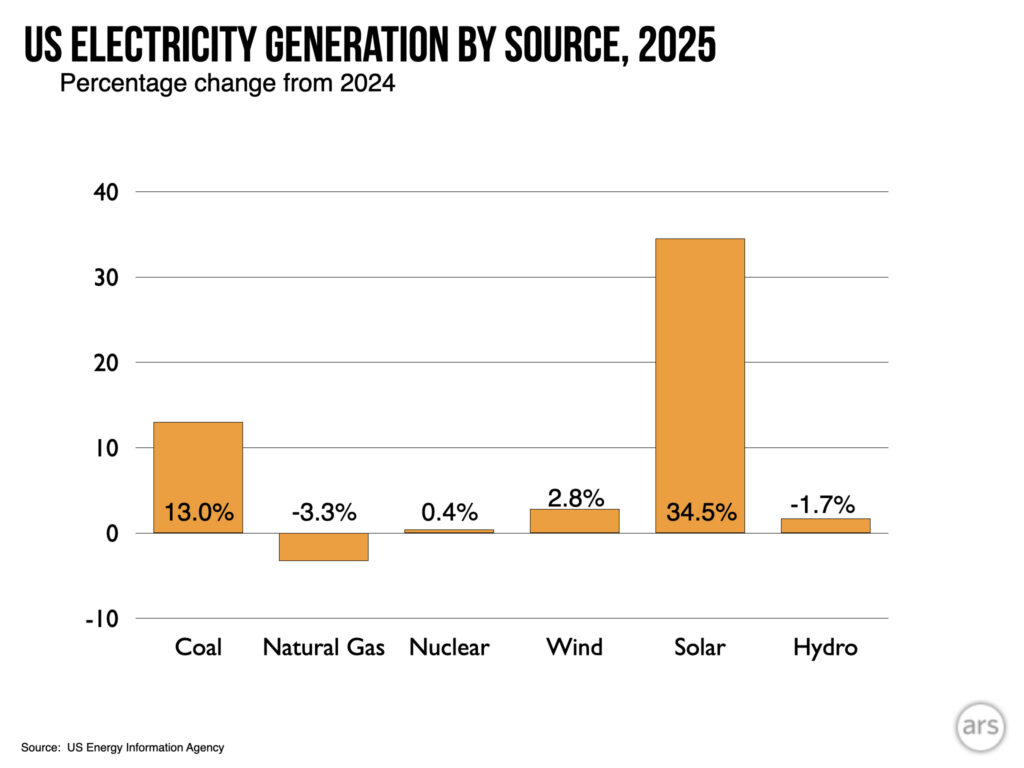 A bar chart, with most of the bars tiny except a moderate sized one for coal, and a very large one for solar.
arstechnica.com
A bar chart, with most of the bars tiny except a moderate sized one for coal, and a very large one for solar.
arstechnica.com
 Photo of John Timmer
arstechnica.com
Photo of John Timmer
arstechnica.com
Google says its first Minnesota data center will be backed by 1.9 gigawatts of new “clean power” and what it describes as the world’s largest battery: a 300-megawatt system designed to discharge for 100 hours. The project, reported by TechCrunch, is planned for Pine Island, southeast of Minneapolis, and pairs 1.4 GW of wind and 200 MW of solar with a 30 gigawatt-hour iron-air battery from Form Energy.
The technical headline is duration. Most grid-scale batteries today are lithium-ion installations that excel at short bursts—typically a few hours—useful for smoothing peaks and providing fast response. Form Energy’s approach stores power by rusting iron when discharging and reversing the process when charging. It is heavy and less efficient than lithium-ion, with roughly 50–70% round-trip efficiency versus 90%+ for lithium-ion, but it is designed to be cheap at scale. Form has said it is targeting around $20 per kilowatt-hour of storage—pricing that, if it holds, changes the economics of running data centers on intermittent generation.
The business headline is structure. TechCrunch reports that Google and Xcel Energy are using a “clean transition tariff” (also called a “clean energy accelerator charge”) that lets the utility pursue projects regulators might otherwise reject as too risky or expensive, with Google paying a premium intended to shield ordinary ratepayers. The mechanism is a workaround for a regulatory environment that pressures utilities to choose the lowest-cost option in the near term, even when new technologies could reduce long-run system costs.
That also points to a second-order effect: large customers are increasingly negotiating bespoke power arrangements that look like private micro-grids wrapped around the public grid. When hyperscalers can pay for their own firmed supply, they reduce exposure to grid constraints—but they also change who bears the fixed costs of maintaining the shared network. The more the largest loads buy their way into priority capacity and custom tariffs, the more the remaining customer base risks being left with a higher share of the legacy bill.
The timing aligns with a broader demand shift. US Energy Information Administration data for 2025, summarized by Ars Technica, shows electricity consumption rose 2.8% year-on-year, a break from the long period of flat demand. Solar generation jumped 35% and surpassed hydropower for the first time, but rising demand was partly met by increased coal generation as gas economics and policy shifted. Data centers are one of the drivers now being cited for that demand growth.
Form Energy is still early in deployment. Its first installation is being built with cooperative utility Great River Energy in Minnesota, a smaller system intended to validate the technology. Google’s plan would scale the concept by orders of magnitude.
Google is not just buying renewable energy credits for a data center. It is paying to reshape the utility’s risk model around a single customer’s load profile.