
Iran nears deal to buy Chinese supersonic anti-ship missiles
Reuters sources say talks accelerated after June Israel–Iran war, Hormuz risk pricing rises before any delivery
Images
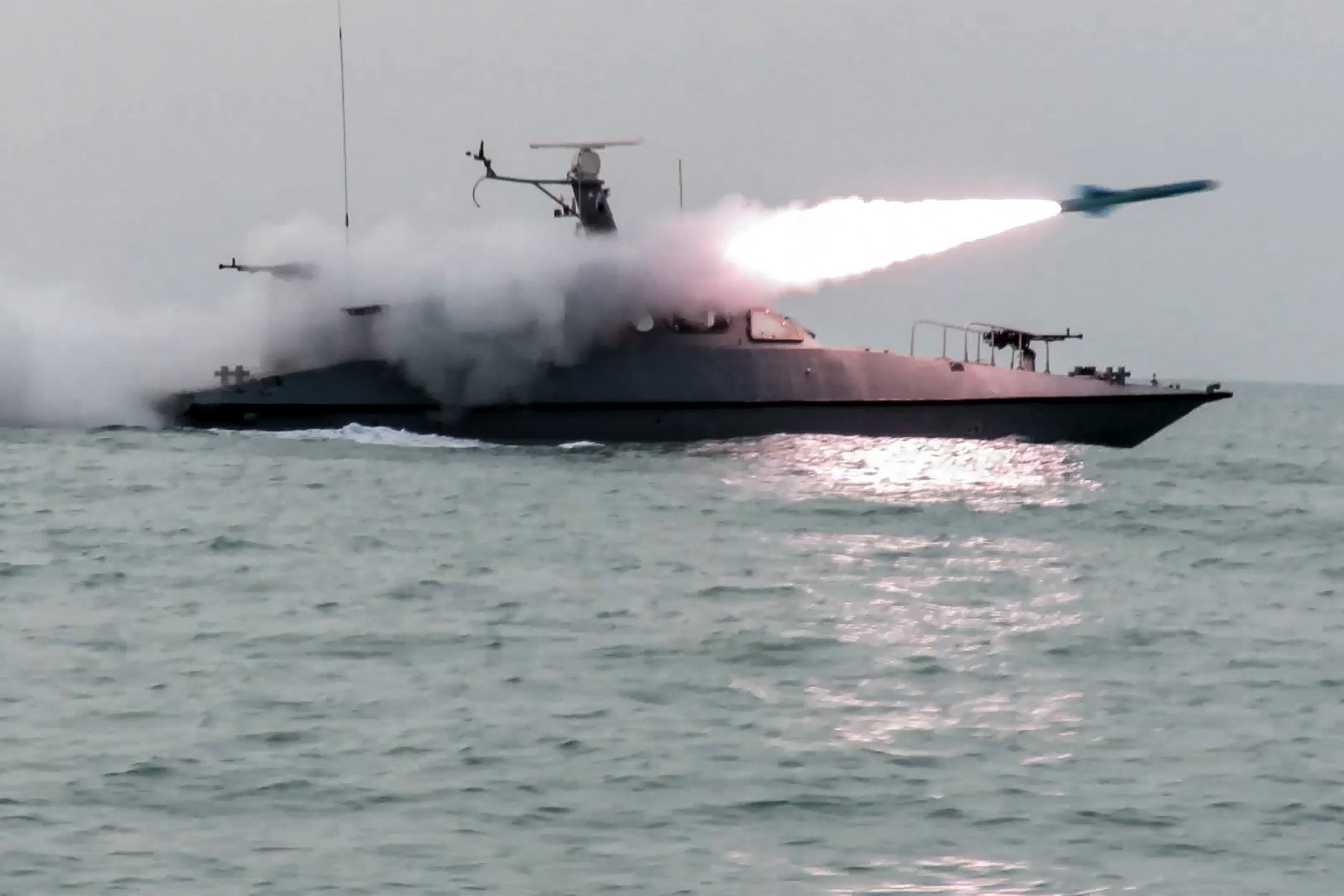 Aboat firing a missile during a military exercise by members of Iran's Revolutionary Guards Corps (IRGC) and navy in the Gulf (Sepha News/AFP via Getty)
Sepha News/AFP via Getty
Aboat firing a missile during a military exercise by members of Iran's Revolutionary Guards Corps (IRGC) and navy in the Gulf (Sepha News/AFP via Getty)
Sepha News/AFP via Getty
 Chinese President Xi Jinping told the Iranian leader that ’China supports Iran in safeguarding sovereignty, territorial integrity and national dignity’ (Getty)
Getty
Chinese President Xi Jinping told the Iranian leader that ’China supports Iran in safeguarding sovereignty, territorial integrity and national dignity’ (Getty)
Getty
Iran is close to a deal to buy Chinese-made CM-302 supersonic anti-ship cruise missiles, according to Reuters reporting cited by The Independent, based on six people with knowledge of the talks. The negotiations, which began at least two years ago, accelerated after a 12-day Israel–Iran war in June, and Iranian officials—including deputy defence minister Massoud Oraei—travelled to China during the final stages, the sources said. China’s foreign ministry said it was not aware of the reported talks, and Beijing’s defence ministry did not respond.
The CM-302 is designed to fly low and fast, complicating shipborne interception. If Iran adds a credible supersonic sea-denial weapon to its inventory, the immediate effect is not that tankers start sinking, but that every transit through the Strait of Hormuz gets repriced. The region’s shipping market has already been treating Hormuz as a kind of political toll gate: war-risk insurance rises, charter rates jump, and cargo owners pay to move the same barrel of oil through a narrower corridor of acceptable routes and schedules. A missile that forces navies to assume less reaction time and higher interception failure rates raises the premium even if it is never fired.
That premium is also a revenue line for someone. Shipowners and insurers can charge more for “uncertainty,” while states and navies convert that uncertainty into budget requests: more escorts, more air defence, more patrol hours. The United States’ visible buildup—carriers, destroyers, air wings, Patriot-style defensive systems—signals capability, but it also advertises what Iran should target and what it should make expensive. A supersonic anti-ship threat does not need to defeat the US Navy; it needs to make the Navy spend more per day to do the same job, and to make commercial traffic behave as if the threat is real.
For China, the logic is different. Selling a capability that ties down US air defence and escort assets in a distant theatre is a way to export costs without firing a shot. Beijing has already been sanctioned by the US for entities accused of supplying dual-use inputs linked to Iran’s missile programmes, and China, Iran and Russia conduct regular joint naval exercises. A sale that deepens operational dependence—training, spare parts, doctrine—also creates a long tail of leverage: even partial delivery or delayed delivery can be used as a bargaining chip, while the mere prospect of delivery can keep risk pricing elevated.
None of this requires a formal blockade. It works through paperwork, underwriting models and deployment cycles: the more Washington moves hardware into place, the more Tehran has reason to buy the kind of weapon that makes that hardware necessary, and the more commercial actors can bill for the resulting risk.
Reuters could not determine how many missiles are involved, what Iran would pay, or whether a delivery timeline has been agreed. In the meantime, the Strait of Hormuz is being priced as if the negotiation itself were already a capability.