
Meta signs $60bn five-year AMD chip deal
AI compute shifts from market scarcity to private contracts, power and grid constraints do not disappear
Images
 AMD will provide central processors as well as its flagship graphics chips. Photograph: Dado Ruvić/Reuters
theguardian.com
AMD will provide central processors as well as its flagship graphics chips. Photograph: Dado Ruvić/Reuters
theguardian.com
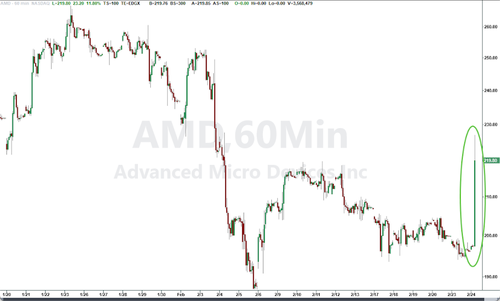 zerohedge.com
Meta commits to a five-year, $60bn purchase of Advanced Micro Devices AI chips, according to Reuters, alongside a 10% equity stake in the US semiconductor company. AMD says the deal covers both its flagship Instinct GPUs and central processors, including a custom CPU variant tailored to Meta’s data-centre needs, with deliveries beginning in the second half of this year.
The agreement is framed as capacity planning for the next phase of AI deployment, but the numbers point to something closer to private infrastructure allocation. AMD said it would supply “6GW worth of chips” to Meta, beginning with 1GW of its forthcoming MI450 hardware. In data-centre terms, gigawatts are not a metaphor: they imply power contracts, grid upgrades, and new buildings, long before a single model is trained or a chatbot answers a query.
Meta is not abandoning Nvidia, which still dominates the market; Reuters notes Meta has also struck a separate deal with Nvidia for millions of AI chips. Instead, the company is buying itself bargaining power and insurance against bottlenecks. When a handful of firms pre-purchase years of compute, the shortage moves from the open market into closed contracts—where smaller buyers, startups, and universities compete for what is left.
AMD’s chief executive Lisa Su described Meta’s move as a “big bet” on AMD. That bet is easier to make when the customer can shape the product: AMD said Meta contributed to the MI450 design, optimised for inference—the stage where trained models run in production. Analysts expect inference demand to outgrow training hardware, because each new consumer-facing AI feature becomes a permanent operating cost measured in electricity and chips.
The deal also illustrates how AI spending can be financed without looking like spending. ZeroHedge reports the agreement includes a performance-based warrant for up to 160 million AMD shares, vesting as shipments scale. In practice, the supplier’s upside becomes tied to the customer’s purchase schedule, and the customer becomes a quasi-owner of the supplier. It is partnership language, but it functions like a long-term lock on scarce industrial capacity.
Meta says it will continue to buy from other vendors and develop in-house processors, and Reuters reports it has discussed using Google’s TPUs. The result is not a single dominant supplier, but a tightly managed ecosystem where the biggest platforms reserve optionality—while the physical constraints of power, land, and grid connections remain stubbornly local.
AMD will start shipping the first gigawatt of MI450-class hardware to Meta in the second half of this year. By then, the data centres needed to plug those racks in will already have been built.