
Mexico reports El Mencho killed in CJNG raid
Nationwide roadblocks and flight suspensions follow, decapitation strike meets franchise-style retaliation
Images
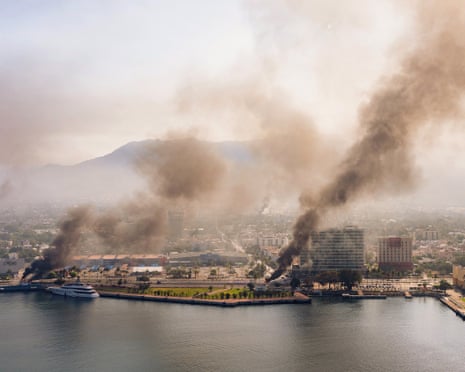 Gunmen blocked major roads, torched cars and buses and fought with government forces. Photograph: Gerardo Santillan/EPA
theguardian.com
Gunmen blocked major roads, torched cars and buses and fought with government forces. Photograph: Gerardo Santillan/EPA
theguardian.com
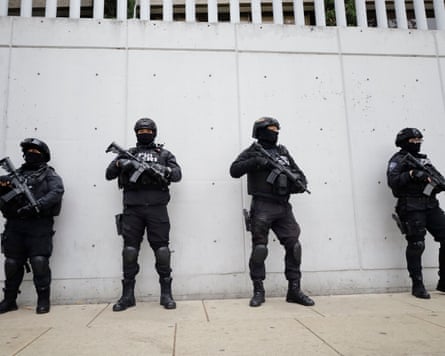 People are being advised to stay indoors, while international flights have been suspended. Photograph: Gerardo Vieyra/NurPhoto/Shutterstock
Shutterstock
People are being advised to stay indoors, while international flights have been suspended. Photograph: Gerardo Vieyra/NurPhoto/Shutterstock
Shutterstock
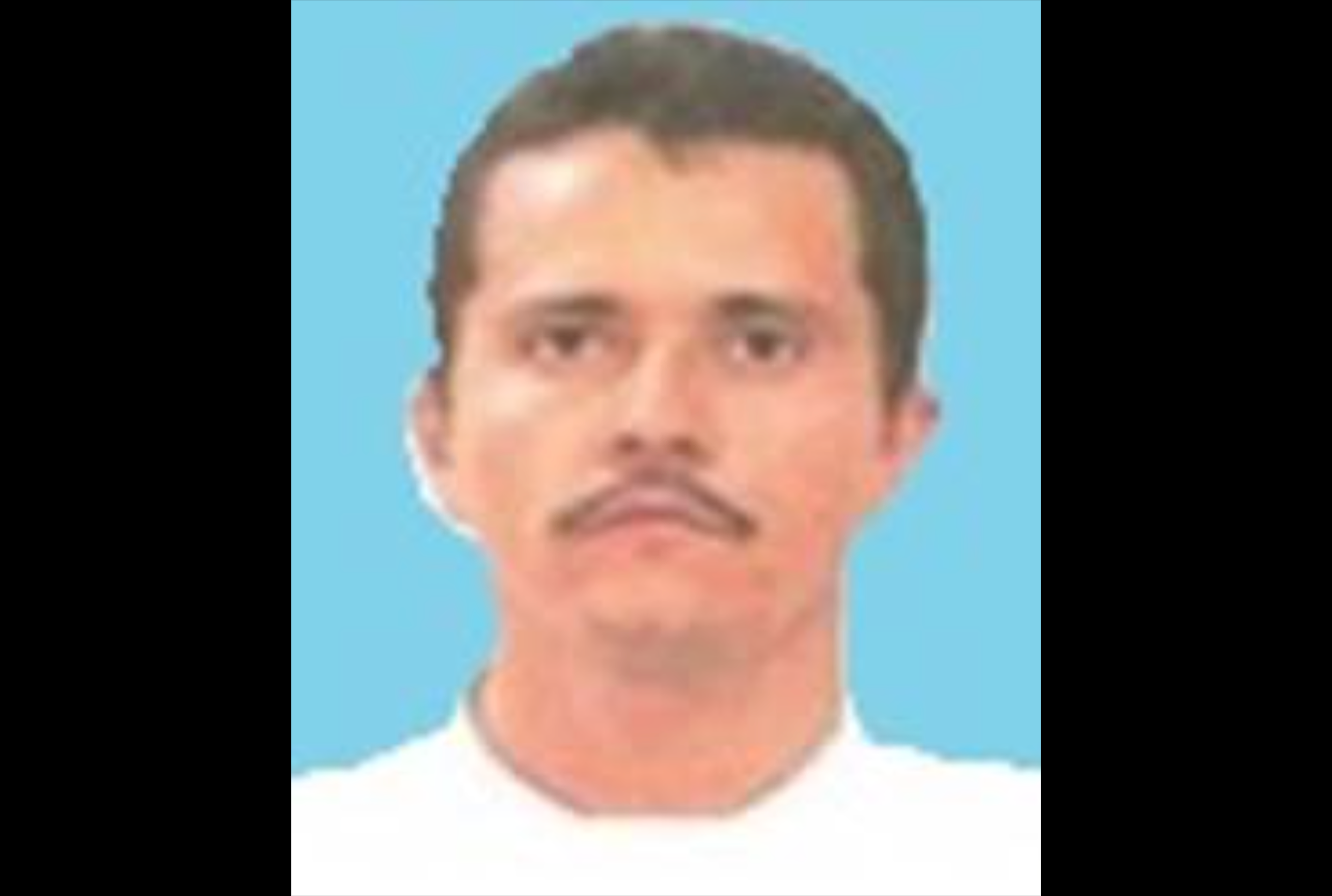 Mexican drug kinpin Nemesio Rubén Oseguera Cervantes (United States Drug Enforcement Administration)
United States Drug Enforcement Administration
Mexican drug kinpin Nemesio Rubén Oseguera Cervantes (United States Drug Enforcement Administration)
United States Drug Enforcement Administration
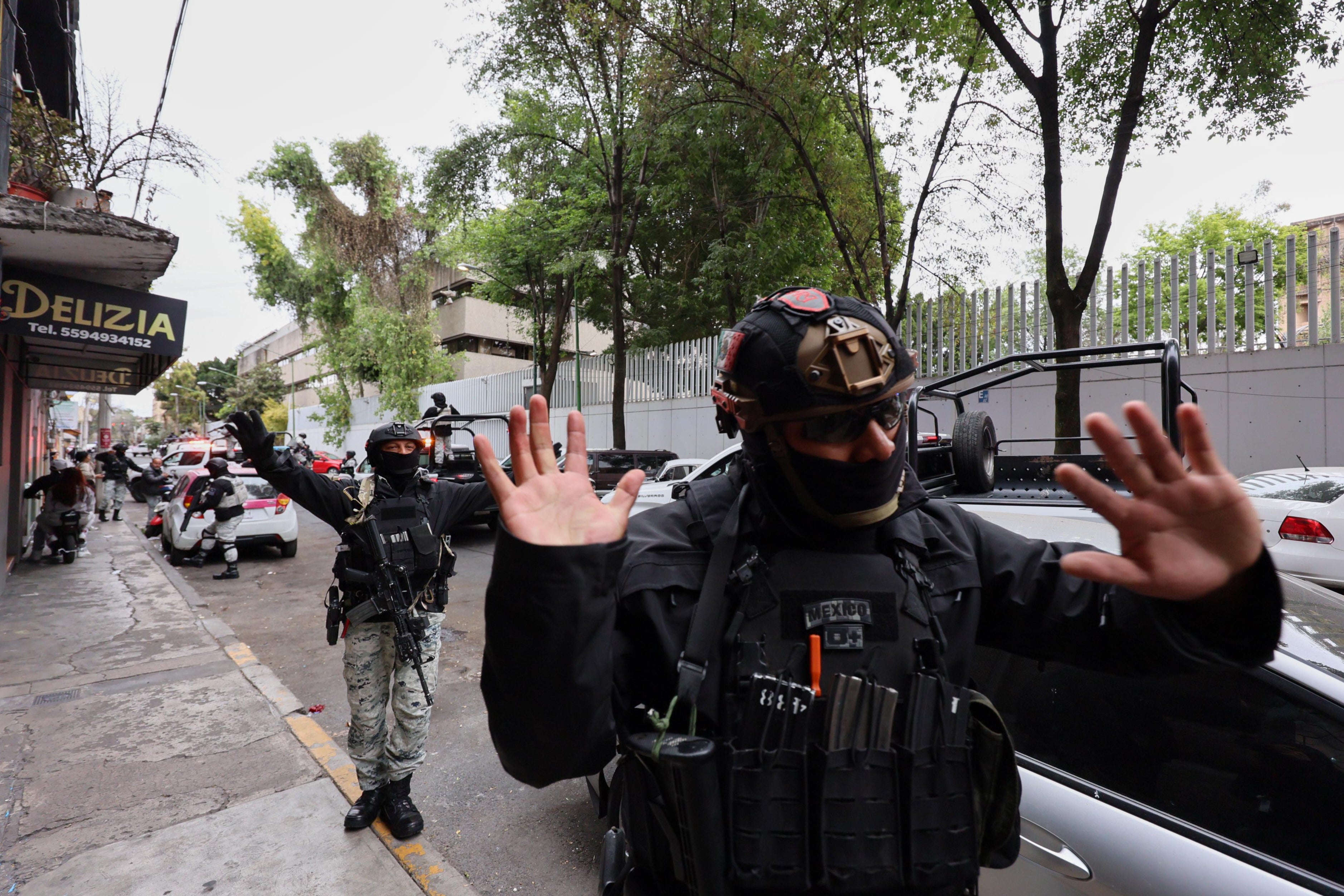 National Guards remove pedestrians by the General Prosecutor’s headquarters in Mexico City (AP)
independent.co.uk
National Guards remove pedestrians by the General Prosecutor’s headquarters in Mexico City (AP)
independent.co.uk
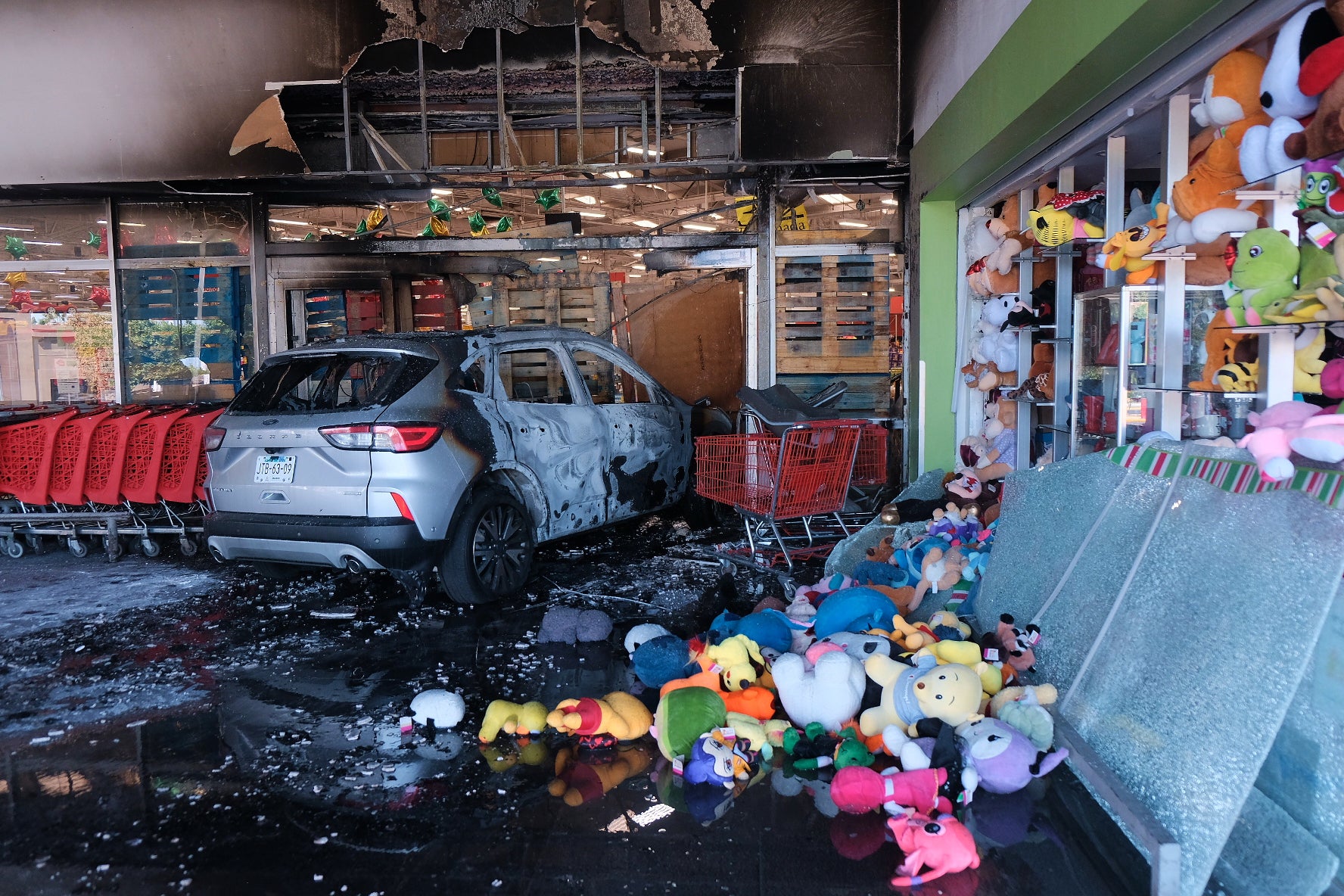 A charred vehicle sits at a damaged supermarket in Guadalajara, Jalisco state (AP)
independent.co.uk
A charred vehicle sits at a damaged supermarket in Guadalajara, Jalisco state (AP)
independent.co.uk
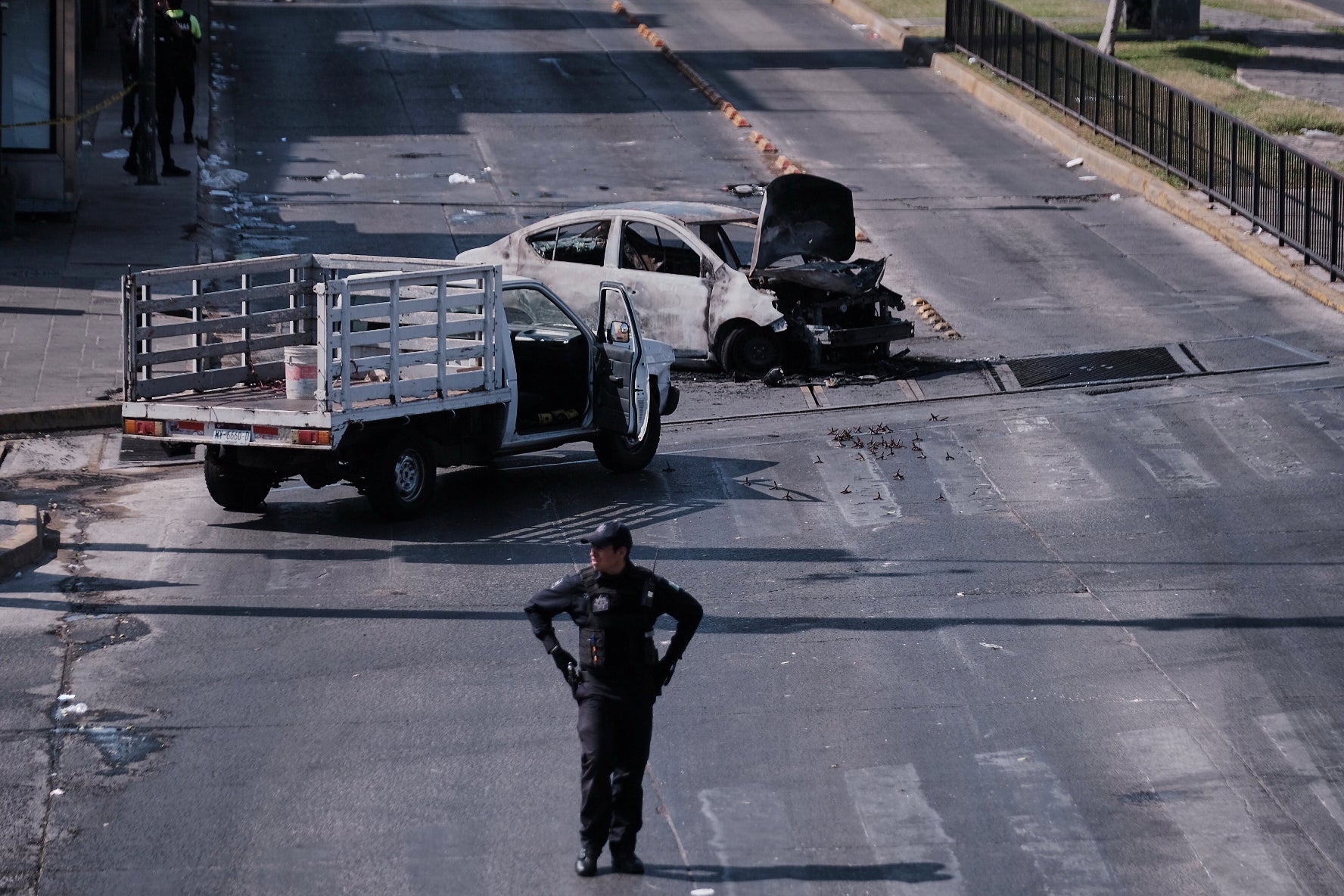 A police officer stands guard by a charred vehicle on a road in Guadalajara, after it was set on fire (AP)
independent.co.uk
A police officer stands guard by a charred vehicle on a road in Guadalajara, after it was set on fire (AP)
independent.co.uk
El Mencho, Mexico’s most wanted cartel boss, is reported killed in a military operation in Jalisco on Sunday, triggering road blockades and arson attacks across large parts of the country. The Guardian reports more than 250 roadblocks across 20 states, with schools closed and flights suspended in places including Puerto Vallarta, while The Independent says the army attempted to capture Nemesio Rubén Oseguera Cervantes and that he died during transfer by air to Mexico City.
The government is presenting the killing as its biggest blow against organised crime since the recapture of Joaquín “El Chapo” Guzmán, but the immediate response shows what the state is actually fighting: a network that can rapidly price violence into logistics. Burning vehicles are not a battlefield tactic so much as a supply-chain lever—closing highways, forcing businesses to halt deliveries, and making ordinary movement costly. When a cartel can shut down a second-largest city like Guadalajara for a day, the question becomes less about whether a leader is dead and more about how quickly the organisation can reconfigure.
Both outlets describe the Jalisco New Generation Cartel (CJNG) as a fast-growing, diversified enterprise: trafficking fentanyl, methamphetamine and cocaine, moving migrants, and earning money from fuel theft, extortion and fraud. That mix matters because it reduces dependence on any single “kingpin” and makes leadership decapitation a management problem rather than an existential threat. The Independent notes that troops seized rocket launchers capable of downing aircraft and destroying armoured vehicles—hardware that does not disappear with one funeral. The Guardian adds that CJNG has cultivated a reputation for “ultraviolence” and public displays of firepower, which function as recruitment marketing and deterrence at the same time.
Washington is in the story, too. The Guardian reports the raid was supported by US intelligence, and The Independent says both countries acknowledged collaboration. That linkage turns Mexico’s security operations into a deliverable in a broader bilateral negotiation, as the Trump administration pressures Mexico over fentanyl flows and threatens tariffs or unilateral action. A successful strike offers a headline for both governments; the retaliatory shutdowns, the cancelled flights, and the heightened security costs stay in Mexico.
By Monday, officials said many of the blockades had been cleared, according to the Guardian. The fact that the country could be partially immobilised—and then reopened—within roughly a day is the operational detail that will matter to investors, transport firms, and local governments long after the name “El Mencho” fades from the news cycle.