
Swiss firms seek US tariff refunds after Supreme Court ruling
$175bn in duties turns importers into state creditors, new 15% tariff schedule still unclear
Images
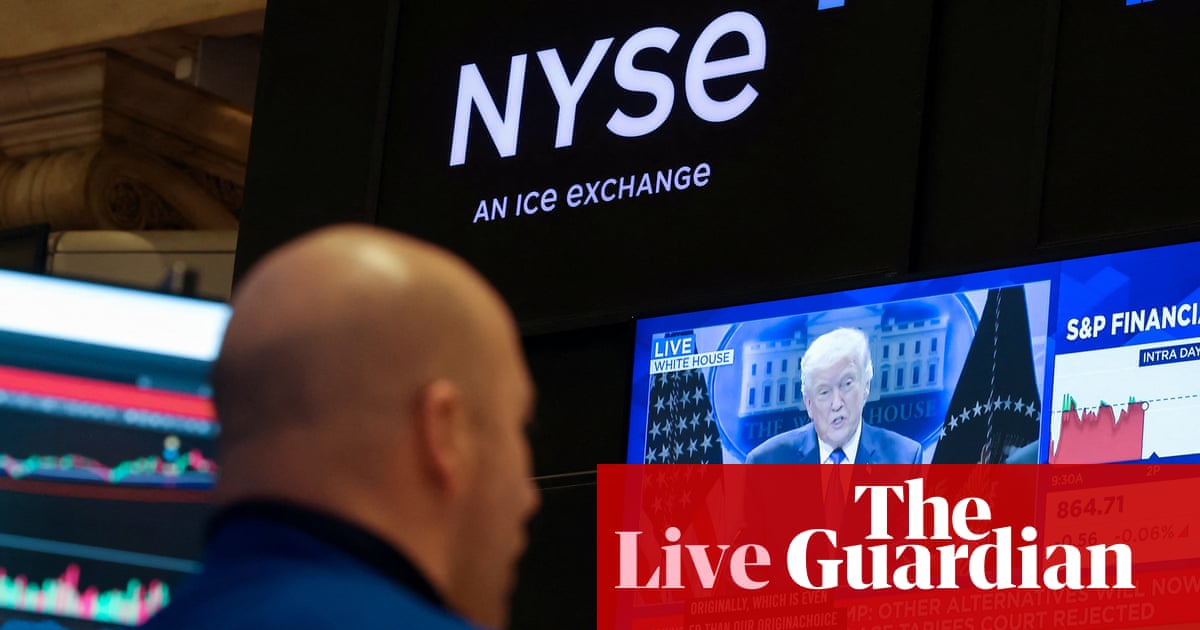 Confusion in UK and EU as Trump’s 15% global tariff creates ‘an unholy mess’ – business live
theguardian.com
Confusion in UK and EU as Trump’s 15% global tariff creates ‘an unholy mess’ – business live
theguardian.com
 Diese Schweizer Firmen wollen Trumps Zoll-Einnahmen zurück
blick.ch
Diese Schweizer Firmen wollen Trumps Zoll-Einnahmen zurück
blick.ch
Swiss manufacturers including Stöckli, Logitech and Swatch are preparing to demand refunds of US import duties after the Supreme Court ruled that a tranche of President Donald Trump’s tariffs was unlawfully imposed, according to Blick. The University of Pennsylvania has estimated the disputed takings at about $175bn, turning what looked like a trade policy tool into one of the largest ad‑hoc tax collections in recent US history.
The immediate question is not whether the money was collected — it was — but how, and on what timetable, it will be returned. Tariffs are paid at the border to US Customs and Border Protection and flow into federal receipts; unlike a private counterparty, the state can collect first and litigate later. Once a court strikes the legal basis, importers become creditors. Companies now have to assemble documentation, file claims, and potentially sue, while the administration decides whether to appeal, delay, or set a uniform refund mechanism. For firms that priced the tariff into contracts, the refund can also reopen disputes inside supply chains: who “really” bore the cost — the importer, the exporter, or the end customer — becomes a question lawyers, not economists, have to settle.
In Europe, the tariff story is already functioning less like a predictable tax schedule and more like a rolling policy risk premium. The Guardian reports confusion over whether a new 15% “global tariff” applies to the UK and EU from tomorrow, even as US trade representative Jamieson Greer insists previously agreed tariff deals will stand. Britain’s Chambers of Commerce president Andy Haldane told the BBC he believed the 15% rate would apply unless the UK hears otherwise; Germany’s BDI business lobby called the situation “an unholy mess” and urged the EU to seek clarity.
That uncertainty is itself a cost. Importers cannot hedge a rate they do not know, and manufacturers cannot plan production around a tariff that might be 10%, 15%, or a blend of new and pre‑existing duties. When policy is issued by weekend announcement and revised within a day, firms react by shortening order cycles, building buffers, and writing more protective contract clauses — all of which tie up working capital. The more often the state changes the rules, the more trade starts to resemble a regulated utility: stable for those who can negotiate exceptions, volatile for everyone else.
For Swiss companies, the refund fight is also a reminder that “tariff revenue” is not a pot earmarked for the industries paying it. It is a transfer into general government cashflow until a court forces it back out — and even then, only to those with the paperwork, patience and legal budget to claim it.
Blick reports that US Customs will stop collecting the struck‑down 15% tariff rate from Tuesday, while a new 15% tariff announced on Friday is scheduled to begin the same day. The invoices may change, but the border will still be collecting.