
Nepal bus plunges 200 metres into Trishuli River killing at least 19
Crash follows earlier deadly falls on same route, Wrecks can vanish for months before recovery
Images
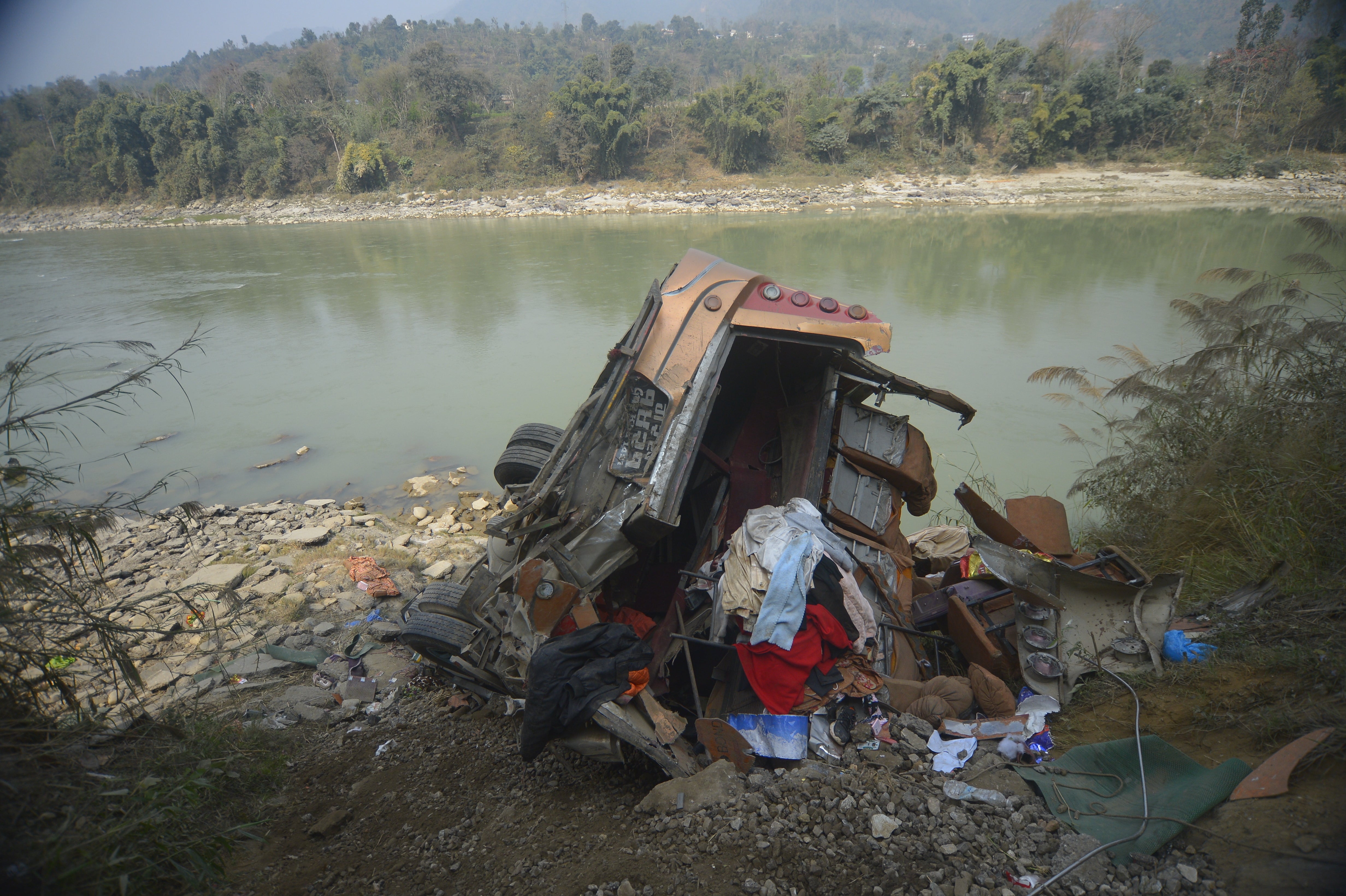 The wreckage of a bus is seen on the bank of the Trishuli River (AP)
independent.co.uk
The wreckage of a bus is seen on the bank of the Trishuli River (AP)
independent.co.uk
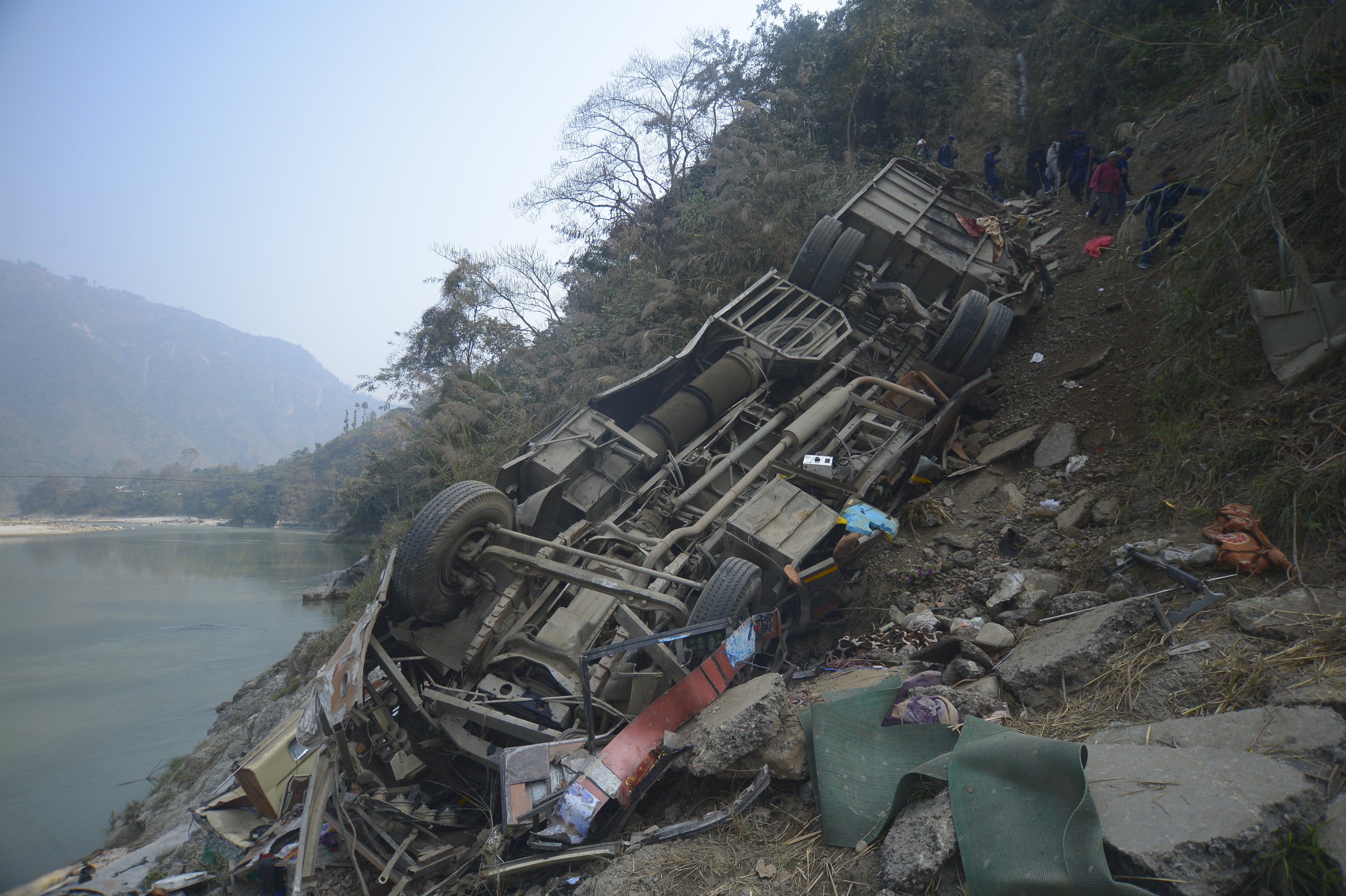 The passenger bus drove off a mountain highway near Benighat, west of the capital Kathmandu (AP)
independent.co.uk
The passenger bus drove off a mountain highway near Benighat, west of the capital Kathmandu (AP)
independent.co.uk
A passenger bus carrying about 44 people left Pokhara and plunged roughly 200 metres off Nepal’s Prithvi Highway on Monday, coming to rest by the Trishuli River in Dhading district, police said. At least 19 people were killed, including a British national, while 25 were injured; officials said a New Zealander and a Chinese national were among the injured, and China’s embassy said another Chinese citizen was missing, according to The Independent. The crash occurred about 80 kilometres west of Kathmandu, on a mountain road that is one of the country’s main arteries.
Nepal’s road tragedies rarely hinge on a single mechanical failure. The country’s geography funnels long-distance traffic onto narrow, winding routes where overtaking is risky, guardrails are inconsistent, and a small mistake becomes a long fall. Operators face an obvious trade-off: more passengers per trip and tighter schedules raise revenue, while the costs of wear, maintenance and driver fatigue are easier to defer—especially when enforcement is sporadic and responsibility is spread across owners, contractors, local regulators and insurers. When a bus is “packed”, as the reporting describes this one, the marginal fare is collected immediately, while the added braking distance, tyre stress and rollover risk are paid later by passengers and emergency services.
The Trishuli corridor underlines how little learning is built into the system. The Independent notes that in 2024 two buses with 65 people aboard fell into the same river, with most passengers killed or still missing; one wreck was only found this year, buried in sand. That detail matters: if vehicles can disappear into a riverbed for months, the true casualty count and the chain of errors—dispatch decisions, vehicle condition, driver hours, road maintenance—can vanish with them. In that environment, “investigations” often arrive after the evidence has washed downstream.
Nepal markets its mountains to trekkers and tourists, but the same terrain makes everyday transport a high-stakes bottleneck. More visitors and more domestic travel increase traffic volume on roads that were never built to absorb it, while the quickest visible response remains post-crash: rescue, hospitalisation, condolence statements, and occasionally a promise of stricter checks. The harder work—credible inspection regimes, liability that reaches owners and dispatchers, and contracts that reward safety rather than speed—does not produce a headline until it fails.
Rescuers were still pulling people from twisted metal on the riverbank as officials tried to identify nine of the dead. One bus trip from a tourist city ended where last year’s wrecks were still being recovered.