
Gavin Newsom book tour lands in Nashville
Former Californians cite housing costs, Rich state economy fails young families
Images
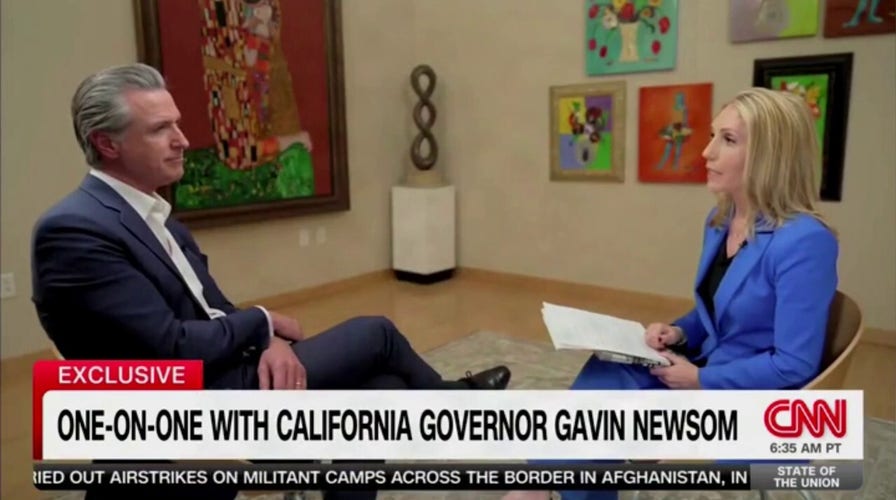 Gavin Newsom pressed on California's affordability crisis during CNN interview
foxnews.com
Gavin Newsom pressed on California's affordability crisis during CNN interview
foxnews.com
 Gov. Gavin Newsom
foxnews.com
Gov. Gavin Newsom
foxnews.com
 'The Daily Show' hammers 'leading man' Gavin Newsom on homelessness, high-speed rail
foxnews.com
'The Daily Show' hammers 'leading man' Gavin Newsom on homelessness, high-speed rail
foxnews.com
 Newsom speaking at a school
foxnews.com
Newsom speaking at a school
foxnews.com
California Governor Gavin Newsom’s book tour stop in Nashville doubled as a migration anecdote: he met former Californians who said they left because they could not afford rent, a down payment, or starting a family. The New York Times reports the event drew an audience that included ex-residents now living in Tennessee, while Fox News highlights a CNN interview in which host Dana Bash pressed Newsom on California’s cost-of-living gap.
Newsom’s response was to argue from scale and output: California has regained population growth in recent years, he said, and now ranks as the world’s fourth-largest economy, with dominance in fields from artificial intelligence to agriculture. He pointed to state policies meant to blunt household costs—capped insulin pricing, expanded paid family leave, higher minimum wages for some sectors, and subsidised childcare slots. Yet he also conceded the state’s central political failure: housing. “We’re as dumb as we want to be on housing,” he said, describing a decades-long affordability problem and claiming recent reforms are the most consequential in a generation.
The exchange is a reminder that American states still compete in ways European countries often cannot: people can move, employers can follow, and tax bases can thin out without a passport check. When the price of living in the productive hubs rises faster than incomes, the first households to leave are typically those with the most flexibility—remote workers, mobile professionals, young families without deep local ties. The receiving states, from Tennessee to Texas, gain consumers and taxpayers without having financed their early schooling or career networks.
California, meanwhile, is left trying to square three incompatible aims at once: high-demand coastal metros, restrictive building rules, and a political preference for redistributing the resulting scarcity through subsidies. The subsidies can soften the pain for those who stay, but they also raise the amount of public money required to make life tolerable, while doing little to increase the number of homes. As long as new construction remains slow, the state’s signature welfare-and-regulation model is forced to operate on a shrinking slice of households who can still pay market prices.
Newsom is widely discussed as a potential 2028 presidential contender. The same affordability question that followed him to Nashville is likely to follow him onto any national stage: whether a state that leads in headline industries can also keep ordinary family formation within reach.
In Nashville, the couple at dinner did not ask about AI or GDP rankings. They asked why they had to leave California to buy a home.