
Sudan government condemns RSF chief Uganda visit
RSF claims capture of Chad-border town, Border control turns diplomacy into revenue
Images
 Sudan condemns RSF chief’s visit to Uganda as minimising ‘human values’
aljazeera.com
Sudan condemns RSF chief’s visit to Uganda as minimising ‘human values’
aljazeera.com
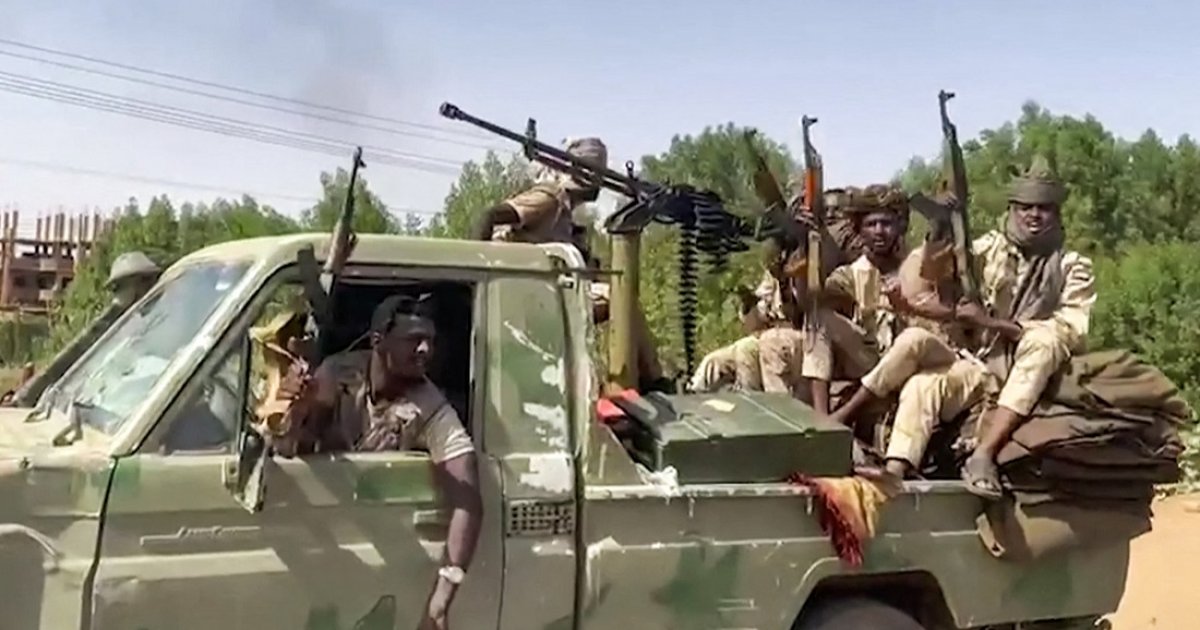 Sudan’s RSF says it took town on Chad border
dhakatribune.com
Sudan’s RSF says it took town on Chad border
dhakatribune.com
Sudan’s military-led government has condemned a visit by Rapid Support Forces commander Mohamed Hamdan Dagalo, known as Hemedti, to Uganda, accusing him of “minimising human values”, according to Al Jazeera. At the same time, the RSF said it had taken a town on the border with Chad, Dhaka Tribune reported, extending its control over a corridor that matters less for symbolism than for cross-border flows.
The two moves—diplomacy in Kampala and a claim of territorial gain near Chad—fit the RSF’s core strategy: behave like a state while financing itself like a network. A meeting with a neighbouring government does not require international recognition, only a counterpart willing to hedge. For Uganda, talking to the RSF is a low-cost insurance policy in a war whose outcome remains uncertain; it preserves channels for trade, security coordination and refugee management whichever side holds the roads next month.
For the RSF, border towns are not just map colour. They are choke points for fuel, food, weapons and people, and therefore for taxation, protection rackets and smuggling rents. Control of a crossing can generate cash daily, while also denying the Sudanese Armed Forces the ability to resupply or collect customs. In a conflict where salaries are irregular and formal budgets have collapsed, the actor that can monetise movement tends to outlast the actor that can only issue orders.
That political economy also explains why regional diplomacy follows the guns. Neighbours pay the costs of spillover—refugees, disrupted trade, armed groups moving across porous frontiers—and they adapt by keeping lines open to whoever can credibly guarantee a truck’s passage. Public condemnations from Khartoum do little to change that calculus if the RSF is the force actually policing a route.
There is a second-order effect: as the RSF accumulates both territory and foreign meetings, it becomes easier for outside actors to treat it as a negotiating partner, even while atrocities remain documented and contested. The threshold for “legitimacy” shifts from constitutional status to operational control: who can deliver a ceasefire on a road, who can release detainees, who can keep a border post open.
On paper, Sudan still has one sovereign government. On the ground, the side that can collect at the frontier and shake hands in Kampala is building the infrastructure of recognition without asking for it.
The RSF’s statement about taking a border town arrived the same day Khartoum protested its leader’s foreign visit.