
Mexican forces reportedly kill CJNG leader El Mencho
Roadblocks and arson spread across multiple states, decapitation headline meets franchise reality
Images
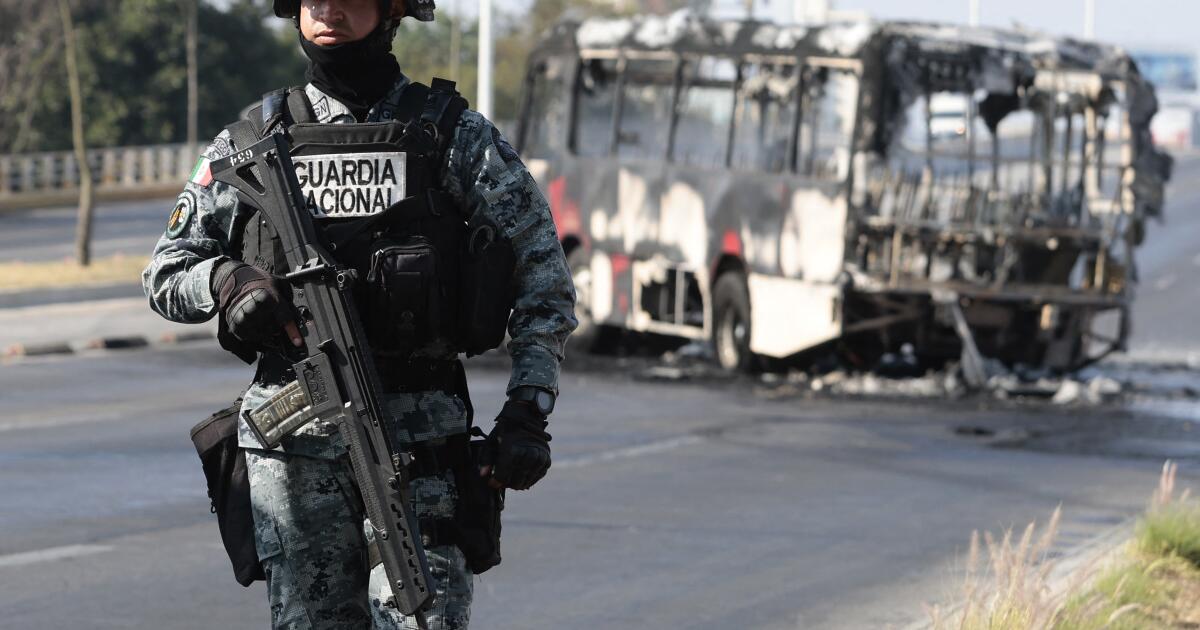 Mexican army kills leader of Jalisco New Generation cartel, official says
latimes.com
Mexican army kills leader of Jalisco New Generation cartel, official says
latimes.com
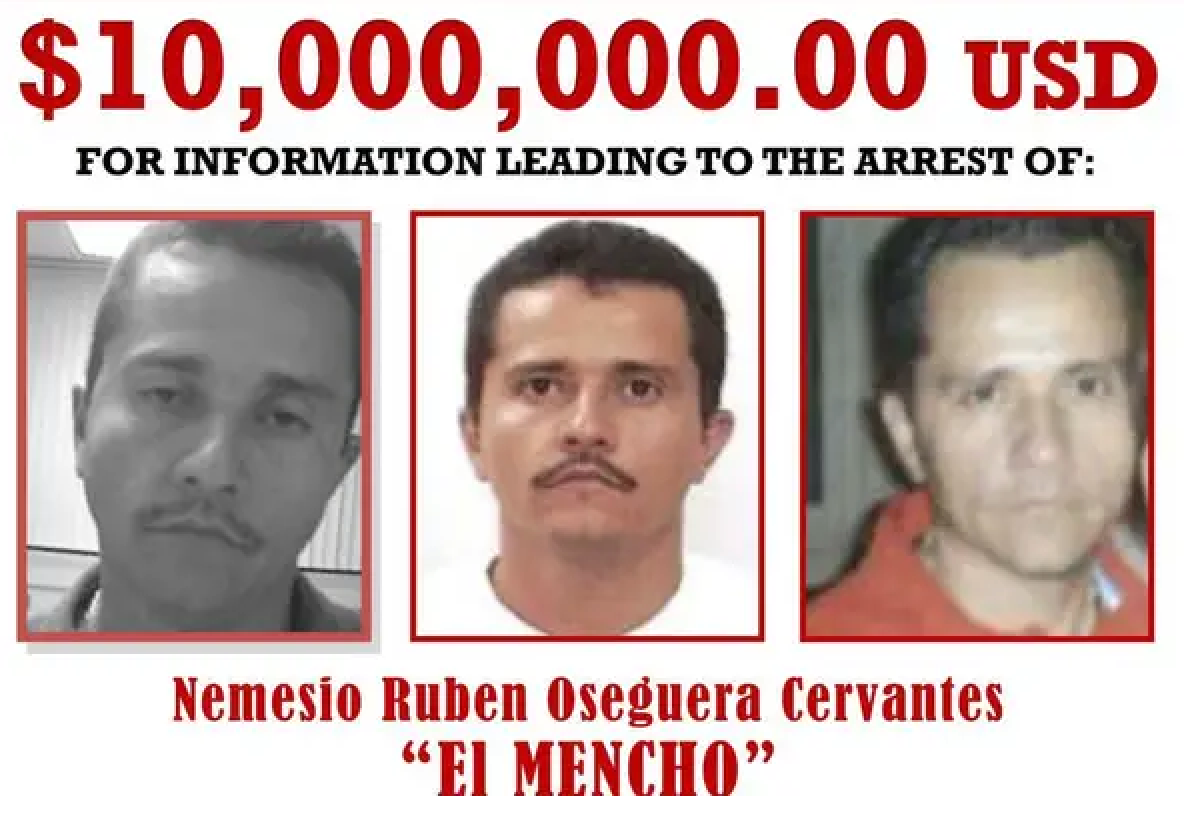 The US government initially offered $10m for his arrest before upping the reward to $15m (Especial)
Especial
The US government initially offered $10m for his arrest before upping the reward to $15m (Especial)
Especial
 Mexican newspapers reported that Nemesio Oseguera Cervantes was killed on Sunday in the western state of Jalisco. Photograph: DEA
theguardian.com
Mexican newspapers reported that Nemesio Oseguera Cervantes was killed on Sunday in the western state of Jalisco. Photograph: DEA
theguardian.com
Mexican security forces say they have killed Nemesio Oseguera Cervantes, better known as “El Mencho”, the long-time leader of the Jalisco New Generation Cartel (CJNG), during an operation in the western state of Jalisco. The U.S. State Department had offered up to $15 million for information leading to his arrest, and U.S. prosecutors have indicted him on multiple drug-trafficking and firearms charges, according to the Los Angeles Times and The Independent. Within hours, burning vehicles and “narco” roadblocks were reported across several states including Jalisco and Guanajuato, with smoke visible near the resort city of Puerto Vallarta, The Guardian reports.
The immediate violence is the part governments can point to as proof the target mattered. It is also the part that rarely answers the operational question: what changes in a cartel that already runs like a distributed business. CJNG is widely assessed to be less a single hierarchy than a network of local cells tied together by brand, protection, logistics and access to corruption. When the top is removed, the revenue streams do not disappear; they get contested. The fastest route to “replacement” is not a board meeting but a demonstration of force—roadblocks, arson and attacks that show commanders can still impose costs on the state and on rivals.
Mexico has seen this pattern repeatedly. Decapitation produces a clean headline and a measurable deliverable for politicians and security agencies, but it also creates a vacancy in a market where violence is the enforcement mechanism. The fight is not only over territory; it is over routes, port access, precursor chemicals, and the ability to move fentanyl, methamphetamine and cocaine north. Those assets are held by mid-level operators and corrupt intermediaries who often survive leadership changes. A leader’s death can therefore trigger fragmentation rather than collapse: more bosses, more disputes, shorter time horizons and more public displays of brutality designed to keep subordinates in line.
Washington’s incentives do not always align with Mexico’s. U.S. officials can claim progress against a named “most wanted” figure—especially after CJNG’s designation as a foreign terrorist organisation under the Trump administration, The Independent notes—while the underlying supply chains adapt. For Mexico’s government, the pressure is to show control quickly, because the costs of disorder land on commuters, small businesses and municipal services long before they land on cartel finances.
On Sunday, the clearest signal was not the reported killing itself but the response: burning trucks, blocked highways, and a governor telling eight million residents to stay home until the situation stabilises.