
Pakistan says it kills 70 militants in Afghanistan strikes
Taliban government reports civilian casualties, Border becomes a place to export blame and import retaliation
Images
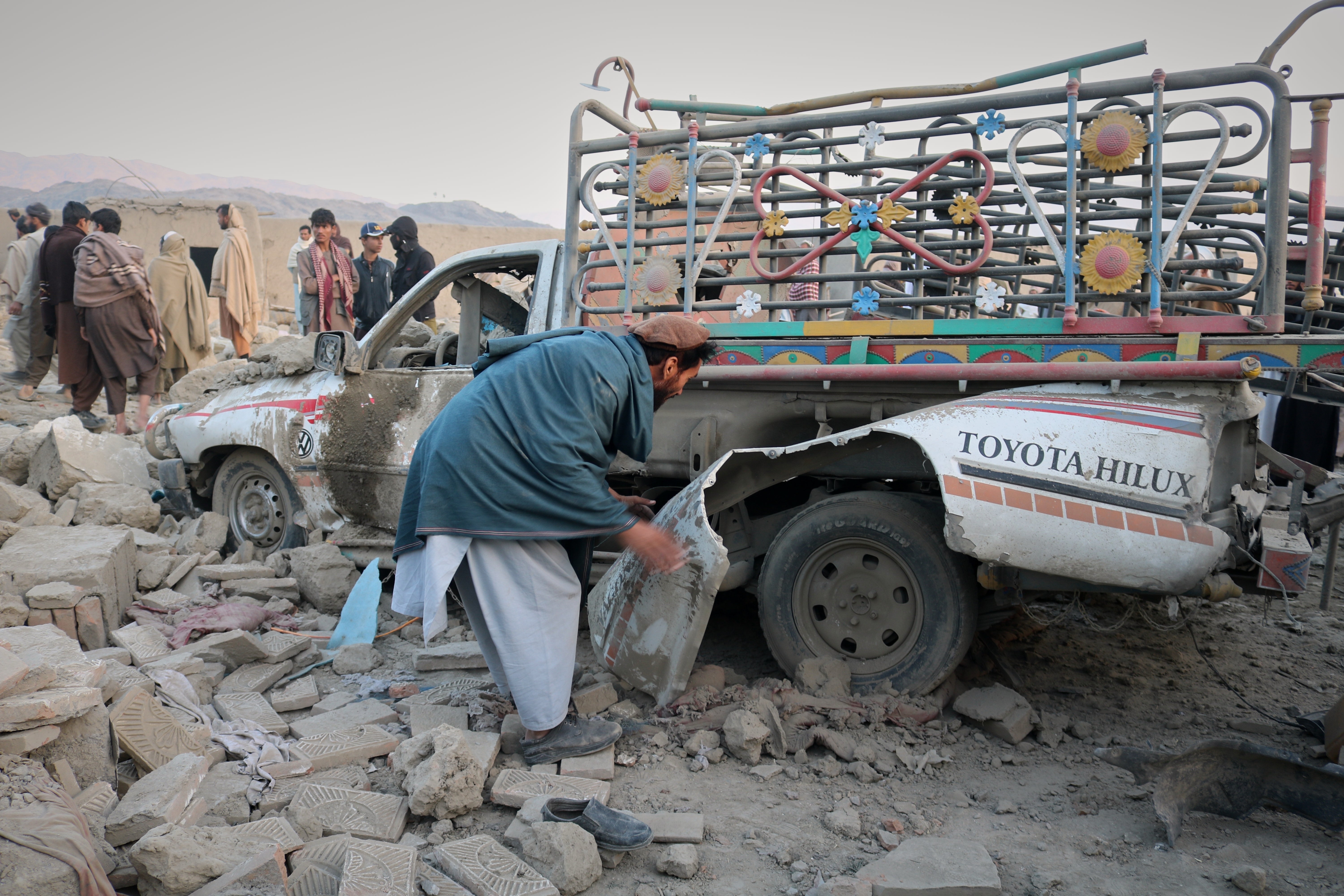 The Afghan Defence Ministry condemned the strikes as a violation of Afghanistan’s airspace and sovereignty (AP)
independent.co.uk
The Afghan Defence Ministry condemned the strikes as a violation of Afghanistan’s airspace and sovereignty (AP)
independent.co.uk
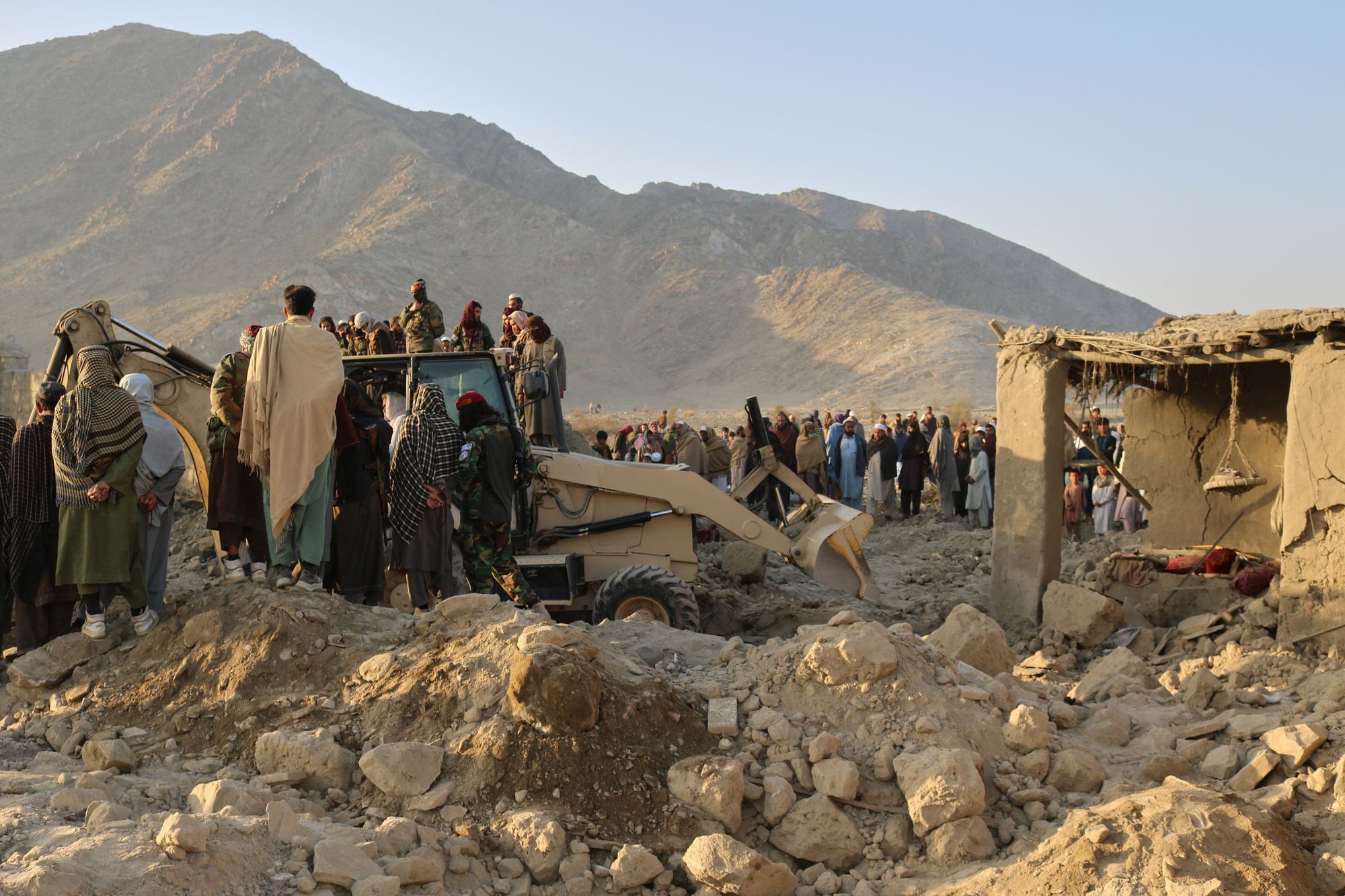 The Afghan Defence Ministry condemned the strikes as a violation of Afghanistan’s airspace and sovereignty (AP)
independent.co.uk
The Afghan Defence Ministry condemned the strikes as a violation of Afghanistan’s airspace and sovereignty (AP)
independent.co.uk
 Pakistan launches border strikes on Afghanistan
france24.com
Pakistan launches border strikes on Afghanistan
france24.com
 Afghan relatives and mourners surround the body of a victim, killed in an overnight Pakistani air strike, during a mass burial ceremony in Nangarhar province, Afghanistan, on Sunday.
japantimes.co.jp
Afghan relatives and mourners surround the body of a victim, killed in an overnight Pakistani air strike, during a mass burial ceremony in Nangarhar province, Afghanistan, on Sunday.
japantimes.co.jp
 A solar farm in Nakai, Kanagawa Prefecture, in March 2016. Japan gets about a tenth of its electricity from solar panels despite having nearly no domestic production of photovoltaics (PVs).
japantimes.co.jp
A solar farm in Nakai, Kanagawa Prefecture, in March 2016. Japan gets about a tenth of its electricity from solar panels despite having nearly no domestic production of photovoltaics (PVs).
japantimes.co.jp
 Sonic the Hedgehog, Castlevania's Alucard and the weak yet lovable Slime from Dragon Quest are just some of Japan's iconic gaming franchises celebrating midlife anniversaries in 2026.
japantimes.co.jp
Sonic the Hedgehog, Castlevania's Alucard and the weak yet lovable Slime from Dragon Quest are just some of Japan's iconic gaming franchises celebrating midlife anniversaries in 2026.
japantimes.co.jp
 A Ukrainian rises in the traditional world of sumo
japantimes.co.jp
A Ukrainian rises in the traditional world of sumo
japantimes.co.jp
Pakistan says it carried out pre-dawn strikes on targets inside Afghanistan on Sunday, with officials claiming 70 militants were killed—later revised by state media to 80—after a surge of attacks in Pakistan’s northwest. Afghanistan’s Taliban government rejected the account, saying the strikes hit “civilian areas” in Nangarhar and Paktika provinces, including homes and a religious school, and that women and children were among those killed and wounded, according to Reuters via The Japan Times.
The immediate dispute is over body counts and categories, but the longer-running argument is about responsibility for violence that crosses the Durand Line. Islamabad blames the Pakistani Taliban (TTP) for recent suicide bombings and says the group operates from Afghan territory with support networks beyond Pakistan’s reach, according to The Independent and France24. Kabul denies harbouring the TTP and framed the strikes as a violation of sovereignty, summoning Pakistan’s ambassador to protest and warning of consequences.
The mechanics of the conflict push both sides toward escalation. Pakistan can show domestic audiences that it is “doing something” by hitting targets across the border, while shifting the operational and political cost of counterinsurgency away from Pakistani cities and onto remote Afghan districts. Afghanistan’s Taliban, meanwhile, can condemn the strikes and promise retaliation without demonstrating that it can—or wants to—police allied militants whose pressure on Pakistan can be useful leverage.
The result is a familiar pattern: violence becomes a cross-border accounting trick. Pakistan’s officials describe “intelligence-based, selective operations” against camps, but offered no evidence for the claimed militant death toll, The Independent reports. Afghan officials and local residents describe funerals and rubble-clearing in villages and insist those killed were not fighters. The same airspace, the same blast craters, and two incompatible narratives—each one designed to assign the bill elsewhere.
The timing matters. The strikes followed a suicide attack on a military convoy in Bannu and another major assault in Bajaur that killed 11 soldiers and a child, according to The Independent. Pakistan has also pointed to an alleged Afghan national involved in one of the attacks, and claims “conclusive evidence” that militants act on instructions from leadership based in Afghanistan. In Kabul, the Taliban’s response language emphasised obligation—calling territorial protection a “Sharia responsibility”—but did not acknowledge any TTP presence.
For the region, the escalation lands where governance is thinnest: border provinces, trade routes, and aid-dependent districts that cannot price in sudden airstrikes. Diplomatic protests and revised casualty numbers do not rebuild a roof or reopen a market.
By Sunday afternoon, Pakistan was still presenting the operation as a counterterror success, while Afghan officials were counting bodies in villages and preparing mass burials.