
Chicago office towers sell at 80–94% discounts
Higher rates and remote work reset valuations, city tax base meets a slow-motion write-down
Images
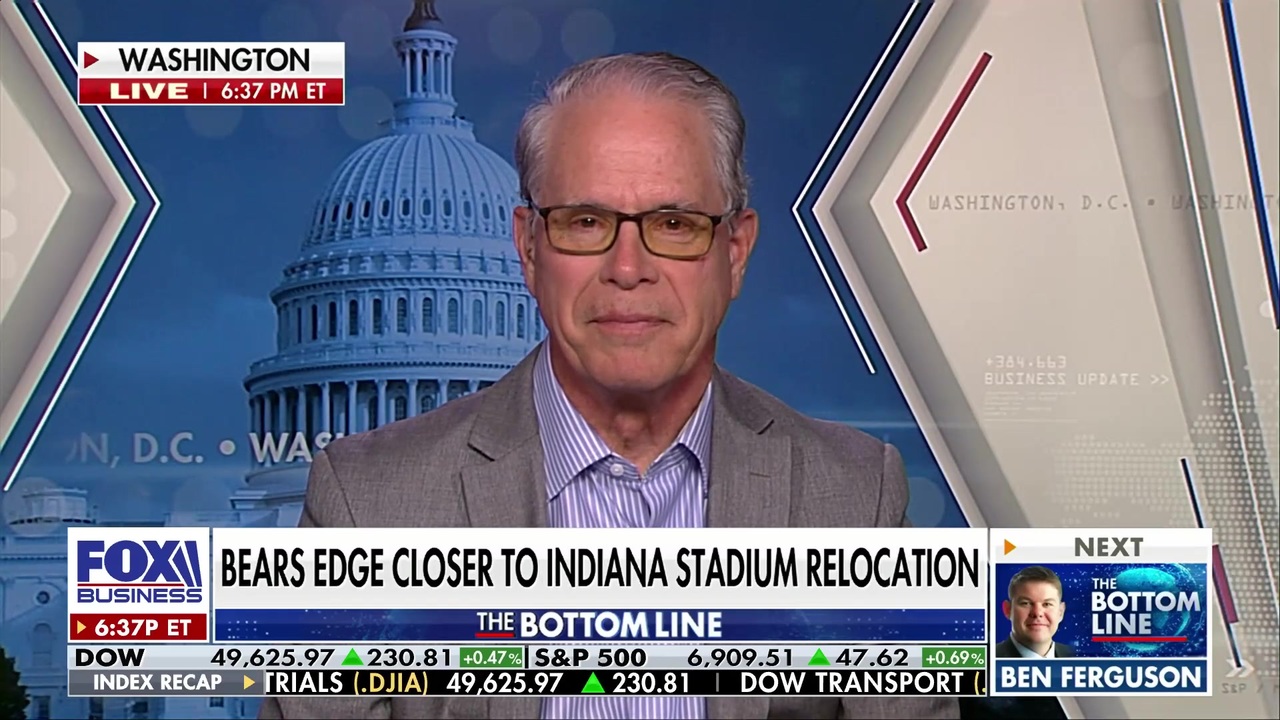 Indiana Gov. Mike Braun discusses the potential relocation of the Chicago Bears to Indiana, highlighting Indiana's business-friendly environment and contrasting it with Illinois' high taxes and regulations on ‘The Bottom Line.’
foxbusiness.com
Indiana Gov. Mike Braun discusses the potential relocation of the Chicago Bears to Indiana, highlighting Indiana's business-friendly environment and contrasting it with Illinois' high taxes and regulations on ‘The Bottom Line.’
foxbusiness.com
 People are seen taking a photo of the Chicago skyline.
foxbusiness.com
People are seen taking a photo of the Chicago skyline.
foxbusiness.com
 A man walks by an empty Chicago building up for a rent.
foxbusiness.com
A man walks by an empty Chicago building up for a rent.
foxbusiness.com
 Soldier Field
foxbusiness.com
Soldier Field
foxbusiness.com
Chicago’s office towers are now selling for pennies on the dollar.
A building at 401 S. State Street changed hands for $4.2 million, down from $68.1 million in 2016, according to figures cited by Fox Business. Another Loop property at 311 S. Wacker Drive sold for $45 million versus $302 million in 2014—an 85% markdown.
The discounts are not limited to obsolete stock. Fox Business reports that a leasehold interest tied to Boeing’s long-term presence at 100 N. Riverside Plaza sold for $22 million, down from $165 million in 2005. A leasehold at 300 W. Adams Street traded for $4 million, compared with $51 million in 2012. The pattern echoes distressed sales in Dallas, St. Louis, San Jose and suburbs like Newton, Massachusetts, where buildings have traded at 50–90% below prior peaks.
What changed is not a single tenant decision but the financing math. Downtown office values were propped up by cheap debt, predictable occupancy, and the assumption that central business districts would keep absorbing white-collar growth. Higher interest rates raise the cost of refinancing, while hybrid work reduces the revenue certainty that lenders and buyers once treated as near-guaranteed. When a building’s debt comes due, owners face a choice between injecting new equity, negotiating with lenders, or handing over the keys.
For cities like Chicago, the problem quickly becomes municipal. Office towers are a large part of the property-tax base that pays for schools, transit and public safety. When assessed values fall, the gap can be closed by cutting services, raising rates on other taxpayers, or shifting the burden onto residents and businesses that cannot relocate. Each option carries political risk, and the slow pace of reassessment can delay the reckoning—until a sale price makes the write-down unavoidable.
Banks and city hall also share an incentive to postpone recognition. Marking loans and buildings to market can trigger covenant breaches, force capital raises, and accelerate a downward spiral in local credit conditions. Keeping valuations “sticky” avoids immediate pain but freezes transactions and discourages new investment, leaving downtowns with the same vacancy and fewer buyers willing to take the first loss.
Chicago’s leaders are simultaneously trying to keep marquee anchors in place. Fox Business notes that the Chicago Bears are exploring a move across the state line to Indiana, where officials are courting the team with a new stadium plan near Wolf Lake in Hammond.
A century-old building in Printing House Row now costs less than a mid-rise apartment block.
Chicago is still collecting taxes on addresses that the market has already repriced.