
Iran student protests flare in Tehran
US military buildup tightens Gulf noose, Domestic dissent becomes convenient casus belli
Images
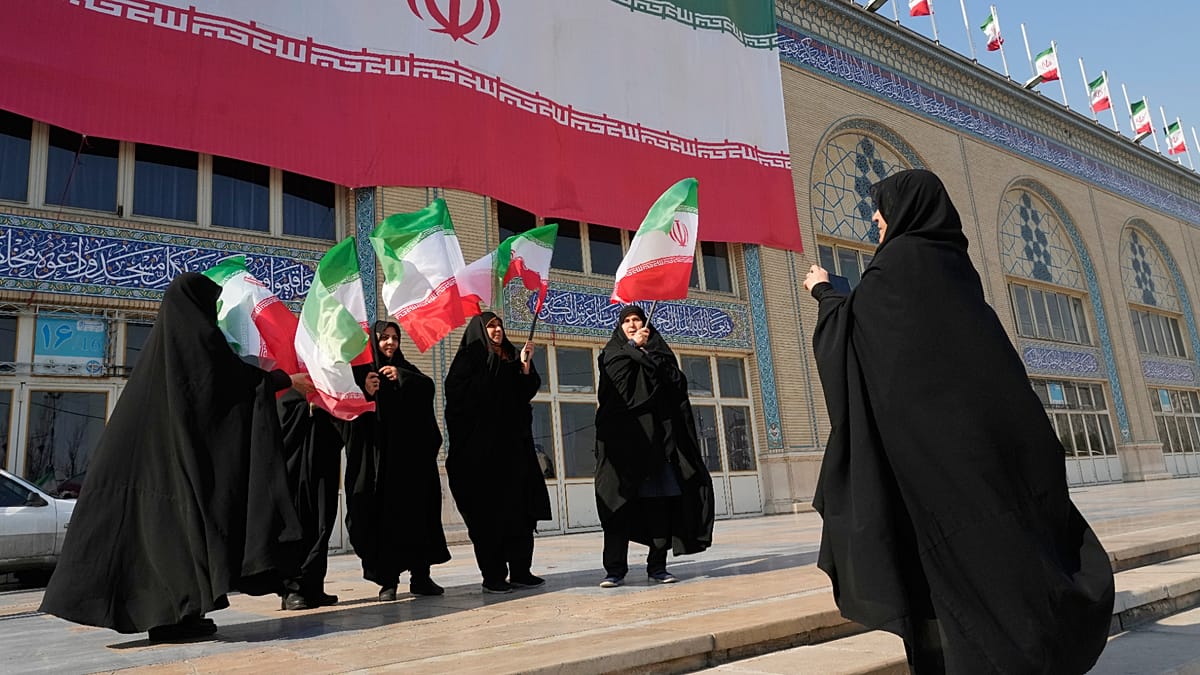 Anti-government student protests reported in Tehran
euronews.com
Anti-government student protests reported in Tehran
euronews.com
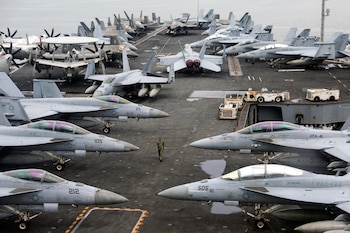 EEUU aumenta su capacidad militar
infobae.com
EEUU aumenta su capacidad militar
infobae.com
 infobae.com
 La movilización de fuerzas estadounidenses
infobae.com
La movilización de fuerzas estadounidenses
infobae.com
 EEUU desplegó el portaaviones USS
infobae.com
EEUU desplegó el portaaviones USS
infobae.com
Iran is seeing renewed student protests in Tehran just as the US visibly thickens its military posture around the Gulf, a coincidence that creates incentives for both sides to fuse domestic unrest with external confrontation.
Videos geolocated at leading Tehran universities show clashes between anti-government students and pro-regime groups, with chants including “death to the dictator” and “bi sharaf” (“disgraceful”), according to Euronews citing AP and AFP verification. Iranian authorities frame the unrest as foreign-instigated “terrorist acts”, while casualty claims diverge wildly: Iran’s leadership has acknowledged more than 3,000 deaths in the January crackdown, while the US-based Human Rights Activists News Agency puts the toll above 7,000. Euronews notes that President Masoud Pezeshkian publicly rejected “international pressure” during ongoing nuclear talks, a line delivered live on state TV—a reminder that internal legitimacy and external bargaining are now one theatre.
The other theatre is logistics. Euronews, citing Reuters, reported US military aircraft seen at Lajes Air Base in the Azores and said US officials discussed strikes that could target individual leaders. Infobae, summarising Reuters and other reporting, describes a large concentration of US forces: heavy airlift into the region, aerial refuelling assets, electronic surveillance aircraft, and carrier strike groups, alongside missile defence deployments. Even if some details are hard to independently verify, the signalling value is the point: Washington wants Tehran to price in the possibility of decapitation-style strikes, while Tehran wants its own population to price in the risks of being labelled an auxiliary of an external enemy.
That incentive structure is combustible. For the Iranian state, externalising blame is not propaganda fluff; it is a governance technology. When protests are framed as foreign subversion, the regime can justify harsher repression, widen the definition of “security threats”, and demand loyalty from wavering elites. The cost is borne by citizens; the benefit accrues to institutions that survive by treating dissent as treason.
For Washington, a “buildup” is also an institutional product. Military movements create bureaucratic momentum: once assets are forward-positioned, the marginal cost of using them falls, while the political cost of not using them can rise if hawks argue credibility is on the line. The risk is classic escalation-by-commitment: each side interprets the other’s preparations as intent.
The most dangerous linkage is informational. If Tehran convinces itself that protests are coordinated with US pressure, it gains a pretext to retaliate abroad—against shipping, bases, or proxies—turning an internal legitimacy crisis into a regional security crisis. Conversely, if Washington sells “stabilisation” as protecting civilians while quietly moving strike packages into place, it creates a narrative bridge from sympathy to force.
Europe, meanwhile, is reduced to issuing travel advisories—Sweden, Serbia and Australia have urged citizens to leave Iran, Euronews reports—while the strategic decisions are made elsewhere. The irony is that the same actors who insist “de-escalation” is the goal are busy building the machinery that makes escalation easier.