
UK industrial electricity costs stay far above peers
Network charges and net zero levies hit manufacturers and indoor growers, Deindustrialisation risk grows while exemptions pick winners
Images
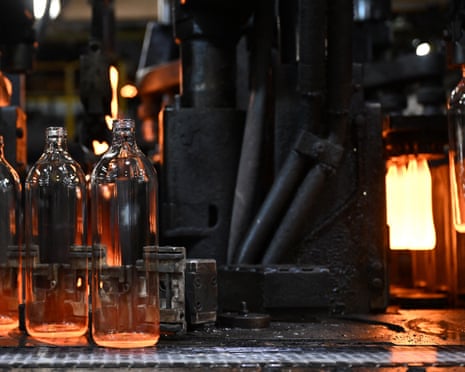 A survey underpinning the report found almost 90% of firms have seen energy bills rise over the last five years. Photograph: Paul Ellis/AFP/Getty Images
theguardian.com
A survey underpinning the report found almost 90% of firms have seen energy bills rise over the last five years. Photograph: Paul Ellis/AFP/Getty Images
theguardian.com
 Rob James, Thanet Earth’s technical director, in one of its glasshouses. ‘It’s a ticking timebomb,’ he says of the rise in standing charges this April. Photograph: Graeme Robertson/The Guardian
theguardian.com
Rob James, Thanet Earth’s technical director, in one of its glasshouses. ‘It’s a ticking timebomb,’ he says of the rise in standing charges this April. Photograph: Graeme Robertson/The Guardian
theguardian.com
 Thanet Earth estimates the rise in standing charges will add an extra £900,000 a year to its existing energy bill. Photograph: Graeme Robertson/The Guardian
theguardian.com
Thanet Earth estimates the rise in standing charges will add an extra £900,000 a year to its existing energy bill. Photograph: Graeme Robertson/The Guardian
theguardian.com
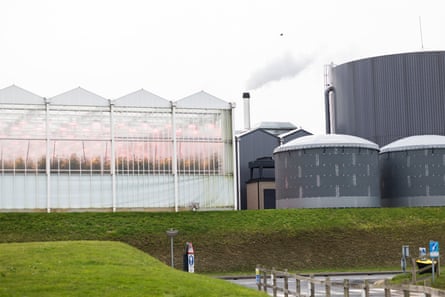 Thanet Earth has the UK’s largest glasshouse complex, with 51.5 hectares (127 acres) of growing area. Photograph: Graeme Robertson/The Guardian
theguardian.com
Thanet Earth has the UK’s largest glasshouse complex, with 51.5 hectares (127 acres) of growing area. Photograph: Graeme Robertson/The Guardian
theguardian.com
 Growers are warning they will be forced to pass on the sharp jump in energy costs, which will ultimately be felt by consumers at the checkout. Photograph: Graeme Robertson/The Guardian
theguardian.com
Growers are warning they will be forced to pass on the sharp jump in energy costs, which will ultimately be felt by consumers at the checkout. Photograph: Graeme Robertson/The Guardian
theguardian.com
Britain’s electricity prices are starting to look less like a market signal and more like an industrial policy instrument that no one wants to name.
A joint report by the Confederation of British Industry and Energy UK warns that around 40% of firms have cut investment because power costs remain far above pre-Ukraine levels. According to the report, business electricity prices are still about 70% higher than before Russia’s invasion of Ukraine; gas prices are about 60% higher. The UK now sits as an outlier: industrial electricity prices are almost two-thirds above the median across International Energy Agency countries and the highest among G7 members, the organisations say.
The immediate story is competitiveness. If electricity is a key input, then persistently higher unit energy costs function like a selective tax on domestic production. That “tax” is not collected by the Treasury alone; it is embedded in network charges, policy levies, balancing costs and the price of regulatory uncertainty. Firms respond rationally: they defer capex, reduce output, or shift marginal investment to jurisdictions where energy is cheaper and grid connections are faster.
The Guardian adds a concrete example from “protected horticulture”, where indoor growers face a sharp rise in electricity standing charges from 1 April. Thanet Earth, a major UK glasshouse operator supplying large supermarket chains, estimates the change will add about £900,000 per year to its energy bill—roughly a 5% increase in total tomato production costs—with projections rising to £1.6m by 2028 as standing charges continue to increase. Standing charges, in theory a fixed fee for access to the network, are being used to fund grid upgrades and the low-carbon transition. In practice, they penalise high-load, high-utilisation users—the very businesses that make the economics of the grid work.
The distributional politics are explicit. Energy-intensive industries such as steel, cement and chemicals are partially shielded via exemptions and targeted support, while food producers are not, industry bodies argue. That is industrial policy by classification: the state decides which sectors merit relief from policy-driven costs. Everyone else pays—either directly, or via higher prices.
The macro numbers underline the drift. The Guardian notes that 2025 saw the UK’s goods trade deficit widen to £248.3bn, only partly offset by a £192bn services surplus. Deindustrialisation is not a moral category; it is what happens when policy makes domestically producing tradables structurally uncompetitive while keeping domestic demand financed.
Net zero goals intensify the game-theory problem. Firms are told to electrify processes and invest in clean energy, but face power prices and network charges that make electrification unattractive in the short run. The result is a predictable equilibrium: import more embedded carbon instead of producing locally, while domestic producers become price-takers in a market where access to affordable energy is increasingly political.
Ministers talk about growth, resilience and “transition”. Businesses see a simpler message in their bills: capital is welcome—so long as it doesn’t consume too much electricity.