
US revokes visas for Chile officials over Chinese subsea cable
Procurement choices reframed as security compliance, Personal mobility becomes Washington’s enforcement layer
Images
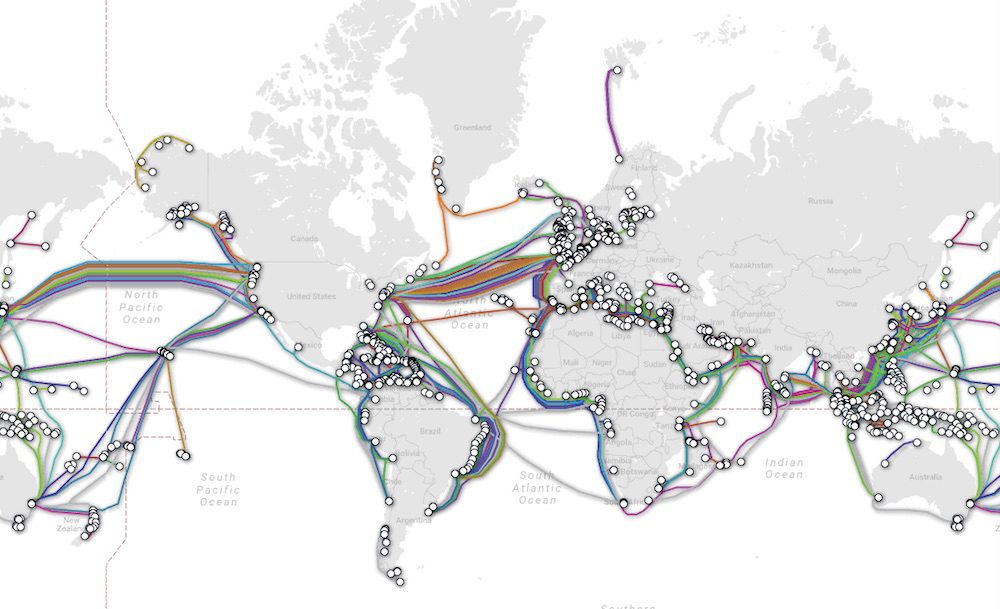 US Bars Chilean Ministers Over Undersea Cable to China
gcaptain.com
US Bars Chilean Ministers Over Undersea Cable to China
gcaptain.com
Washington has found a low-friction way to punish allies that make the “wrong” infrastructure choice: don’t block the contract—block the people.
The US has revoked visas for Chilean officials after Santiago selected a Chinese-backed proposal for a subsea fibre-optic cable project, according to Bloomberg, cited by gCaptain. The move is striking not because it is novel—visa leverage is a staple of US foreign policy—but because it is explicitly aimed at procurement decisions rather than corruption, sanctions evasion, or human-rights abuses.
From an incentives perspective, this is an elegant tool. It bypasses the messy work of proving legal violations, avoids direct retaliation against the Chilean state (which could trigger countermeasures), and targets a scarce, personally valuable asset: access to the US. For senior officials, US visas are not merely about tourism; they are about conferences, financial networks, family logistics, prestige, and the implicit status of being inside the American system. Revocation is a reputational sanction delivered at near-zero cost to Washington.
The deeper logic is that the US cannot always outbid or out-contract China in third countries. Subsea cables are capital-heavy, politically sensitive, and often bundled with financing, equipment, and engineering capacity. When the economic offer is hard to beat, the US can instead raise the personal price for decision-makers: choose the Chinese vendor and you may lose mobility, future career optionality, or access to US-linked institutions.
For Europe, the Chile episode reads like a preview of “strategic autonomy” under real constraints. EU capitals talk about sovereign cloud, trusted connectivity, and resilient subsea cable routes—while simultaneously relying on US security guarantees, US intelligence sharing, US chip supply chains, and US platforms. That asymmetry makes European procurement decisions legible to Washington as compliance problems.
Game theory suggests a predictable equilibrium: if visa sanctions work once, they become a repeated-game threat. Officials internalise the expected penalty and self-censor procurement choices long before any formal US objection lands. The chilling effect is the point.
The irony is that the West’s own rhetoric about “rules-based order” often assumes disputes will be handled through transparent regulation and competitive tendering. Visa revocations are neither: they are discretionary, opaque, and individually targeted—precisely the kind of informal coercion Western governments denounce when used by rivals.
Chile is not a NATO member and not in the EU. But the mechanism scales. If European states want genuine independence in cables, cloud, and telecoms, they will need something more robust than strategy papers: diversified suppliers, enforceable procurement law insulated from diplomatic pressure, and—most awkwardly—political leaders willing to bear personal costs when Washington decides a contract is a geopolitical referendum.
Otherwise, “autonomy” remains what it often is in Brussels: a slogan until the visa gets revoked.