
DHS pauses TSA PreCheck and Global Entry
Funding lapse shuts down paid fast lanes, State turns queues into subscription then can’t keep lights on
Images
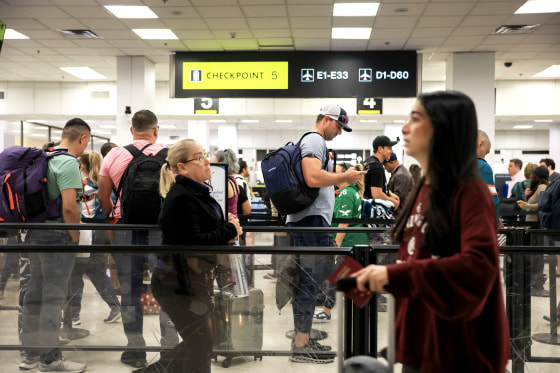 Image: FAA Targets 40 "High-Volume" US Airports For Flight Cuts Amid Government Shutdown
nbcnews.com
Image: FAA Targets 40 "High-Volume" US Airports For Flight Cuts Amid Government Shutdown
nbcnews.com
The US Department of Homeland Security will suspend two of its flagship “trusted traveler” programmes — TSA PreCheck and Customs and Border Protection’s Global Entry — starting 6 a.m. Sunday, citing a “funding lapse” that began February 14, according to NBC News. The Hill reports the same pause, framing it as a shutdown-related measure.
On paper, this is a narrow budget disruption. In practice, it is a stress-test of a governance model that has quietly turned basic mobility into a two-tier subscription service run by the state.
PreCheck and Global Entry are sold as efficiency upgrades: background checks, biometric enrolment, and expedited lanes. But the political economy is harder to ignore. The government first creates a universal bottleneck — long, unpredictable queues at airports and ports of entry — then offers a paid escape hatch to those willing to submit to additional screening and data collection. When funding “lapses,” the state does not merely close an office; it switches off privately purchased time-savings that households and firms have already built into their schedules.
Airports and airlines have increasingly planned around this clearance layer. Frequent flyers, consultants, cross-border commuters, and logistics managers treat PreCheck/Global Entry status as an input into trip planning, not a luxury. Suspending enrolment and processing doesn’t just inconvenience applicants; it creates a pipeline shock that propagates into longer lines and more staffing pressure at checkpoints — a classic queueing-system problem where small capacity reductions produce outsized delays.
NBC News notes that many DHS employees (including TSA and Coast Guard personnel) are still working but not being paid because they are deemed “critical.” That arrangement underlines the deeper incentive mismatch: agencies can demand continuity from labour and compliance from travellers while Congress and the White House treat funding as a bargaining chip.
The trigger for the DHS shutdown, NBC reports, is a political standoff tied to negotiations over DHS and ICE after two people were killed by federal law enforcement in Minneapolis during an immigration crackdown. Whatever one thinks of the policy dispute, the mechanism is telling: a budget fight over enforcement powers ends up throttling unrelated civilian services.
The episode also exposes how fragile “security theatre” becomes once it is embedded as infrastructure. A private fast-track operator that fails to deliver would face refunds, reputational damage, and contract loss. A federal monopoly that fails can call it a technicality — and travellers still have to fly.
If the US wants resilient mobility, it has two options: either treat these programmes as essential infrastructure and fund them accordingly, or stop designing systems where the state profits from the queues it creates. Right now, Washington is managing to do the worst of both: mandatory bottlenecks, paid shortcuts, and shutdown risk.