
Cuban security advisers reportedly exit Venezuela
Delcy Rodríguez shifts protection to Venezuelan guards, Alliance once paid in oil now strained by US interdiction
Images
 People hold up portraits of soldiers killed in the U.S. strike on Venezuela and the capture of President Nicolas Maduro and his wife, Cilia Flores, during a march outside the U.S. Embassy to protest against what they denounce as U.S. aggression in the region, in Havana on Jan. 16.
japantimes.co.jp
People hold up portraits of soldiers killed in the U.S. strike on Venezuela and the capture of President Nicolas Maduro and his wife, Cilia Flores, during a march outside the U.S. Embassy to protest against what they denounce as U.S. aggression in the region, in Havana on Jan. 16.
japantimes.co.jp
 A solar farm in Nakai, Kanagawa Prefecture, in March 2016. Japan gets about a tenth of its electricity from solar panels despite having nearly no domestic production of photovoltaics (PVs).
japantimes.co.jp
A solar farm in Nakai, Kanagawa Prefecture, in March 2016. Japan gets about a tenth of its electricity from solar panels despite having nearly no domestic production of photovoltaics (PVs).
japantimes.co.jp
 Sonic the Hedgehog, Castlevania's Alucard and the weak yet lovable Slime from Dragon Quest are just some of Japan's iconic gaming franchises celebrating midlife anniversaries in 2026.
japantimes.co.jp
Sonic the Hedgehog, Castlevania's Alucard and the weak yet lovable Slime from Dragon Quest are just some of Japan's iconic gaming franchises celebrating midlife anniversaries in 2026.
japantimes.co.jp
 Yamagata co-hosts event on revitalizing rural economies
japantimes.co.jp
Yamagata co-hosts event on revitalizing rural economies
japantimes.co.jp
 newsweek.com
 All 9 Skiers Killed in California Avalanche Have Been Recovered
newsweek.com
All 9 Skiers Killed in California Avalanche Have Been Recovered
newsweek.com
 Trump Withdraws Endorsement of Colorado Republican
newsweek.com
Trump Withdraws Endorsement of Colorado Republican
newsweek.com
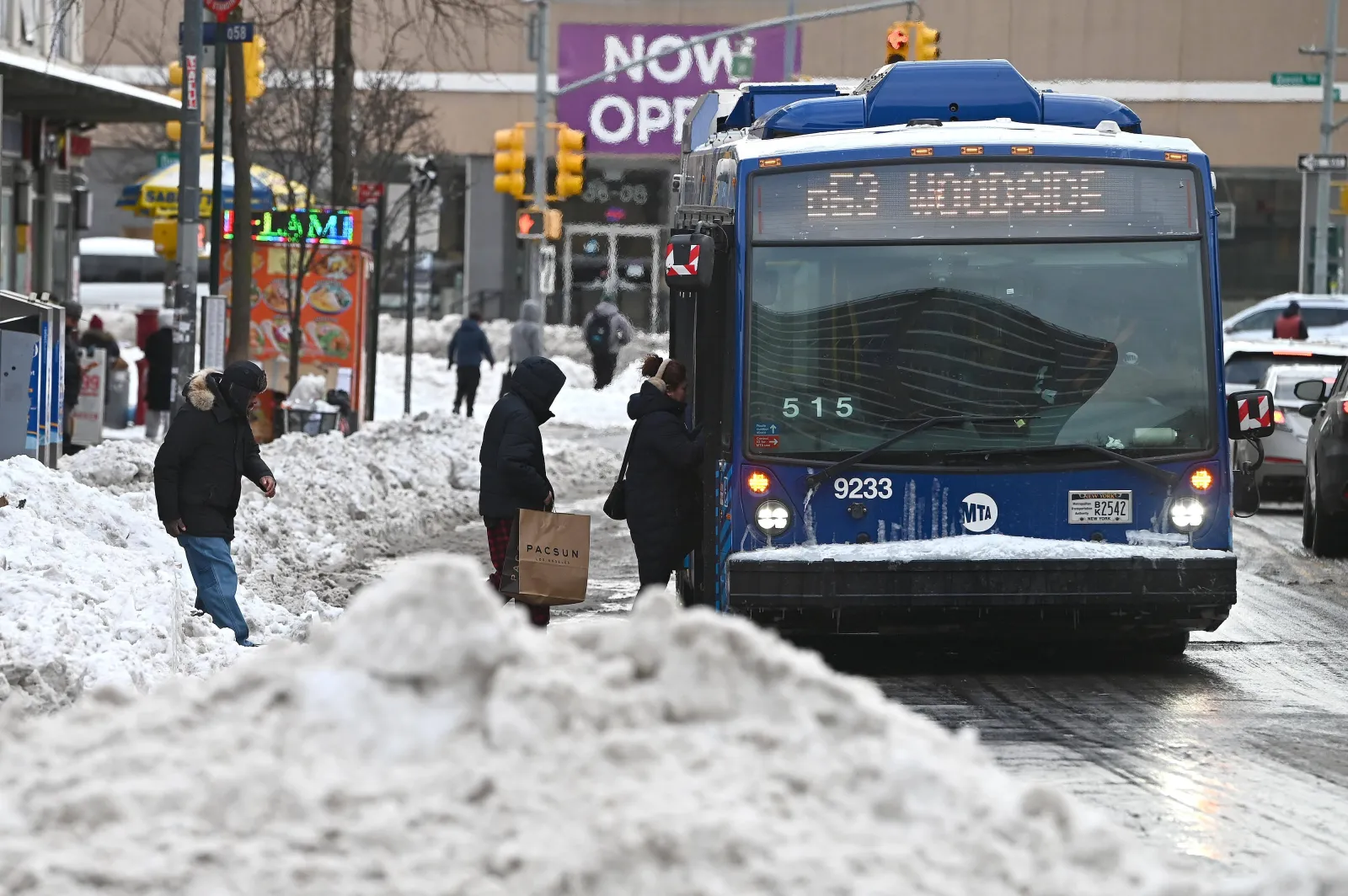 States of Emergency Declared as Up to 18 Inches of Snow to Hit Millions
newsweek.com
States of Emergency Declared as Up to 18 Inches of Snow to Hit Millions
newsweek.com
 JPMorgan Chase Breaks Silence on Trump Debanking Controversy
newsweek.com
JPMorgan Chase Breaks Silence on Trump Debanking Controversy
newsweek.com
Cuban security advisers and medical personnel are beginning to leave Venezuela, a development that looks less like a humanitarian footnote than a stress test of how the post-Maduro order is being stabilized.
According to Reuters, cited by The Japan Times, 11 sources say Cuban advisers embedded in Venezuela’s security apparatus have departed in recent weeks as interim president Delcy Rodríguez faces strong US pressure to unwind Caracas’ decades-long partnership with Havana. Several sources told Reuters that Rodríguez has shifted her personal protection to Venezuelan bodyguards—breaking with the pattern under Hugo Chávez and Nicolás Maduro, both of whom relied on elite Cuban protection details. Some Cuban personnel were also pulled from roles connected to Venezuela’s DGCIM counterintelligence service, which has historically focused on coup-proofing and internal surveillance.
The timing matters. Cuba says 32 of its nationals were killed in the US strike on January 3 that captured Maduro—an unusually costly reminder that “advisers” were not merely exporting stethoscopes. If those losses were concentrated among the most trusted protection and intelligence cadres, the rational response is to reduce exposure, reprice the service, or renegotiate the contract.
The economic logic of the Cuba–Venezuela alliance has always been simple: Venezuela supplied subsidized oil and hard-currency access; Cuba supplied personnel who helped keep the Venezuelan state coherent under sanctions, shortages and factionalism. In game-theory terms, Cuba functioned as an external enforcement technology—monitoring loyalty within the armed forces and security services, reducing the probability of a successful defection by insiders. Remove that layer and the equilibrium shifts: local actors have more room to hedge, negotiate, or sell their loyalty to the highest bidder.
Washington appears to be exploiting precisely that vulnerability. Reuters reports the US has blocked Venezuelan crude shipments to Cuba since mid-December, tightening the island’s energy crisis while turning the Cuba link into a bargaining chip. Newsweek—leaning heavily on the Reuters reporting—casts the Cuban drawdown as a “big win” for the Trump administration and a warning signal to other US adversaries. That framing is self-serving, but the mechanism is real: sanctions and maritime interdiction don’t need to “collapse” a regime; they just need to disrupt the cashflow that pays for political insurance.
Still, “Cuban forces leaving” is ambiguous. It could be a genuine withdrawal, a rotation, or a relabeling—moving personnel off visible posts while keeping the same networks in place through contractors, dual-nationals, or Venezuelan proxies trained by Cubans. A partial drawdown can also be signaling: Rodríguez may be advertising compliance to Washington without surrendering the core capability.
For Europe, the lesson is less about Latin American ideology and more about how states buy stability. When a regime’s survival depends on imported security specialists and opaque barter (oil for control), it is not a sign of strength. It is a balance sheet with a single point of failure—and a reminder that, in the end, “sovereignty” is often just a services contract.