
Pakistan launches cross-border strikes into Afghanistan
Islamabad cites suicide attacks and claims seven militant sites hit, border militarisation turns insecurity into self-funding economy
Images
 Pakistan carries out strikes in Afghanistan, ‘killing and wounding dozens’
aljazeera.com
Pakistan carries out strikes in Afghanistan, ‘killing and wounding dozens’
aljazeera.com
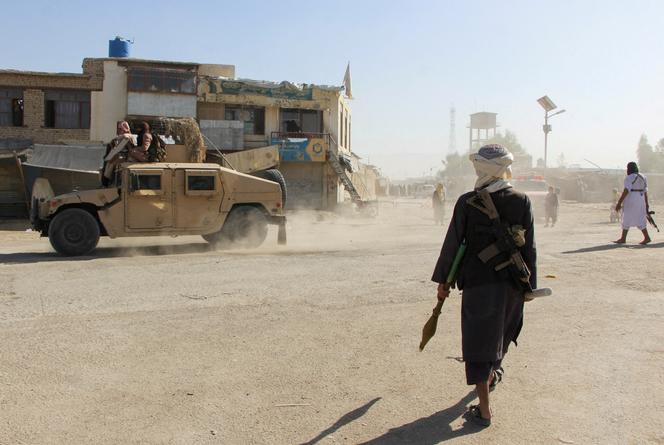 Des talibans à Spin Boldak, dans la province de Kandahar, près de la frontière entre l’Afghanistan et le Pakistan, le 15 octobre 2025. STRINGER / REUTERS
STRINGER / REUTERS
Des talibans à Spin Boldak, dans la province de Kandahar, près de la frontière entre l’Afghanistan et le Pakistan, le 15 octobre 2025. STRINGER / REUTERS
STRINGER / REUTERS
Pakistan says it carried out “intelligence-based” strikes across the border into Afghanistan after a spate of suicide attacks, including a deadly bombing at a Shia mosque in Islamabad that killed 40 people, according to Al Jazeera and Le Monde. Islamabad claims militant groups operating from Afghan territory are responsible; the Taliban government denies harbouring them.
Le Monde reports Pakistan said it hit seven sites described as “terrorist camps and refuges” and that the operation also targeted a group affiliated with Islamic State. The strikes come against a backdrop of deteriorating Pakistan–Afghanistan relations since the Taliban’s 2021 return to power, periodic border clashes, and a land border that has been largely closed since mid-October 2025, disrupting trade and daily life in frontier communities.
The immediate political logic for Pakistan is straightforward: after spectacular attacks, the state is rewarded for visible action. Airstrikes are the fastest way to demonstrate resolve, shift the news cycle, and reassure domestic audiences that the government is not passive. But the long-run incentive structure is less flattering. Cross-border strikes tend to buy short-term deterrence at the price of long-term entanglement: retaliation, a hardening of insurgent recruitment narratives, and a permanent escalation ladder that must be climbed again after the next attack.
This is what “intelligence-based” operations often become in practice: a branding strategy for force. Intelligence is inherently unverifiable for the public, which reduces accountability and increases the temptation to treat military action as a signalling tool rather than a targeted disruption of networks. If the strategic goal were primarily to reduce attacks, the harder work would be institutional: border governance, incentives for local cooperation, and credible costs imposed on facilitators—tasks that do not fit neatly into a press release.
The costs, meanwhile, diffuse. A February report by the UN mission in Afghanistan (UNAMA), cited by Le Monde, attributed 70 civilian deaths and 478 injuries in Afghanistan over three months in 2025 to actions blamed on Pakistani forces. Even if Islamabad disputes those figures, the reputational and humanitarian fallout predictably increases political friction with Kabul and raises the probability of blowback.
Economically, the border closure and militarisation function like a tariff on one of the region’s most important informal trade corridors. When legal crossings shut, smuggling routes become more valuable, and armed actors—who can provide “security” and logistics—capture rents. In that sense, the cycle is self-financing: insecurity creates black-market profits that fund more insecurity.
Pakistan’s strikes may satisfy the domestic demand for decisive action. But as with many counterterror moves, the state collects the political benefits now while outsourcing the downstream costs—refugee pressure, disrupted commerce, and a more militarised frontier—to taxpayers and border communities later.