
Gaza farmers return to border fields despite gunfire
Reconstruction politics turns security zones into property policy, Higher Lancet death estimate raises donor stakes
Images
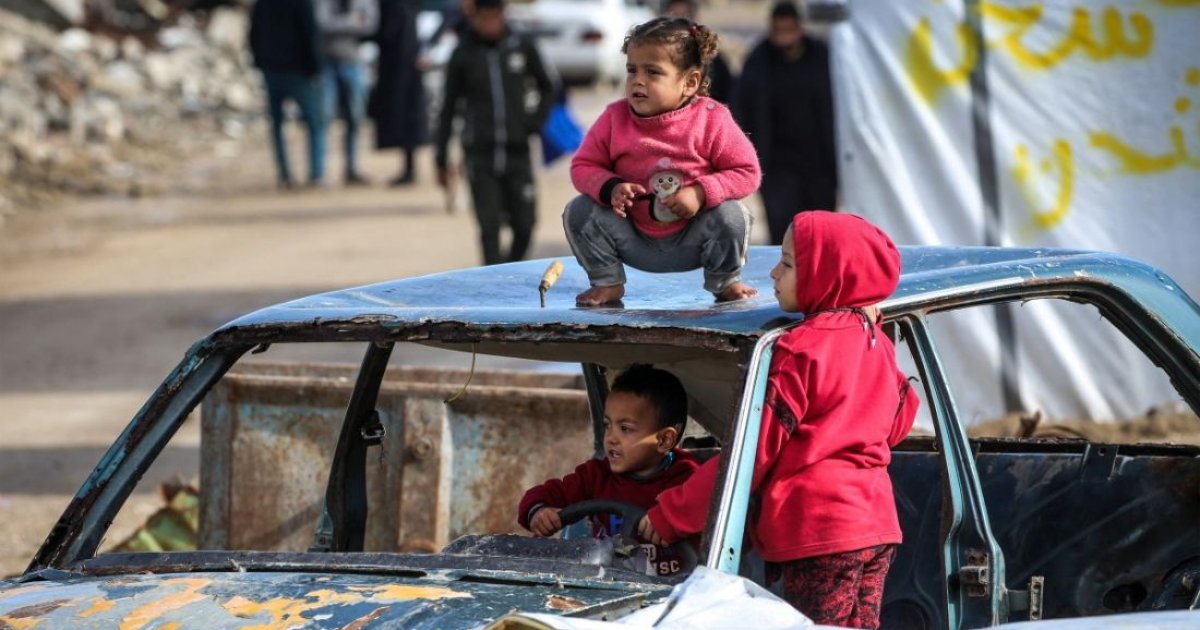 Hamas says path for Gaza must begin with end to aggression
dhakatribune.com
Hamas says path for Gaza must begin with end to aggression
dhakatribune.com
 Farmers in Gaza risk Israeli bullets to bring their fields back to life
aljazeera.com
Farmers in Gaza risk Israeli bullets to bring their fields back to life
aljazeera.com
Farmers in Gaza are edging back into fields that Israel has effectively turned into a live-fire perimeter, while Hamas insists that any “path” forward must begin with an end to Israeli “aggression”. The politics are familiar; the economics are the story.
Al Jazeera reports that farmers are returning to agricultural land near the border and former buffer areas despite the risk of being shot, trying to restart production with damaged irrigation, limited inputs, and uncertain access. This is not merely resilience theatre. In a territory where imports, fuel, and movement can be throttled by an external security authority, local food production is one of the few partially decentralised sources of bargaining power.
At the same time, Hamas is signalling that reconstruction and governance cannot be separated from the war’s terms, according to Dhaka Tribune. That messaging is aimed at donors and mediators as much as at domestic audiences: if Hamas can frame “reconstruction” as contingent on a political settlement, it can demand a seat at the table that controls permits, distribution, and taxation.
A new estimate of war deaths adds another lever. Norway’s NRK summarises a Lancet-published analysis by international researchers, including PRIO’s Håvard Hegre, estimating about 75,200 violent deaths between 7 October 2023 and 5 January 2025—well above the roughly 49,090 reported by Gaza’s Hamas-run health authorities at the time. The researchers attribute the gap to undercounting of identified bodies and to survey-based methods across roughly 2,000 families; they also note additional “non-violent” deaths from hunger and disease beyond the headline number.
In donor politics, numbers are not only a moral claim; they are a budget constraint and a reputational risk. Higher credible death estimates increase pressure for funding—yet they also intensify scrutiny over who will control that funding. Reconstruction money is never neutral: it creates rents.
The core contest is over chokepoints. Whoever controls border crossings, import licences, fuel allocation, and security clearances can extract monopoly margins on cement, steel, generators, food staples, and logistics. In Gaza, “security zones” function as de facto property policy: declaring land too dangerous to access is indistinguishable from regulating its use, and it changes the payoff matrix for farmers deciding whether to plant, harvest, or abandon.
This is why the return of farmers matters. If agriculture restarts, it reduces dependence on aid pipelines that are easily politicised. If it fails—because access is intermittent, inputs are blocked, or fields sit inside an informal buffer enforced by bullets—then Gaza remains an externally managed economy where the only scalable business model is navigating permits and scarcity.
For European governments and Gulf donors, the incentives are awkward. They want stability and fewer migration pressures, but they also want plausible deniability about financing any armed actor. That pushes money into technocratic mechanisms and contractor-heavy delivery models—systems optimised for compliance paperwork and visibility, not for local autonomy. In such a setup, the winner is often the actor best positioned to tax the bottleneck, not the one best positioned to rebuild.
Gaza’s ‘post-war’ economy, in other words, is being reconstituted under fire: not by grand conferences, but by who can safely cross a field, who can import a truckload of fertiliser, and who gets to stamp the permit.