
Trump announces US Navy hospital ship mission to Greenland
Humanitarian branding masks logistics and basing leverage, Mercy and Comfort sit in Alabama shipyard
Images
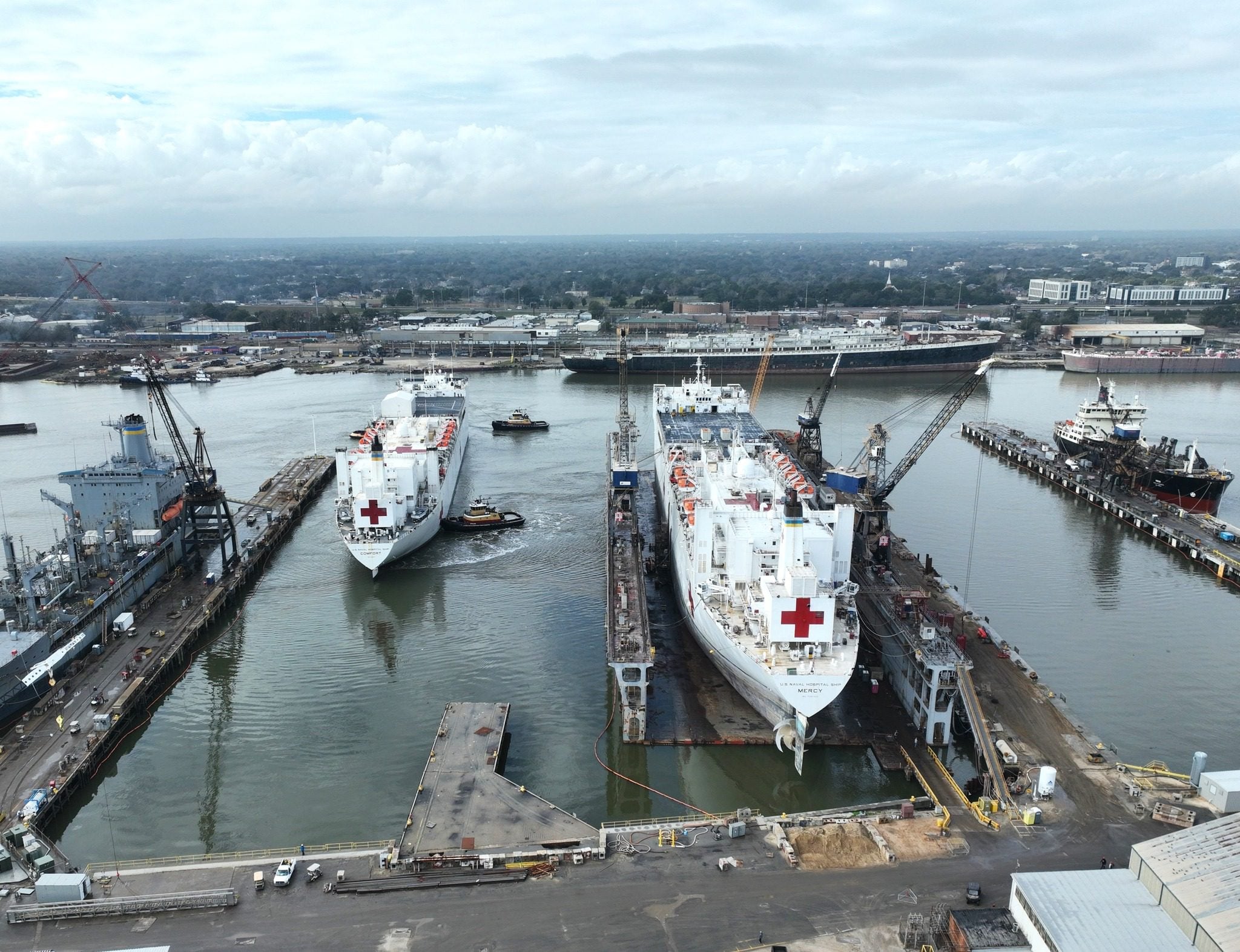 Trump Announces Greenland Hospital Ship Mission as Mercy and Comfort Sit in Alabama Shipyard
gcaptain.com
Trump Announces Greenland Hospital Ship Mission as Mercy and Comfort Sit in Alabama Shipyard
gcaptain.com
Donald Trump has announced a “humanitarian” hospital-ship mission to Greenland, according to maritime trade outlet gCaptain. The framing: a floating clinic presented as emergency relief. The platform choice is not. If the goal were simply to expand care capacity, Washington could fund contracts with Greenlandic providers, subsidise patient transport to Iceland/Denmark, or build modular civilian facilities with local staff. A US Navy ship instead brings its own workforce, its own command structure, and—crucially—its own justification for recurring presence.
gCaptain notes that the US Navy’s two dedicated hospital ships, USNS Mercy and USNS Comfort, are currently laid up in an Alabama shipyard. That detail matters because it undercuts the “urgent crisis response” narrative: if the vessels are not operationally ready, the mission becomes less about rapid medical throughput and more about signalling intent and creating a pipeline of appropriations.
A hospital ship is a logistics project disguised as charity. It requires port access, security, fuel, waste handling, communications, and a steady flow of supplies and personnel. Each requirement forces agreements with local authorities and creates path dependence: once you have built procedures and infrastructure to host a US military platform, the marginal cost of repeating the deployment drops, and the political cost of saying “no” rises. In game-theory terms, the ship is a commitment device—an expensive, visible asset that makes the relationship harder to unwind than a paper memorandum.
It also shifts the bargaining position. Civilian aid contracts can be audited, renegotiated, or terminated. A military mission is wrapped in classification, force-protection arguments, and alliance rhetoric. The “humanitarian” label supplies moral cover while the operational reality supplies sovereignty leverage.
Follow the incentives. A Navy-run deployment channels spending to US shipyards, contractors, and uniformed services; it sustains billets and budgets. A civilian procurement strategy would instead empower local providers and expose performance to market comparison. The state’s preference for a floating base over competitive contracting is rarely about efficiency; it is about control, jurisdiction, and institutional self-preservation.
For Greenland, the risk is not that extra medical capacity arrives, but that it arrives bundled with an implicit strategic claim: that Washington’s default solution to Arctic presence is military infrastructure with a bedside manner. Once a crisis story establishes “need”, the next request is always “continuity”—and continuity is how temporary missions become permanent facts.
The public will be told it is medicine. The procurement trail will read like basing policy.