
Kennedy Center ice rink shut after unknown toxic liquid dumped
Contamination incidents expose security stacks built for cameras not chemistry, New procurement opportunities arrive faster than accountability
Images
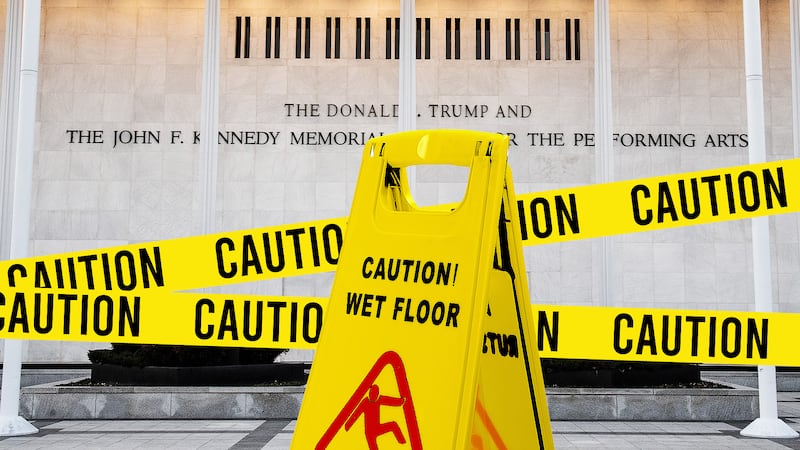 Photo Illustration by Victoria Sunday/The Daily Beast/Getty Images
Photo Illustration by Victoria Sunday/The Daily Beast/Getty Images
Photo Illustration by Victoria Sunday/The Daily Beast/Getty Images
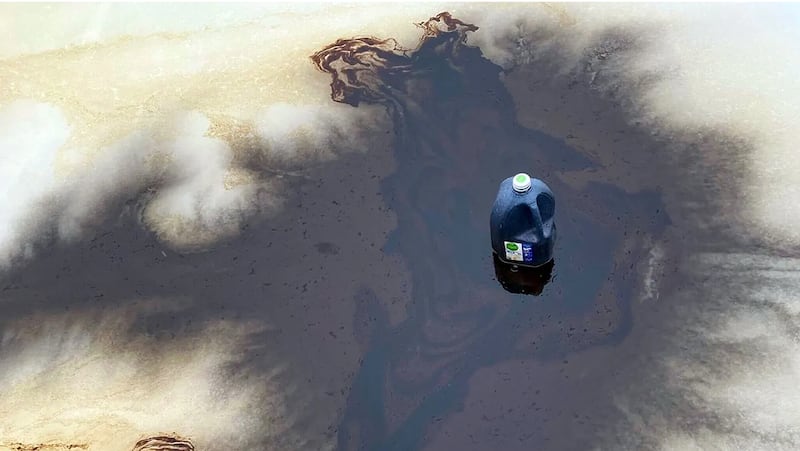 A gallon-sized container is visible amid a dark liquid smeared across the outdoor ice rink at the Trump-Kennedy Center. Officials said the substance was deliberately poured onto the ice in what they called a “targeted attack.” Kennedy Center
Kennedy Center
A gallon-sized container is visible amid a dark liquid smeared across the outdoor ice rink at the Trump-Kennedy Center. Officials said the substance was deliberately poured onto the ice in what they called a “targeted attack.” Kennedy Center
Kennedy Center
 Trump started his Kennedy Center makeover last February. Chip Somodevilla/Getty Images
Chip Somodevilla/Getty Images
Trump started his Kennedy Center makeover last February. Chip Somodevilla/Getty Images
Chip Somodevilla/Getty Images
 A photo illustration of Donald Trump in front the Kennedy Center.
thedailybeast.com
A photo illustration of Donald Trump in front the Kennedy Center.
thedailybeast.com
 Kennedy Center Attraction Vandalized With ‘Toxic Chemicals’
dnyuz.com
Kennedy Center Attraction Vandalized With ‘Toxic Chemicals’
dnyuz.com
A late-night act of sabotage at Washington’s Kennedy Center has exposed how “security tech” is built for the wrong threat model.
According to The Daily Beast, an unknown person poured a brown-black liquid across the outdoor ice rink at the recently renamed “Donald J. Trump and John F. Kennedy Memorial Center for the Performing Arts,” forcing the cancellation of a scheduled performance by Montreal skating troupe Le Patin Libre. The center’s spokesperson described the substance as “toxic,” though officials have not publicly identified what it was. Fox News, cited by The Daily Beast, reported that surveillance footage has been provided to authorities.
One question is mundane: how do you restore an ice surface? Another is institutional: what is the detection-and-response chain for chemical contamination in semi-public venues that are neither high-security government facilities nor fully private spaces with tight contractual control over access?
Most public-facing security stacks are optimized for visible, discrete threats—metal detectors, bag checks, cameras, and post-incident identification. Chemical or biological contamination is the opposite: low visibility, uncertain intent, ambiguous harm, and a high premium on rapid sampling, isolation, and decontamination. Cameras help you prosecute later; they do little to tell you what you’re standing in.
That gap is not just technical; it’s an incentives problem. A venue can spend on cameras and access control because the benefits are legible (deterrence theater, insurance checkboxes, political reassurance) and the procurement is standardized. By contrast, contamination readiness requires expensive capabilities that are rarely used: trained staff, clear decision rights, pre-negotiated lab capacity, chain-of-custody procedures, and credible “stop operations” authority. Each of those has ongoing costs and creates liability—meaning institutions underinvest until an incident forces them to.
The Kennedy Center’s timing matters because it is already in a capital-renovation cycle. The Daily Beast notes the complex has faced years of infrastructure problems and that Congress recently appropriated $257 million for renovations in Trump’s “One, Big, Beautiful Bill,” with a temporary closure planned from July 4. Incidents like this can become leverage: they justify expanded surveillance, tighter access controls, and new procurement categories—“hazmat-aware security,” continuous environmental sensing, and vendor-managed incident response.
Private actors often enforce stricter standards because they directly bear the costs of disruption. But when a prominent, federally funded cultural institution is involved, the outcome can be more technology, more contractors, and more centralized control—without necessarily fixing the underlying problem of who is accountable for rapid, correct decisions when the threat is invisible.
The substance on the ice may turn out to be harmless. The point is already clear: public venues are instrumented to watch people, not to measure the environment—and the market for closing that gap is now open.