
Nine skiers killed in Sierra Nevada avalanche near Lake Tahoe
Recovery complete as officials probe possible criminal negligence, Snowpack uncertainty and group dynamics outpace warning models
Images
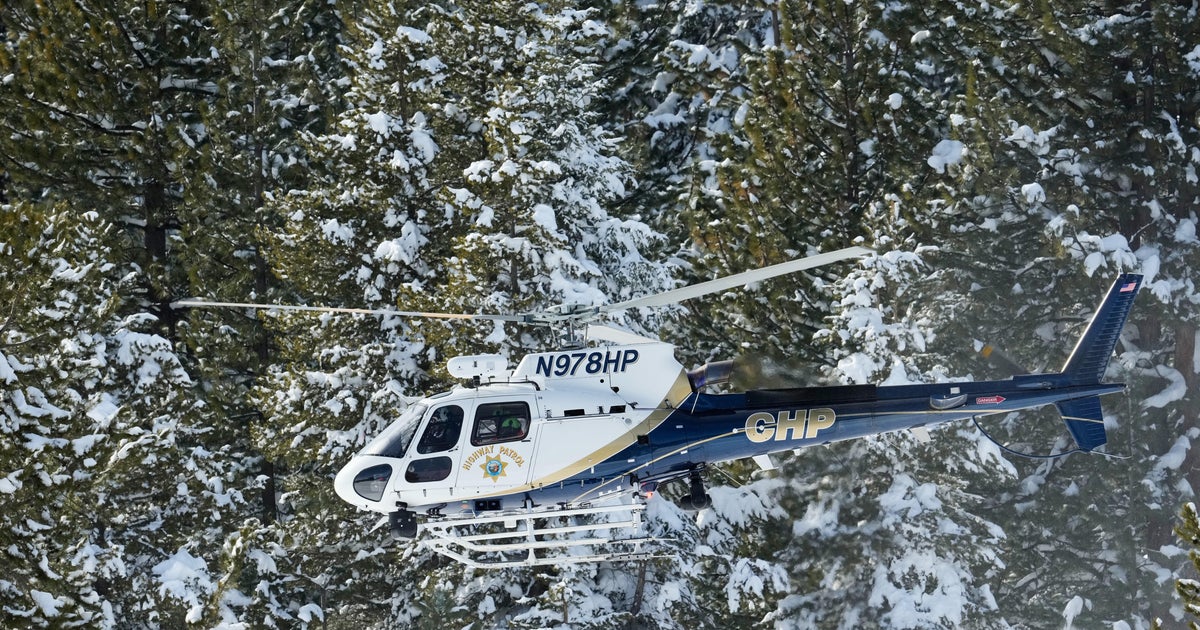 All 9 avalanche victims recovered from California's Sierra Nevada, sheriff says
cbsnews.com
All 9 avalanche victims recovered from California's Sierra Nevada, sheriff says
cbsnews.com
Rescuers have recovered the bodies of nine skiers after an avalanche in California’s Sierra Nevada near Lake Tahoe, a fatality count confirmed by local officials, according to The New York Times and CBS News. With all victims now located, the story shifts from the grim logistics of recovery to the question of how a day in the backcountry becomes a mass-casualty incident.
Avalanches are not “snow falling.” Most lethal events are slab avalanches: a cohesive plate of snow fractures and slides on top of a weak layer—often persistent grains such as faceted crystals or surface hoar—creating a low-friction failure plane. The physics is brutally simple: once a crack propagates across the slope faster than a skier can react, the slab accelerates into terrain traps (gullies, depressions, tree wells), where burial depth and compaction rise quickly. Forecast centers can model broad instability, but the relevant variables—weak-layer continuity, spatial variability, wind loading, and micro-topography—are exactly the ones that change over tens of meters. “Uncertainty” isn’t a bug; it’s the system.
That mismatch between model scale and human decision scale is why avalanche forecasting is probabilistic and why it remains so hard to operationalize into a binary go/no-go rule. Public bulletins describe danger levels over regions; the fatal decision is made on a specific slope at a specific moment, often after a sequence of small commitments that feel individually rational. Group dynamics then do the rest. When several people are invested—time sunk, skins already on, powder fever activated—risk becomes a social contract rather than an engineering calculation.
CBS reports that authorities are investigating possible criminal negligence. That’s the modern state’s reflex: if nature kills, someone must have violated a policy. Yet avalanche accidents usually arise from a chain of marginal choices under uncertainty, not a single dramatic act. Criminal law is built for intent and clear causation; snowpack failures are built for ambiguity.
Medical and rescue data, where available, tend to show that deaths in avalanches are dominated by asphyxia from burial, with trauma a secondary cause—especially in high-speed slides through trees or over cliffs. That detail matters because it clarifies what actually saves lives: rapid companion rescue (minutes, not hours), airway management, and preventing deep burial in the first place through conservative terrain selection. Helicopters and recovery dogs are impressive, but they are often post-mortem technologies.
The uncomfortable conclusion is that avalanche risk management is less about better slogans (“extreme weather”) and more about accepting irreducible uncertainty, resisting group escalation, and treating every slope as a local experiment—one where the penalty for a false negative is paid immediately and in full.