
DOJ says Colombian scammers staged fake US immigration court
Black-market legal process thrives on state monopoly over status
Images
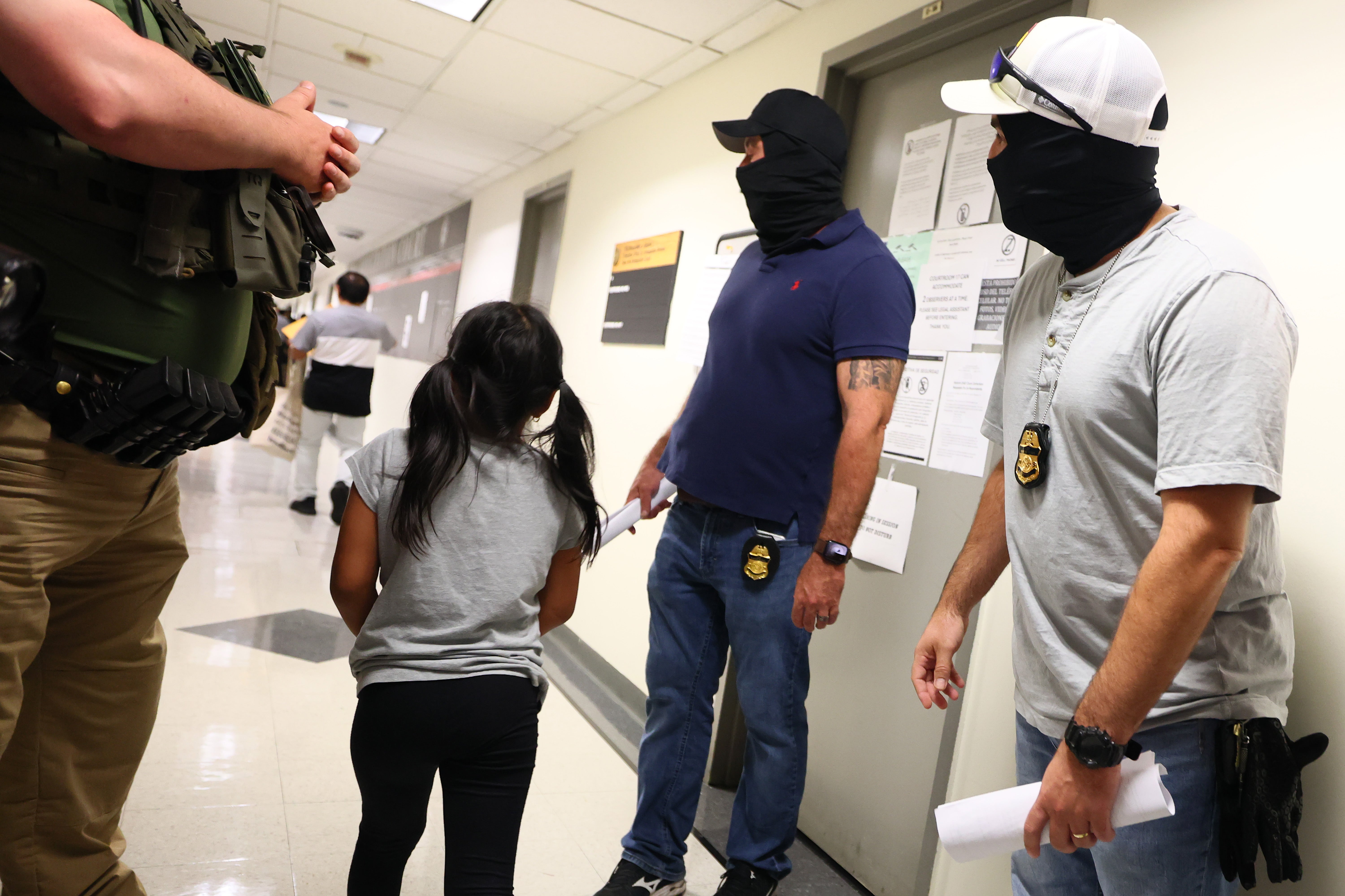 Colombian scammers offered fake lawyers and created fake court hearings for vulnerable immigrants, according to the Justice Department. Immigration courts have exploded with ICE activity as judges swiftly dismiss cases across the country to support Trump’s mass deportation efforts (Getty Images)
Getty Images
Colombian scammers offered fake lawyers and created fake court hearings for vulnerable immigrants, according to the Justice Department. Immigration courts have exploded with ICE activity as judges swiftly dismiss cases across the country to support Trump’s mass deportation efforts (Getty Images)
Getty Images
 Lawyers have warned that similar schemes are cropping up to take advantage of a growing number of immigrants who face arrest and removal under the Trump administration (Getty Images)
Getty Images
Lawyers have warned that similar schemes are cropping up to take advantage of a growing number of immigrants who face arrest and removal under the Trump administration (Getty Images)
Getty Images
Federal prosecutors say a group of Colombian nationals built a counterfeit slice of the US immigration state—complete with a fake law firm and a staged courtroom—to sell “legal process” to Spanish-speaking immigrants who believed they were appearing before real judges and attorneys.
According to The Independent, four defendants were arraigned in New Jersey after an indictment was unsealed alleging they lured immigrants with pending immigration cases into sham proceedings between March 2023 and November 2025. Prosecutors say victims were charged thousands of dollars for fabricated services, with more than $100,000 taken overall, and that funds were laundered to co-conspirators in Colombia. Three of the accused—Daniela Alejandra Sanchez Ramirez, Jhoan Sebastian Sanchez Ramirez and Alexandra Patricia Sanchez Ramirez—were arrested at Newark Liberty International Airport while attempting to fly to Colombia; a fifth suspect remains at large in Colombia.
Prosecutors allege at least one victim was deported during the Trump administration after missing their real immigration court hearings—because they attended the fake ones. The scheme, prosecutors say, included impersonation of federal officers and intimidation of at least one person who discovered the fraud.
The US government has engineered an environment where legal status is scarce, procedures are labyrinthine, and the penalty for procedural failure is existential. In such a system, “process” becomes a commodity—and counterfeits flourish.
Immigration court is a particularly ripe target because it is already a parallel legal universe: it is housed under the Department of Justice’s Executive Office for Immigration Review rather than the federal judiciary, and it runs on backlogs, continuances, and a specialized bar that many respondents cannot afford. When enforcement accelerates, the value of anyone who can plausibly claim to navigate the system rises—whether they are competent counsel or stagehands.
The Independent notes the American Bar Association has warned of multiple instances of scammers using the names and bar numbers of legitimate attorneys, with increasingly sophisticated technology making fraud harder to detect. That is the predictable result of a state that insists on being the sole issuer of permission to live and work, while simultaneously making the permissioning system opaque enough to require paid intermediaries.
The Justice Department will likely respond by tightening the choke points it controls: more credential checks, more compliance rules, more “authorized representative” requirements, and more paperwork that only large organizations can reliably handle. That may marginally reduce impersonation. It will also raise the entry cost for legitimate, low-cost help—community advocates, small practices, and informal navigators—further concentrating the market and pushing desperate people toward whatever looks official.
When the state monopolizes identity and status, it shouldn’t be shocked that entrepreneurs—criminal or otherwise—start selling convincing imitations of the monopoly’s product.