
Iran university students resume anti-regime protests as campuses reopen
US military pressure gives Tehran propaganda fuel and protesters urgency, repression state struggles with decentralised mobilisation
Images
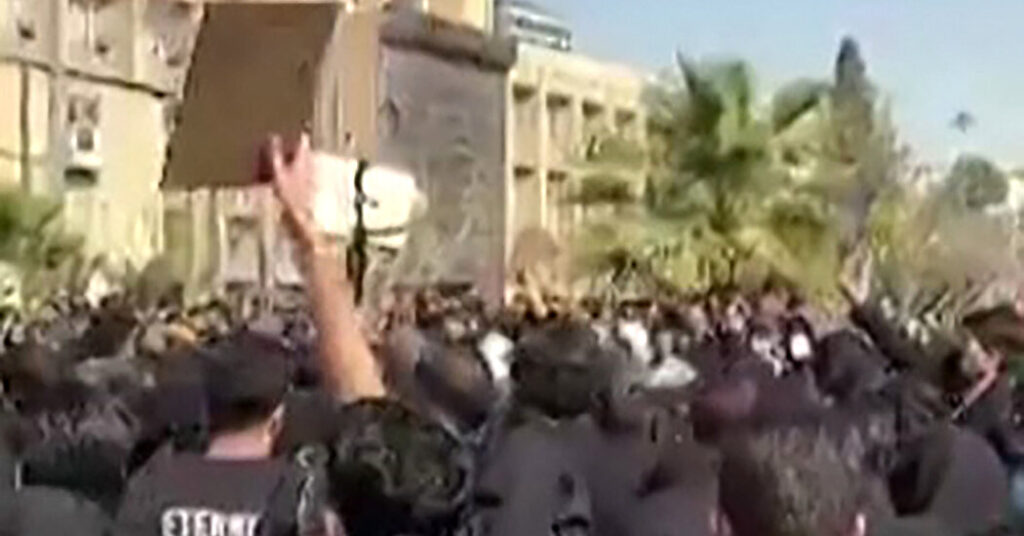 Iran’s Students Hold Anti-Regime Protests as Universities Reopen
dnyuz.com
Iran’s Students Hold Anti-Regime Protests as Universities Reopen
dnyuz.com
Iran’s universities have reopened for the new term, and with them a familiar problem for the Islamic Republic: students who treat campus not as a credential factory but as a high-density coordination space. According to the New York Times, protests have flared at multiple universities, with students chanting anti-regime slogans and framing their defiance as a continuation of the protest cycle that has periodically surged since the 2022 unrest.
Le Monde reports similar scenes in Tehran, citing Iranian and regional media accounts of students chanting against the authorities. What is new is the timing. These demonstrations are resurfacing as Washington simultaneously escalates its military posture toward Iran—an external pressure that Tehran can exploit as propaganda, and that dissidents can interpret as a narrow window before the state tightens the screws further.
The regime’s political economy is repression. It can buy time with arrests, expulsions, surveillance, and the occasional “dialogue” committee that exists mostly to identify ringleaders. Yet campuses remain awkward terrain for total control. Universities concentrate young people with overlapping networks, shared grievances, and—crucially—some institutional routines that make permanent lockdown politically costly. The state can flood campuses with security forces, but it cannot do so without advertising weakness and converting lecture halls into recruiting stations for opposition.
That creates a cat-and-mouse dynamic: students exploit short bursts of collective action—chants, sit-ins, flash protests—while authorities rely on selective punishment to raise the personal cost of participation. The New York Times notes that students have used slogans and gatherings to signal continuity with earlier protest waves, rather than staging a single “decisive” confrontation. That is rational insurgency at low intensity: keep the movement alive, force the state to spend resources, and avoid presenting a single target.
External military pressure complicates this calculus. A U.S. buildup can hand Tehran the oldest trick in the state playbook: equate dissent with collaboration, and frame domestic opponents as useful idiots for foreign enemies. But it also risks exposing the regime’s core vulnerability: if the leadership must prepare for war while suppressing domestic unrest, its coercive apparatus becomes overtasked and its legitimacy more obviously synthetic.
For Iran’s students, the strategic bet is that decentralised mobilisation—difficult to pre-empt, hard to fully infiltrate—can outlast episodic crackdowns. For the regime, the bet is that fear still scales better than courage. History suggests both sides will be right, until one of them isn’t.