
Macron demands algorithm transparency to legitimize speech controls
Fox News reports push to regulate ranking not just content, State oversight migrates from takedowns to distribution
Images
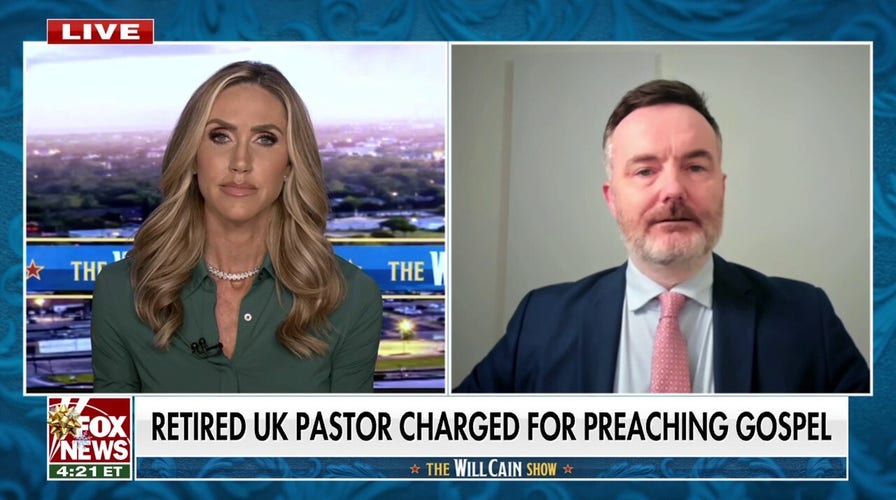 Religious freedom, free speech under attack in UK as pastor charged for preaching gospel
foxnews.com
Religious freedom, free speech under attack in UK as pastor charged for preaching gospel
foxnews.com
 France's President Emmanuel Macron arriving at the White House
foxnews.com
France's President Emmanuel Macron arriving at the White House
foxnews.com
 Distressed teen girl looks at phone while sitting on the floor
foxnews.com
Distressed teen girl looks at phone while sitting on the floor
foxnews.com
 Emmanuel Macron visits Donald Trump at the White House
foxnews.com
Emmanuel Macron visits Donald Trump at the White House
foxnews.com
Emmanuel Macron has offered Europe’s next upgrade to speech regulation: don’t just police content—police the distribution logic. Speaking in New Delhi, Macron dismissed “free speech” defenses as “pure bulls---” unless platforms provide algorithmic transparency, according to Fox News. The target is not merely what users say, but how feeds rank, recommend, and amplify it.
Traditional censorship focuses on removals: bans, takedowns, and penalties for specific posts. Macron’s demand shifts the battlefield to the ranking layer—the invisible machinery that determines what becomes legible at scale. Control the recommendation system and you can leave “speech” nominally intact while quietly throttling its reach. The user still speaks; the audience simply never arrives.
Macron argues that algorithms have biases and that the democratic consequences could be “huge” if the public has “no clue” how they are made, tested, trained, and where they guide users. He claims he does not want companies to reveal intellectual property, but wants them to make the systems “transparent,” and frames the goal as public order and limiting racist or hateful content.
The problem is that “transparency” is not a single technical object. There is a world of difference between auditability and state-readable blueprints.
Auditability can mean outcome-based testing: independent researchers and users verifying whether a system systematically suppresses certain viewpoints, whether it boosts outrage, or whether it discriminates—without exposing the model weights, ranking features, or adversarially useful details. It can also mean reproducible reporting: clear metrics on reach, demotion rates, error rates, and appeals.
Political “transparency,” by contrast, often means privileged access: regulators and aligned NGOs gaining insight into—and eventually influence over—what levers exist and how to pull them. Once the state can demand to “understand” ranking, it can demand to “fix” ranking. And once “fixing” becomes policy, the platform becomes an implementation arm for whichever coalition currently defines “public order.”
Macron is also pushing age-based restrictions on social media, with French lawmakers passing a bill to ban social media for children under 15, Fox News reports. That legislative push pairs neatly with algorithm demands: if you can’t ban a platform outright, you can still manage its outputs, its onboarding, and its visibility.
Governments are demanding transparency from private systems while building their own opaque influence operations—through procurement, pressure, and informal “trusted flagger” channels. A speech regime can plausibly deny censorship because the suppression happens upstream, inside ranking knobs, behind “safety” dashboards, and beneath the legal category of “content.”
A focus on due process, clear liability rules, and user choice—including open protocols and competition—would avoid turning feed algorithms into another regulated utility run by political taste.