
Uzbekistan targets 2028 launch for Mirzo Ulugbek 6U CubeSat
Plans 10–14 day astronaut mission with foreign partners, sovereignty branding meets outsourced launch reality
Images
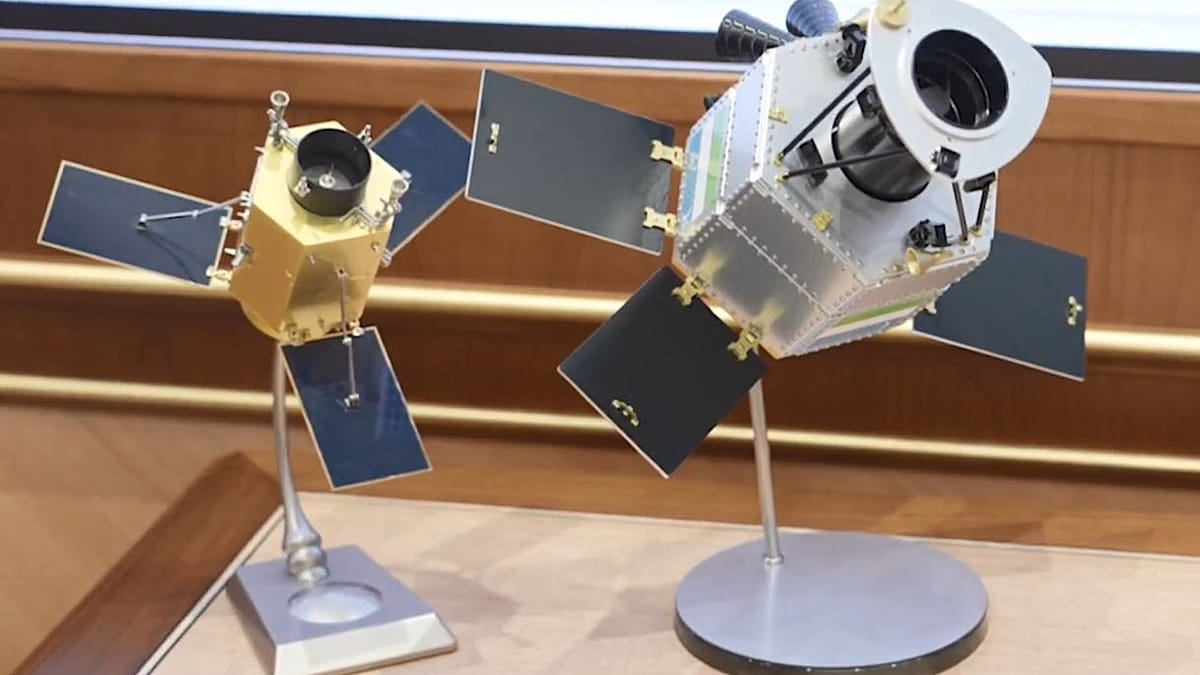 Uzbekistan preps first homegrown satellite and astronaut mission
euronews.com
Uzbekistan preps first homegrown satellite and astronaut mission
euronews.com
Uzbekistan wants a national satellite and, eventually, a national astronaut. The plan is modest on paper—a 6U CubeSat in 2028 and a 10–14 day crewed mission in cooperation with foreign partners—but it is also a familiar political product: “space status” sold as sovereignty.
Euronews reports that Tashkent has confirmed a 2028 launch target for a domestically developed 6U CubeSat dubbed Mirzo Ulugbek, while also preparing a framework for sending an Uzbek astronaut on a short-duration mission. Officials frame both projects as economic and institutional capacity-building, arguing that demand for remote-sensing data has tripled in five years and that more than 10 government agencies and all regional administrations now use satellite monitoring for agriculture, natural resources, and planning.
Technically, a 6U CubeSat—roughly 10×20×30 cm and under about 12 kg—can carry a serious payload by smallsat standards, including Earth-observation cameras, communications experiments, or technology demonstrations. But it does not buy independence by itself. Launch is still outsourced, orbital slots and frequency coordination still require international processes, and the real leverage sits in ground infrastructure, data rights, and the ability to iterate hardware without turning every failure into a national scandal.
Uzcosmos officials, quoted by Euronews, describe the CubeSat as an entry point requiring “relatively moderate investment.” The early emphasis is training: seven Uzbek master’s students are studying at Japan’s Kyushu Institute of Technology, an institution with a track record of launching dozens of CubeSats. Students are assigned to practical subsystems—communications links, camera payload, attitude determination and control—suggesting a genuine attempt to build engineering competence rather than merely buying a turnkey satellite.
That said, the astronaut headline is where the incentives get dangerous. A 10–14 day human spaceflight—almost certainly purchased as a seat on a partner programme—does little for domestic capability unless it is tightly coupled to experiments, payload development, and a pipeline of engineers who can translate the mission into repeatable know-how. Otherwise it becomes the most expensive photo-op imaginable: a flag in microgravity and a domestic propaganda reel.
The critique here is not anti-space; it is anti-prestige budgeting. “National programmes” are magnets for rent-seeking: procurement carve-outs, politically protected contractors, and metrics designed to look good on television rather than in a lab notebook. If Uzbekistan keeps the programme small, modular, and open to commercial partnerships—treating satellite data as an input to real markets rather than a trophy—then a CubeSat can be a sensible on-ramp.
If it drifts into state theatre, the country will discover the basic law of industrial policy: you can subsidize a narrative indefinitely, but you can’t subsidize physics.