
Netherlands adds two more Olympic speed-skating golds
Mass start wins push Dutch total to 20 medals with 10 gold, Specialization beats committee-driven sports nationalism again
Images
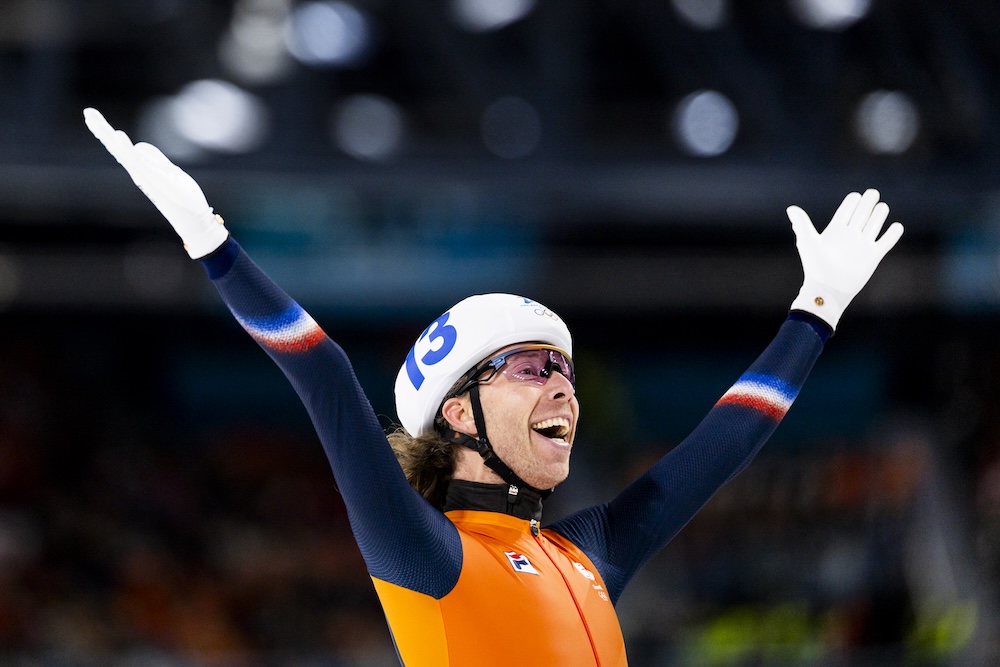 Jorrit Bergsma celebrates his gold. Photo: Sem van der Waal ANP
Sem van der Waal ANP
Jorrit Bergsma celebrates his gold. Photo: Sem van der Waal ANP
Sem van der Waal ANP
The Netherlands has once again turned Olympic speed skating into a near-private franchise, adding two more gold medals in the mass start and pushing its total to 20 medals—10 of them gold—at the Winter Games.
DutchNews.nl reports that Marijke Groenewoud won the women’s mass start for her first individual Olympic gold, after previously taking silver in the team pursuit. In the men’s race, 40-year-old Jorrit Bergsma took gold ahead of Denmark’s Viktor Thorup and Italy’s Andrea Giovannini, with American favorite Jordan Stolz missing the podium. The latest wins place the Netherlands third in the overall medals table, narrowly ahead of Italy, with one day of competition remaining.
This is not a mystery of national character or a sudden flowering of talent. It is what specialization looks like when a country treats a sport like an industry. The Dutch system has spent decades building the boring inputs: rinks, coaching depth, club competition, and a pipeline that turns teenagers into professionals who can peak on schedule. It also benefits from a domestic ecosystem where sponsors can justify spending because they reliably get airtime and winners.
Other nations routinely attempt the opposite model: broad “sports investment” plans, committee-driven talent identification, and politically fashionable funding priorities that rotate with ministers. That approach produces glossy strategy documents and, occasionally, a medal—often in spite of the system rather than because of it.
The Dutch approach is narrower and therefore more ruthless. It rewards athletes who commit early and trains them in an environment where competition is constant and selection is unforgiving. In mass start—an event that adds tactics and pack dynamics to endurance—the Netherlands can field skaters who are not merely fit but schooled in race craft through repeated high-level domestic racing.
There is an implicit lesson here: outcomes follow incentives and institutions, not slogans. The Dutch skating machine is not built by a one-off government “initiative” but by dense, local infrastructure and repeated private and semi-private commitments that compound over time. The result is a medal haul that looks like dominance but functions more like market share.
The Olympics provide the useful illusion that this is a celebration of nations. It is a competition between systems—and the Netherlands keeps showing up with a system built on focus, repetition, and a talent pipeline that does not pretend every sport is equally important.