
Nadella says Gates expected Microsoft OpenAI bet to burn a billion
Platform strategy shifts risk to model labs while Azure sells compute, subsidized frontier AI becomes cloud moat
Images
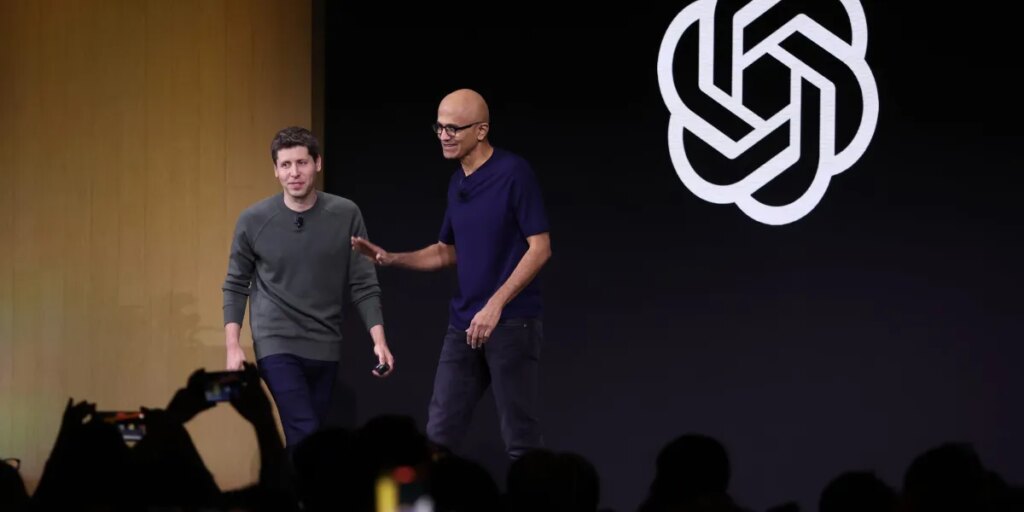 Microsoft CEO Satya Nadella says Bill Gates told him his big bet on OpenAI would be a flop: ‘Yeah, you’re going to burn this
dnyuz.com
Microsoft CEO Satya Nadella says Bill Gates told him his big bet on OpenAI would be a flop: ‘Yeah, you’re going to burn this
dnyuz.com
Microsoft’s relationship with OpenAI has always looked less like a charitable bet on a moonshot lab and more like a carefully structured way to turn frontier AI into a demand engine for Azure. A new anecdote from CEO Satya Nadella reinforces that reading: even inside Microsoft, the expectation was that the early money might burn—yet the strategic option value was the point.
According to Fortune (via dnyuz), Nadella recalled that Bill Gates warned him Microsoft’s initial commitment to OpenAI would likely be a flop: “Yeah, you’re going to burn this billion dollars.” The remark is notable not because venture investments sometimes fail, but because Microsoft is not a venture fund. When a platform incumbent “burns” capital, it can be buying something other than equity upside: distribution control, default infrastructure status, and a privileged position in the next computing cycle.
The economics are stark. Training and serving large models consumes colossal amounts of compute, storage, networking, and power—inputs sold at scale by cloud incumbents. Even when the model lab loses money on operations, the cloud provider can still win by selling the picks and shovels. In practice, subsidizing a frontier lab can be a method of customer acquisition for hyperscale cloud, with the bill paid by investors chasing the mirage of standalone model margins.
That dynamic matters because the public debate still treats “AI companies” as if they are vertically integrated product firms. Many are not. They are compute-intensive tenants. Their cost structure is dominated by GPUs and electricity, and their bargaining position is weakest precisely when they need capacity most.
Microsoft’s advantage is that it can internalize the spillovers. If OpenAI’s models become the default interface layer for search, productivity software, code, and enterprise workflows, the resulting traffic can be routed through Azure. The strategic prize is platform capture: making Microsoft the toll collector on the new cognitive infrastructure, regardless of whether the model-maker itself ever posts conventional profits.
That is a problem for antitrust and industrial-policy fans. Governments increasingly talk about “national AI champions,” as if the competitive unit is the lab. But the durable market power may sit with the cloud and distribution layers—operating systems, office suites, identity, and enterprise procurement—where Microsoft already has entrenched positions.
Gates’s warning reads, in retrospect, less like pessimism and more like a description of the deal’s logic: burning a billion is acceptable when the return is not a dividend, but an ecosystem that forces everyone else to keep buying your compute.