
Israel strikes Baalbek region
Hezbollah reports eight members killed as ceasefire frays, Lebanon civilians and migrant workers absorb deterrence economics
Images
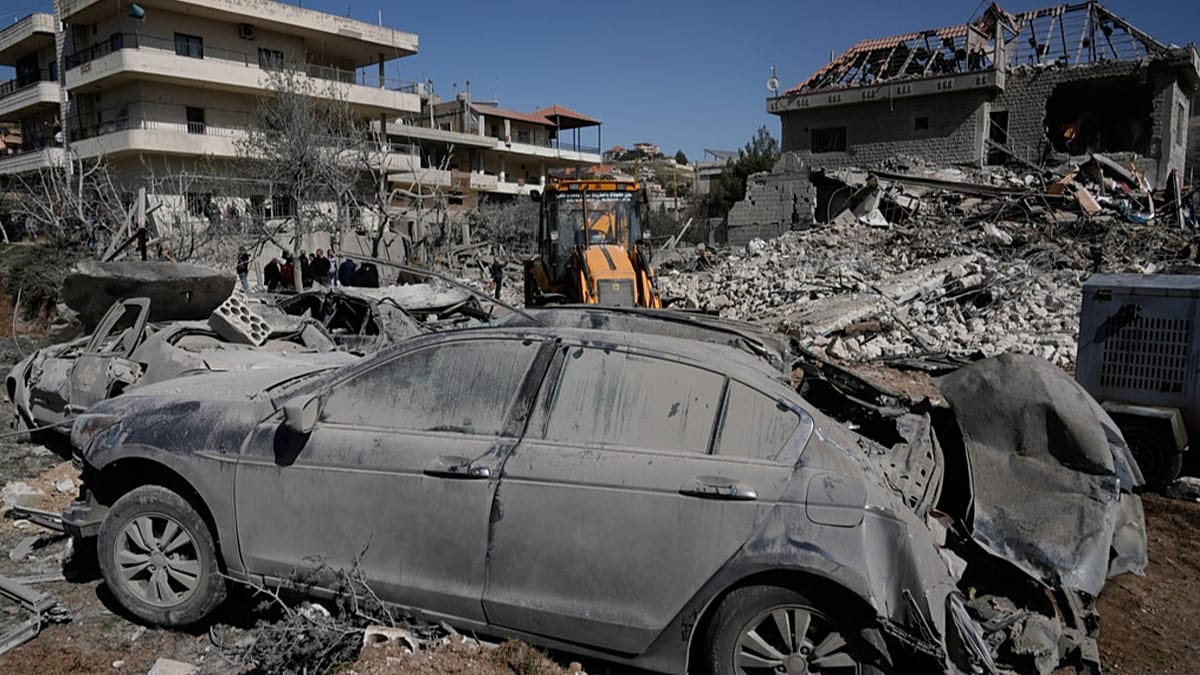 Hezbollah says Israeli strikes on Baalbek have killed eight members
euronews.com
Hezbollah says Israeli strikes on Baalbek have killed eight members
euronews.com
 Hezbollah says 'resistance' is the only choice after deadly Israeli strike
france24.com
Hezbollah says 'resistance' is the only choice after deadly Israeli strike
france24.com
 Videos show aftermath of deadly Israeli attacks in Lebanon
aljazeera.com
Videos show aftermath of deadly Israeli attacks in Lebanon
aljazeera.com
Israel’s strikes in eastern Lebanon are pushing the Israel–Hezbollah front back toward its “tit-for-tat” equilibrium: frequent violence calibrated to stay below the threshold of a full-scale war—until it doesn’t.
Euronews reports that Hezbollah says Israeli attacks late Friday on the Baalbek region near Rayak killed eight of its members, including local-level officials. The Israeli Defense Forces said the strikes hit “command centres” and killed operatives involved in accelerating “readiness and force build-up,” planning rocket fire, and advancing attacks against Israel—actions the IDF described as violating the post-November 2024 ceasefire understandings.
Lebanon’s Health Ministry put the broader toll higher: 10 killed, including three children, and around two dozen wounded. A doctor at Rayak Hospital told the Associated Press the dead included a Syrian man and an Ethiopian woman, and that several of the injured were foreign nationals. That detail is not incidental: Lebanon’s civilian economy—and the migrant labor that keeps it running—has become collateral in a deterrence game run by armed organizations and states.
France 24 quotes Hezbollah framing “resistance” as the only option after the strike, a rhetorical posture that conveniently converts local commanders’ deaths into a mandate for continued escalation. The incentives are asymmetric. Militias can treat each exchange as brand maintenance and recruitment; states must price in diplomatic blowback, insurance costs, and the risk of miscalculation. Yet Israel also has its own incentive problem: if it believes the ceasefire merely creates a window for Hezbollah to rearm, then “preventive” strikes become routine—meaning the ceasefire becomes paperwork, not a constraint.
Al Jazeera’s footage of the aftermath shows the practical result: civilians in Lebanon function as the buffer layer for both sides’ strategic messaging. “Precision” is a political adjective, not a guarantee.
Euronews notes the unusually high death toll comes amid intensifying regional tension as the US threatens strikes on Iran if nuclear talks fail—Tehran being a backer of Hezbollah and Hamas. That linkage raises the risk that local skirmishes become signaling devices in a larger confrontation, with Lebanese territory serving as the cheapest billboard.
In this arrangement, everyone can claim they are avoiding war while steadily normalizing it: Israel says it is preventing rearmament; Hezbollah says it is defending Lebanon; the Lebanese state issues casualty statements; and the people living under the flight paths learn to treat geopolitics as weather.