
Iran offers to dilute 60% uranium but refuses export
Nuclear talks turn into custody-chain fight over 300kg stockpile, US warship buildup sells diplomacy with a firing solution attached
Images
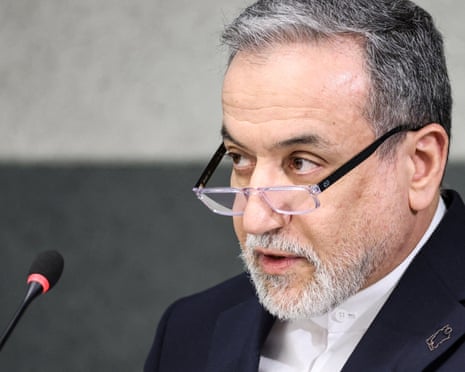 Foreign minister Abbas Araghchi says there has been no US demand for Iran to abandon the right to enrich inside Iran. Photograph: Pierre Albouy/Reuters
theguardian.com
Foreign minister Abbas Araghchi says there has been no US demand for Iran to abandon the right to enrich inside Iran. Photograph: Pierre Albouy/Reuters
theguardian.com
 Iran says will not 'bow' to pressure amid US nuclear talks as anti-govt protests reported in Tehran
france24.com
Iran says will not 'bow' to pressure amid US nuclear talks as anti-govt protests reported in Tehran
france24.com
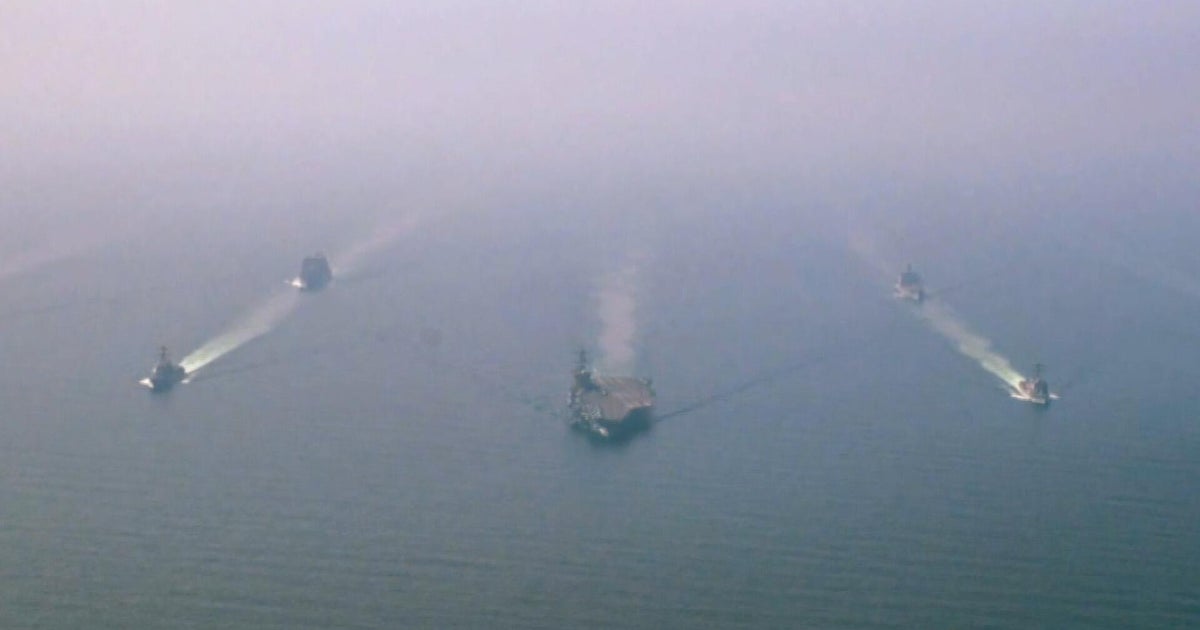 Trump threatens strikes on Iran as more warships enter Mediterranean
cbsnews.com
Trump threatens strikes on Iran as more warships enter Mediterranean
cbsnews.com
Iran is floating a “technical compromise” in nuclear talks with Washington: it will dilute, but not export, its stockpile of highly enriched uranium. The distinction matters because it is really a negotiation over custody—who physically controls the grams, the cylinders, the seals, and the chain of verification.
According to The Guardian, Iranian sources say Tehran holds roughly 300kg of uranium enriched to 60%—close to weapons grade—and is willing to down-blend it to 20% or below, provided the material stays inside Iran under International Atomic Energy Agency (IAEA) supervision. Foreign Minister Abbas Araghchi has publicly insisted that the US has not demanded Iran abandon domestic enrichment, and that Tehran has not offered a temporary suspension. The US message is less Zen: Araghchi’s claim clashes with statements by US officials calling for “zero enrichment,” the Guardian notes.
The offer is designed to avoid a “Libya scenario,” i.e., surrendering strategic material only to discover later that compliance buys neither security nor regime survival. Keeping the stockpile in-country also keeps leverage in Tehran’s hands: dilution can, in principle, be reversed if centrifuge capacity remains and inspectors are obstructed. The core dispute is not chemistry; it is whether the IAEA can enforce a credible custody chain inside a state that has repeatedly treated international monitoring as a negotiating chip.
CBS News frames the backdrop as a deliberate escalation: President Donald Trump has warned that “limited strikes” are possible as US naval forces surge, including the aircraft carrier USS Gerald R. Ford and additional warships moving into the Mediterranean. That posture can be read as bargaining theater—raise the perceived cost of delay—or as the kind of force package that, once assembled, develops its own bureaucratic momentum.
France 24 reports Iran’s leadership is simultaneously projecting defiance (“will not bow to pressure”) while anti-government protests are reported in Tehran—an inconvenient reminder that nuclear talks are conducted by a regime that treats domestic dissent as a security threat, not a political signal.
A dispute ostensibly about nonproliferation becomes a contest between two coercive machines—sanctions and threats versus enrichment and repression—while ordinary people pay for the “deterrence” in inflation, censorship, and the permanent mobilization of security states. The key question Trump faces is whether Tehran’s dilution-without-export offer is a verifiable de-risking step—or simply a clever way to keep the bomb option on Iranian soil, behind Iranian guns, under an inspection regime that can be throttled whenever it becomes inconvenient.