
Thousands march in Lyon after killing of far-right activist Quentin Deranque
Le Monde and France24 report dissolved groups and MPs join while police manage escalating street politics
Images
 'Heavy', 'sad' and 'increasingly intense' atmosphere at rally for killed far-right activist
france24.com
'Heavy', 'sad' and 'increasingly intense' atmosphere at rally for killed far-right activist
france24.com
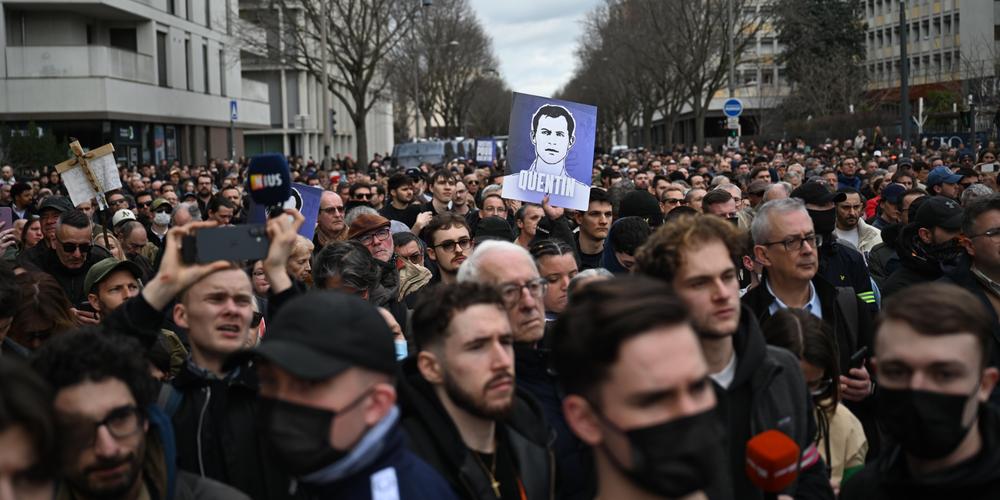 Avant une marche en hommage au militant d’extrême droite Quentin Deranque, à Lyon (Rhône), le 21 février 2026. BRUNO AMSELLEM/DIVERGENCE POUR « LE MONDE »
BRUNO AMSELLEM/DIVERGENCE POUR « LE MONDE »
Avant une marche en hommage au militant d’extrême droite Quentin Deranque, à Lyon (Rhône), le 21 février 2026. BRUNO AMSELLEM/DIVERGENCE POUR « LE MONDE »
BRUNO AMSELLEM/DIVERGENCE POUR « LE MONDE »
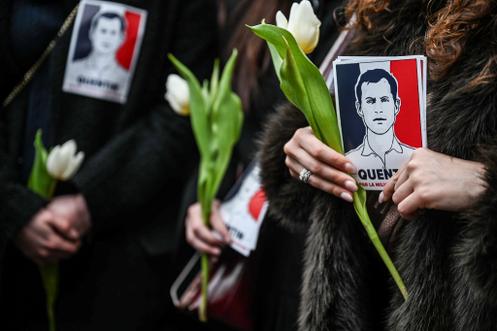 Lors d’une marche en hommage au militant d’extrême droite Quentin Deranque, à Lyon (Rhône), le 21 février 2026. BRUNO AMSELLEM/DIVERGENCE POUR « LE MONDE »
BRUNO AMSELLEM/DIVERGENCE POUR « LE MONDE »
Lors d’une marche en hommage au militant d’extrême droite Quentin Deranque, à Lyon (Rhône), le 21 février 2026. BRUNO AMSELLEM/DIVERGENCE POUR « LE MONDE »
BRUNO AMSELLEM/DIVERGENCE POUR « LE MONDE »
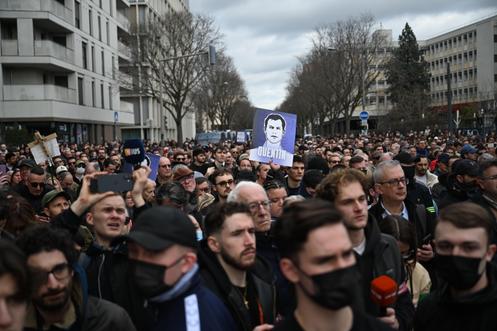 Avant une marche en hommage au militant d’extrême droite Quentin Deranque, à Lyon (Rhône), le 21 février 2026. BRUNO AMSELLEM/DIVERGENCE POUR « LE MONDE »
BRUNO AMSELLEM/DIVERGENCE POUR « LE MONDE »
Avant une marche en hommage au militant d’extrême droite Quentin Deranque, à Lyon (Rhône), le 21 février 2026. BRUNO AMSELLEM/DIVERGENCE POUR « LE MONDE »
BRUNO AMSELLEM/DIVERGENCE POUR « LE MONDE »
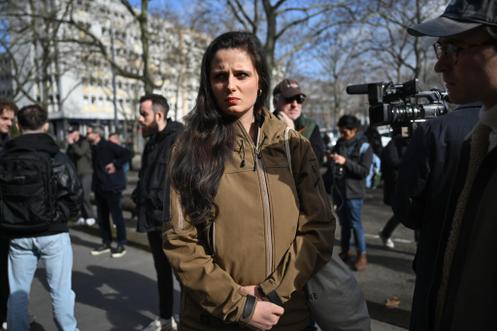 Aliette Espieux, organisatrice de la marche en hommage au militant d’extrême droite Quentin Deranque, à Lyon (Rhône), le 21 février 2026. BRUNO AMSELLEM/DIVERGENCE POUR « LE MONDE »
BRUNO AMSELLEM/DIVERGENCE POUR « LE MONDE »
Aliette Espieux, organisatrice de la marche en hommage au militant d’extrême droite Quentin Deranque, à Lyon (Rhône), le 21 février 2026. BRUNO AMSELLEM/DIVERGENCE POUR « LE MONDE »
BRUNO AMSELLEM/DIVERGENCE POUR « LE MONDE »
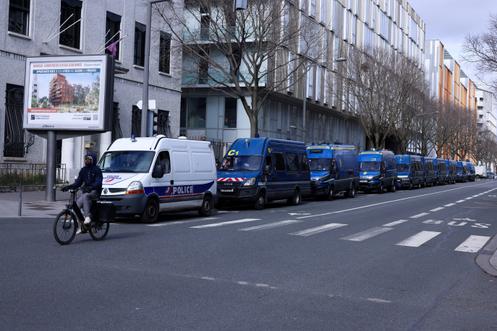 Avant le début d’une marche en hommage au militant d’extrême droite Quentin Deranque, à Lyon (Rhône), samedi 21 février 2026. NICOLAS ECONOMOU/REUTERS
NICOLAS ECONOMOU/REUTERS
Avant le début d’une marche en hommage au militant d’extrême droite Quentin Deranque, à Lyon (Rhône), samedi 21 février 2026. NICOLAS ECONOMOU/REUTERS
NICOLAS ECONOMOU/REUTERS
A rally in Lyon for Quentin Deranque, a far-right activist killed last week, drew several thousand people on Saturday—officially 3,200 according to the Rhône prefecture, while organizers claimed 3,500 and a Le Monde correspondent estimated closer to 5,000.
According to Le Monde’s live coverage, the march left Place Jean-Jaurès in two blocs, with chants such as “Antifas assassins” and “LFI complice,” and banners reading “l’extrême gauche tue” and “justice pour Quentin.” Portraits were distributed from a van with the message: “Quentin killed by Mélenchon’s militia.” The cast list was equally explicit: former members of dissolved groups such as Remparts and the Bastion social offshoot “Audace” appeared, alongside the far-right student union La Cocarde étudiante. Le Monde also reports the presence of Yvan Benedetti, former head of the antisemitic and Pétainist group L’Œuvre française, dissolved in 2013.
France24 described the atmosphere as “heavy,” “sad,” and “increasingly intense,” as mourners and militants mixed with a strong police presence. Authorities had anticipated 2,000–3,000 participants—an estimate that sounds less like forecasting and more like administrative prayer.
The immediate political reflex was predictable: a senator from Rhône, Étienne Blanc (Les Républicains), attended “in a personal capacity,” telling Le Monde he could not remain “by the fire” in the face of what he called a “monstrous” killing. He also alleged “links” between the attackers and La France insoumise (LFI), and demanded a “great program of the right” rejecting violence—while physically sharing the street with dissolved or fringe movements that are, in French public life, essentially a recurring regulatory failure.
The state’s problem is not merely public order; it is precedent. Once police and prefectures normalize exceptional crowd-control measures—kettling, sweeping restrictions, aggressive identity checks—those tools rarely remain ideologically selective. Today’s “security perimeter” around a far-right memorial march becomes tomorrow’s default setting for a labor protest, a farmers’ blockade, or a spontaneous neighborhood demonstration. France’s administrative machinery is built for this: the same institutions that dissolve groups for being too radical can also, with equal confidence, manage the consequences of radicalization in the streets.
What Lyon illustrates is a feedback loop. Political violence produces mass mobilization; mass mobilization produces securitization; securitization produces further polarization, and—conveniently—more justification for the state to expand its discretionary powers. The only actor guaranteed to gain capacity from the cycle is the one already holding the monopoly on force.
Deranque’s death is being litigated in the court of public narrative long before the criminal file is closed. In France, that is not a bug; it is a feature. When the state’s core competency is “maintaining order,” every tragedy becomes a logistics problem—and every logistics problem becomes a reason to make order less negotiable.