
Measles can trigger SSPE decades later
Rare persistent CNS infection follows childhood measles with long latency, public messaging still sells measles as harmless until it isn’t
Images
 Sarah and her mother, Jo (Family handout)
Family handout
Sarah and her mother, Jo (Family handout)
Family handout
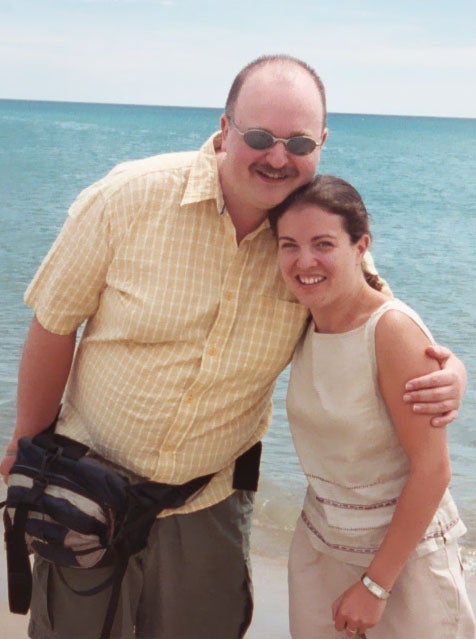 Sarah died in her father Mark’s arms last year (Family handout)
Family handout
Sarah died in her father Mark’s arms last year (Family handout)
Family handout
 Sarah Walton (Family handout)
Family handout
Sarah Walton (Family handout)
Family handout
A measles infection can end long after the rash fades. In a case highlighted by The Independent, a British woman who caught measles at 11 months—before she was eligible for the MMR shot—later developed subacute sclerosing panencephalitis (SSPE), a progressive and ultimately fatal neurodegenerative condition caused by persistent measles virus in the central nervous system. She reportedly developed symptoms in her mid‑20s, lived with the disease for roughly two decades, and died at 45.
SSPE is not a “complication” in the everyday sense of pneumonia after influenza; it is a delayed catastrophe. The mechanism, as described in clinical literature and echoed in the reporting, involves a mutated measles virus that remains in the brain and evades immune clearance. Years later—often 5 to 15 years post-infection, sometimes longer—patients develop cognitive and behavioral changes, myoclonus, seizures, motor decline, and eventually loss of speech, swallowing, and basic function.
The Independent notes an often-cited risk estimate of roughly 1 in 50,000 measles cases. That number is easy to wave away until you translate it into real denominators: outbreaks are measured in thousands, not in one-off tragedies. Moreover, risk is not uniform. SSPE is disproportionately associated with measles acquired in infancy, when the immune system is still developing—precisely the group that depends on high population immunity rather than personal choice.
UK Health Security Agency data cited by The Independent says that since 2009, six people in the UK (three children and three adults) have died from SSPE. The point is not that the absolute count is large; it is that the disease exists at all in a country with a safe, widely available vaccine—meaning these are, in a blunt epidemiological sense, preventable deaths.
Risk communication around measles often leans on averages: “most children recover.” True, and also irrelevant to the family that draws the short straw decades later. A framing should be equally skeptical of two kinds of institutional storytelling: the anti-vaccine influencer who sells fear as identity, and the public-health bureaucracy that sometimes sells reassurance as policy. The honest message is statistical: measles is usually self-limited, sometimes acutely lethal, and in rare cases a time-delayed neurological death sentence.
If you want to argue about vaccination policy, argue about actual tradeoffs—mandates, school access rules, liability regimes—not about whether measles is “mild.” SSPE is exactly the kind of tail risk that gets erased when public debate is reduced to slogans.