
NIST reportedly restricts after-hours lab access for foreign researchers
Security compliance recast as facility policy at US measurement agency, Talent pipeline throttled in name of national strength
Images
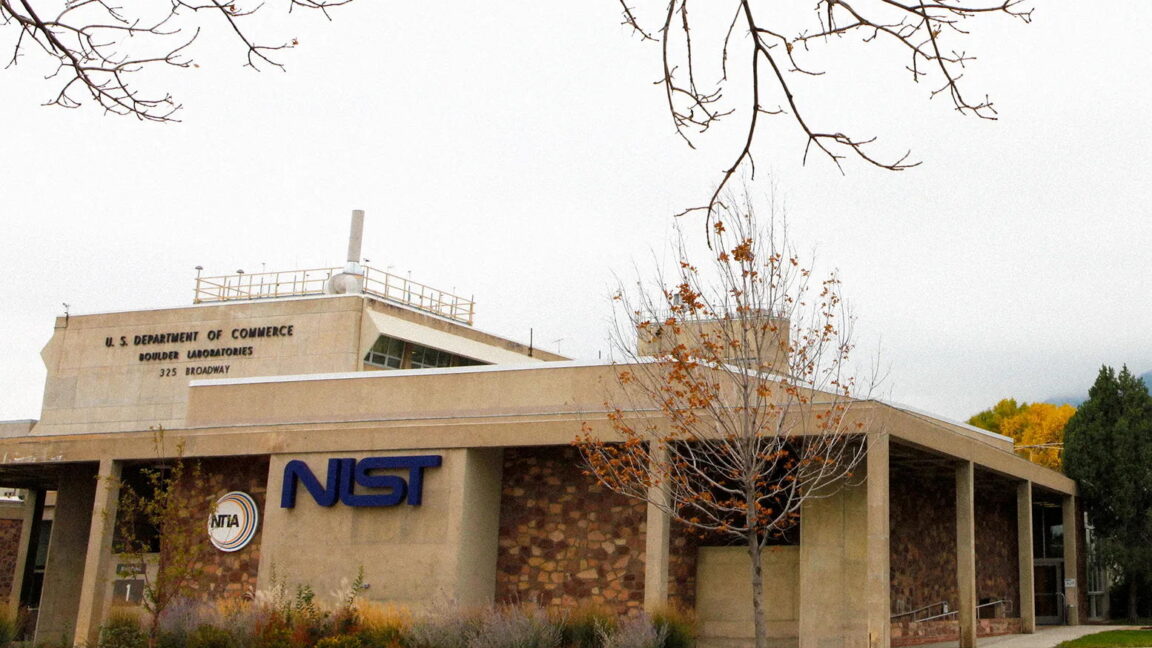 Major government research lab appears to be squeezing out foreign scientists
arstechnica.com
Major government research lab appears to be squeezing out foreign scientists
arstechnica.com
A major US government research facility appears to be tightening access for foreign researchers by limiting after-hours entry, a move that staff and observers say effectively squeezes out “noncitizens” from the kind of long, irregular work patterns that modern labs routinely demand.
According to Ars Technica, the policy shift has landed at the National Institute of Standards and Technology (NIST), a cornerstone of US measurement science and a quiet but essential supplier of credibility to everything from semiconductor manufacturing to cybersecurity standards. The change is bureaucratically modest—access rules and badge privileges—but operationally blunt. If the lab culture assumes experiments, calibrations, and instrument time don’t politely end at 5 p.m., then restricting off-hours access becomes a de facto employment filter.
This turns federally funded research infrastructure into a gated community where citizenship status, not scientific responsibility, determines who can respond to instrument alarms, run time-sensitive measurements, or meet deadlines. In a field where the marginal difference between “we finished the run” and “we lost the sample” is often a night shift, this is not a symbolic inconvenience; it is a structural handicap.
Washington’s industrial policy rhetoric—reshoring, CHIPS, “critical technologies,” and a perpetual sense of strategic emergency—depends on the very talent pipeline such restrictions undermine. The US has long relied on immigrant scientists and engineers to staff labs, graduate programs, and startups. Yet in the name of security, the state repeatedly imposes friction on the people most likely to build the next generation of tools the state claims it needs.
Ars Technica notes the measure is framed as a security move. That framing is common: when institutions lack the capacity—or the incentive—to do targeted risk management, they reach for crude proxies. Citizenship becomes an administrative shortcut. The result is less a security system than a liability-avoidance device, optimized for internal compliance rather than external performance.
There is also a predictable second-order effect: if foreign researchers are treated as inherently suspect, they will self-select away from federal labs toward private-sector research groups, universities, or other countries. The US does not merely lose labor hours; it loses institutional memory, mentorship chains, and the informal networks that make labs productive.
If NIST’s mission is to set standards, it is now also setting one for how a security-first bureaucracy can quietly degrade national capacity: restrict access, increase friction, and then act surprised when the “talent shortage” requires yet another subsidy program. The state can always print money; it cannot print trust—or the midnight competence that keeps complex systems running.