
Israeli strikes hit Hezbollah missile unit sites in Lebanon Bekaa Valley
Lebanese ministry reports 10 dead while Hezbollah claims 8 fighters among them, Ceasefire becomes paperwork as cross-border war turns routine
Images
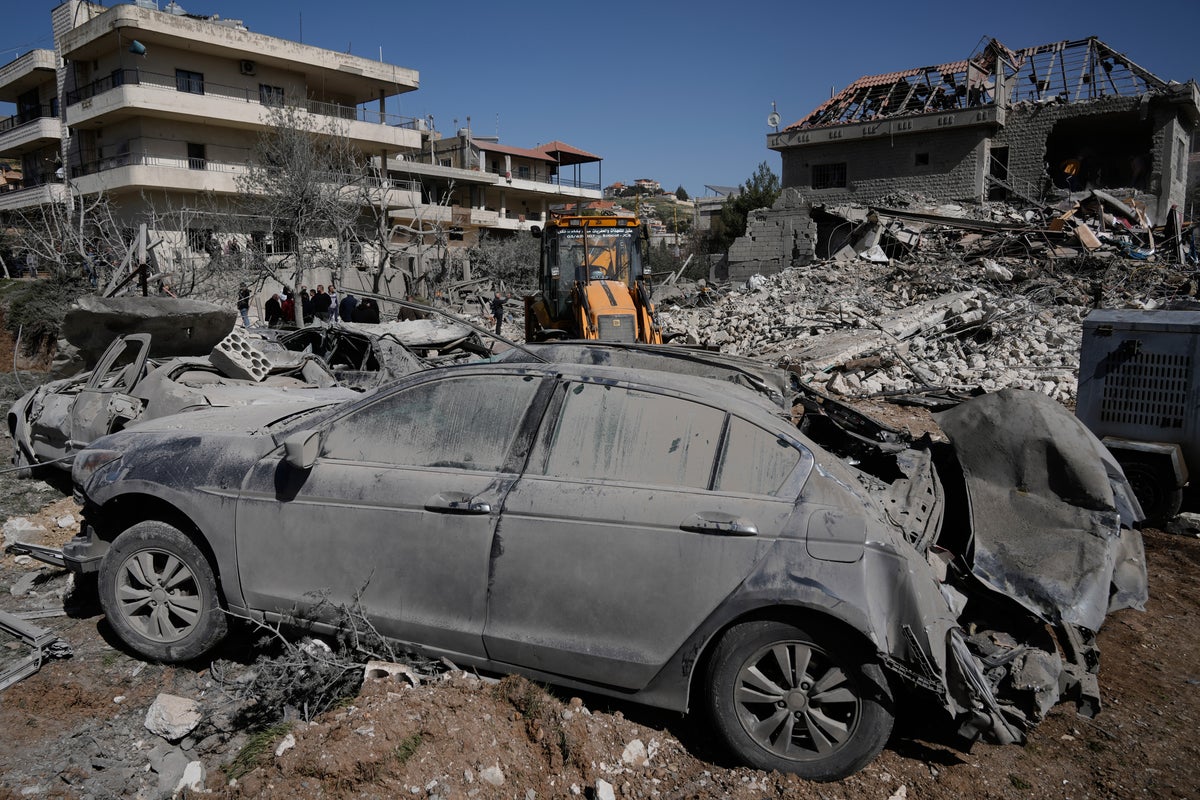 Israeli airstrikes in eastern Lebanon kill 8 Hezbollah members, officials say
independent.co.uk
Israeli airstrikes in eastern Lebanon kill 8 Hezbollah members, officials say
independent.co.uk
Israeli airstrikes in Lebanon’s eastern Bekaa Valley killed at least 10 people and wounded 24, Lebanon’s Health Ministry said Saturday, after overnight strikes near the village of Rayak. Two Hezbollah officials, speaking anonymously to The Associated Press, said eight of those killed were Hezbollah members, including local commanders. The Independent, carrying the AP report, notes the ministry does not distinguish between militants and civilians.
The Israeli military said it struck three Hezbollah “command centers” in the Baalbek area and “eliminated” several members of Hezbollah’s missile unit. According to the Israeli account, those targeted were involved in accelerating readiness and force build-up while planning fire attacks toward Israel.
Hezbollah sources named three of the dead as Ali al-Moussawi, Mohammed al-Moussawi, and Hussein Yaghi. The AP report adds that Yaghi was the son of Mohammed Yaghi, a founder of Hezbollah who died in 2023 and had been close to the group’s longtime leader Hassan Nasrallah—killed in an Israeli strike in September 2024.
Rayak Hospital’s executive director told AP the facility received 10 bodies and 21 wounded. Among the dead were two non-Lebanese—a Syrian man and an Ethiopian woman—while the wounded included Syrians and Ethiopians, underscoring how “precision” violence tends to find the region’s most disposable labor first.
The broader context is a conflict that has been normalized into routine cross-border lethality. After the Hamas-led October 7, 2023 attack and the ensuing Gaza war, Hezbollah began firing rockets into Israel; Israel responded with strikes and shelling. That “low-level” exchange escalated into full-scale war in September 2024, then was partially contained by a US-brokered ceasefire two months later. Partially is doing a lot of work: Israel says Hezbollah is rebuilding and has continued near-daily strikes in Lebanon; Hezbollah has claimed only one strike against Israel since the ceasefire, per AP.
Friday’s toll was unusually high, arriving amid renewed regional tension as Washington threatens strikes on Iran if nuclear negotiations fail. The choreography is familiar: a ceasefire that functions as a press release, not a boundary; a steady drumbeat of targeted killings and infrastructure hits; and a post-hoc accounting dispute over who counts as a combatant.
The institutional incentives are bleakly coherent. States and state-like militias prefer “managed” conflict because it preserves domestic legitimacy, budgets, and emergency powers without the political cost of decisive outcomes. Civilians are left as the reconciled line items—counted later, categorized selectively, and used immediately as justification for the next strike.