
Ukrainian drones strike suspected Votkinsk missile plant deep in Russia
Udmurt officials confirm injuries as Telegram channels point to Iskander and ICBM production, Air defense becomes nationwide overhead with no SLA
Images
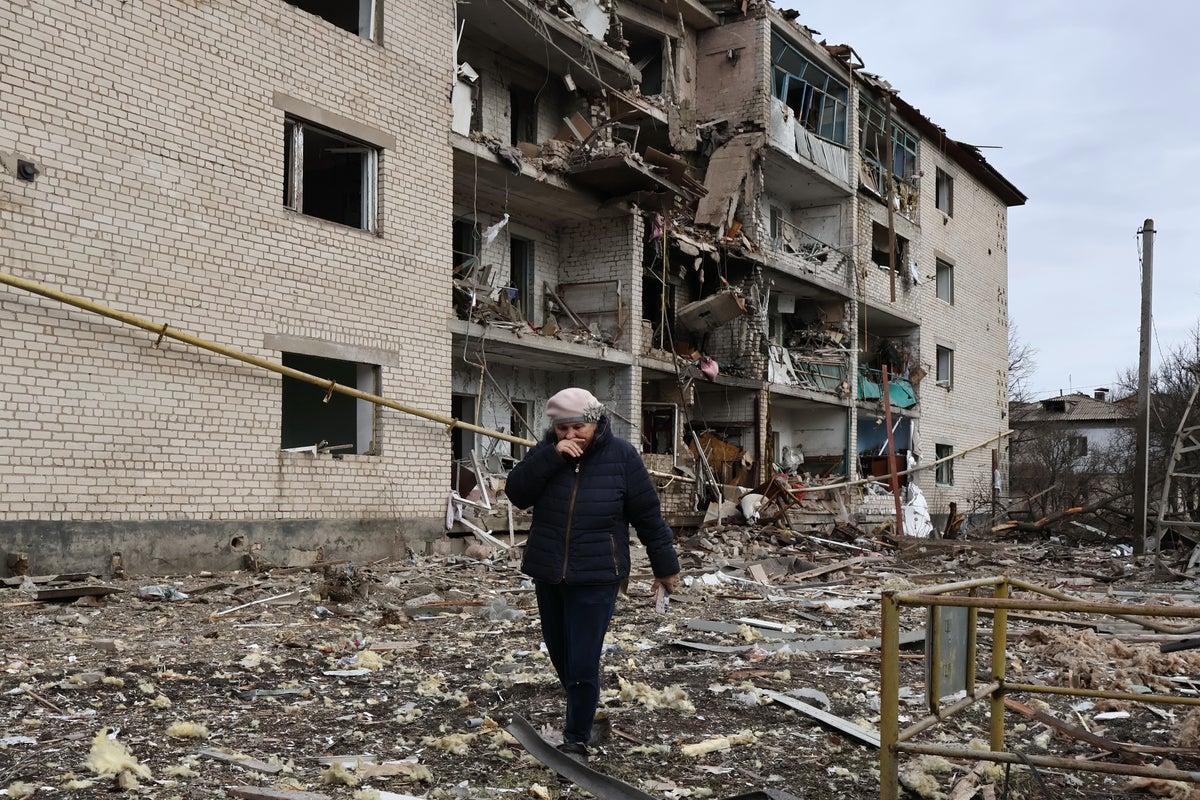 Ukraine strikes a key industrial site deep inside Russia
independent.co.uk
Ukraine strikes a key industrial site deep inside Russia
independent.co.uk
Ukrainian long-range drones struck an industrial facility in Russia’s Udmurt Republic overnight Saturday, injuring 11 people and sending three to hospital, according to Telegram posts by local health minister Sergei Bagin and regional head Alexander Brechalov cited by the Associated Press via The Independent. Russian officials acknowledged a drone attack and damage but did not identify the target.
An unofficial Russian Telegram channel, Astra, said the strike hit the Votkinsk Machine Building Plant, a major state-owned defense enterprise more than 1,400 kilometers from Ukraine. Astra said it based the claim on geolocated footage and images posted by residents; other channels circulated videos showing black smoke and blown-out windows, while SHOT—often linked to security-service sources—reported locals heard at least three blasts and the characteristic “humming” of drones.
If Astra’s identification is correct, this is not a symbolic pinprick but a direct hit on Russia’s missile-industrial spine. The Votkinsk plant is associated with production of Iskander ballistic missiles—frequently used against Ukrainian cities—and nuclear-capable intercontinental ballistic missiles, according to AP. Ukraine did not immediately comment.
The strategic logic is clear: the war’s meaningful front line is not a trench map but the logistics-and-production graph. Drones that can reach deep into Russia turn factories, depots, test stands, and rail nodes into legitimate targets, regardless of what official communiqués choose to name. That, in turn, forces Russia to treat air defense less like a discrete battlefield capability and more like an economy-wide overhead cost.
Air defense at this scale is a kind of subscription service—expensive, continuous, and with no service-level agreement. You can pay for more sensors, more interceptors, more electronic warfare, more patrols, more hardening, more redundancy; you cannot buy a guarantee that a cheap airframe won’t slip through at 3 a.m. and land on a high-value industrial chokepoint.
For civilians, the state’s “strategic depth” can become a marketing slogan rather than a shield. When war reaches a factory town far from the front, the official story can arrive in reverse order: first the smoke, then the injuries, then the carefully limited acknowledgment, and only later—via unofficial channels—the likely name of what was actually hit.
As both sides continue to iterate drone range, navigation, and swarm tactics, industrial geography is becoming as important as battlefield terrain. The question is whether deep strikes will happen again, and how quickly large, centralized defense production can be made resilient—without turning the entire country into a militarized perimeter.