
72 captive tigers die in Chiang Mai after feline parvovirus outbreak
Tiger Kingdom pet-and-photo business model turns biosecurity into a customer-facing failure, Close-contact wildlife tourism sells risk surfaces as entertainment
Images
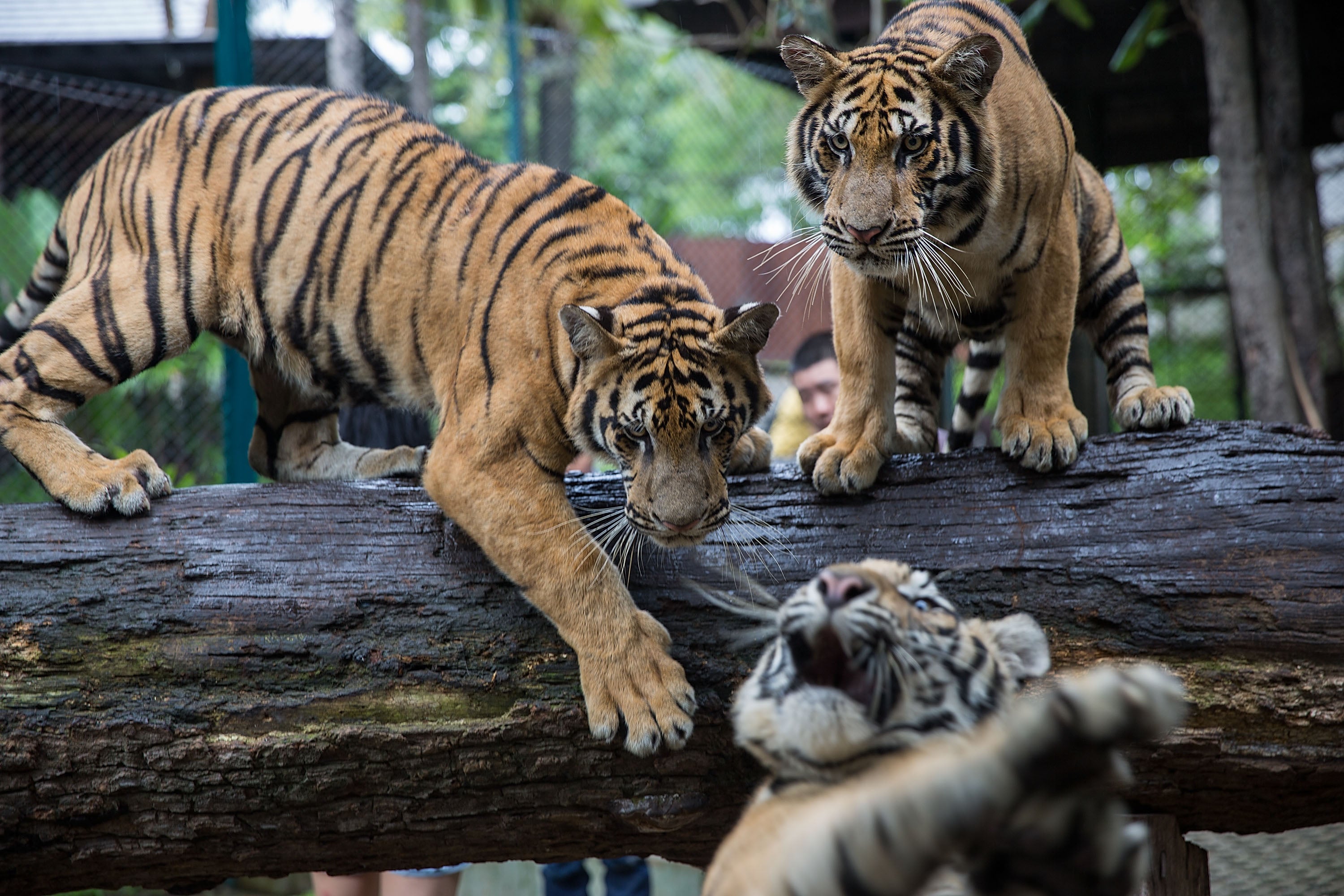 File photo: Tigers play in an enclosure at Tiger Kingdom in Mae Rim, Thailand (Getty Images)
Tigers play in an enclosure at Tiger Kingdom in Mae Rim, Thailand (Getty Images)
File photo: Tigers play in an enclosure at Tiger Kingdom in Mae Rim, Thailand (Getty Images)
Tigers play in an enclosure at Tiger Kingdom in Mae Rim, Thailand (Getty Images)
At least 72 captive tigers have died in Thailand’s northern province of Chiang Mai after an outbreak of feline parvovirus—also known as feline panleukopenia—swept through two privately operated attractions that market direct visitor contact with big cats. Between 8 and 19 February, 51 tigers died at Tiger Kingdom Mae Taeng and 21 at Tiger Kingdom Mae Rim, according to a timeline from the regional Protected Area Office cited by The Independent.
Preliminary testing by livestock officials found feline parvovirus in the carcasses, with additional detections of canine distemper virus (CDV) and Mycoplasma bacteria, according to The Bangkok Post as summarized by The Independent. Officials reported no influenza A signal (the umbrella that includes avian flu strains), a detail that matters because big-cat facilities in the region have previously been implicated in H5N1 events.
Feline panleukopenia is a highly contagious parvovirus that targets rapidly dividing cells, especially in the intestinal lining and bone marrow, producing severe gastrointestinal disease and immunosuppression—an efficient recipe for high mortality in dense captive settings. The co-detection of CDV and Mycoplasma points to a pattern in outbreak ecology: once immune function is compromised, secondary pathogens become opportunistic accelerants.
Thai authorities have temporarily closed Tiger Kingdom Mae Rim for 14 days, restricted access at both sites, and deployed disinfection teams for enclosures and equipment, The Independent reports. Surviving tigers have been moved into quarantine and care centers in Mae Taeng district for monitoring, and officials say they plan to vaccinate healthy animals.
The official line also gestures at husbandry factors. Somchuan Ratanamungklanon, director-general of Thailand’s Department of Livestock Development, told local media that inbreeding among captive tigers may have weakened immune systems, increasing susceptibility and speeding spread, according to The Independent. That may be true, but it also functions as a convenient biological alibi for an operational problem: a commercial facility that invites the public to touch, feed, and pose with apex predators is structurally incentivized to maximize throughput, not minimize transmission.
In such environments, “biosecurity” is not a slogan; it is a logistics system. Likely transmission routes include contaminated food, transport crates, staff movement between enclosures, introduction of new animals, and fomites—exactly the kind of mundane pathways that become lethal when the business model is built around close contact. The more the attraction sells intimacy—selfies, petting, proximity—the more it converts barriers (distance, controlled handling, restricted access) into revenue-killing friction.
Animal-rights group PETA Asia called the deaths a predictable consequence of captivity and urged tourists to stay away, according to AFP via The Independent. Thailand has seen this movie before: during the 2004 H5N1 avian influenza wave, at least 147 tigers at Sriracha Tiger Zoo reportedly died or were euthanized to stop spread, The Independent notes. Vietnam saw dozens of captive big cats die of H5N1 in 2024.
What is new here is not that viruses circulate in captive collections; it is that the “wildlife park” label continues to launder what is, in practice, a high-density animal-handling operation with consumer foot traffic. When customers are part of the contact network, the outbreak investigation is no longer just veterinary medicine—it is a critique of the product being sold.