
Russia reopens Nikita Ouvarov case days before release
Teen branded Minecraft terrorist faces new charges after five years, Digital traces keep security state’s conveyor belt running
Images
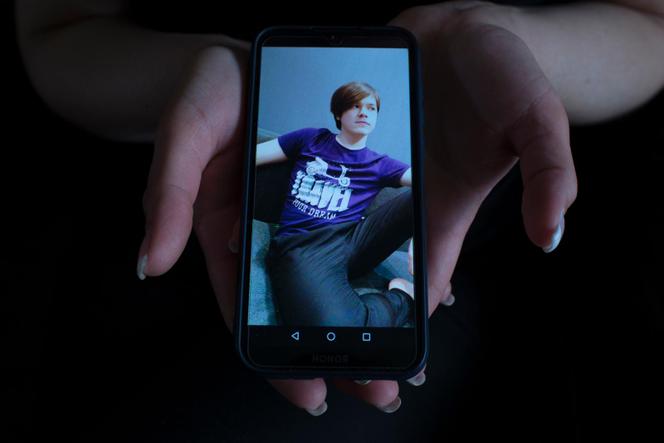 Anna Ouvarova montre une photo de son fils, Nikita Ouvarov, 15 ans, accusé de terrorisme, à Kansk, en Sibérie, en 2021. MARIA TURCHENVOVA POUR M LE MAGAZINE DU MONDE
MARIA TURCHENVOVA POUR M LE MAGAZINE DU MONDE
Anna Ouvarova montre une photo de son fils, Nikita Ouvarov, 15 ans, accusé de terrorisme, à Kansk, en Sibérie, en 2021. MARIA TURCHENVOVA POUR M LE MAGAZINE DU MONDE
MARIA TURCHENVOVA POUR M LE MAGAZINE DU MONDE
Nikita Ouvarov was 14 when Russia’s security state decided that a teenager with a grudge and a keyboard looked sufficiently like a terrorist. Now 20, he was due for release on 19 March after serving five years for what investigators framed as “preparing terrorist activity.” Instead, according to Le Monde, his mother received a call from a Krasnoyarsk pre-trial detention center on 17 February: a new criminal case has been opened against him, jeopardizing his release.
Ouvarov’s original “case” became internationally notorious because the evidentiary spine was not an explosive device or a cell network, but a blend of adolescent behavior and digital exhaust. He was arrested in Kansk, Siberia, after posting anti-FSB leaflets. Prosecutors then elevated the matter into terrorism by leaning on platform artifacts—messages, logs, and alleged online plans—reportedly including references to Minecraft. If a conversation can be screenshotted, it can be stapled into a dossier; if a game can simulate blocks, it can simulate intent.
The new case underscores how modern prosecutions—especially in authoritarian systems—treat digital infrastructure as a substitute for physical acts. A sandbox becomes a storyboard; a chat becomes a conspiracy; metadata becomes “coordination.” The result is a procedural machine that can keep running even when the underlying facts are thin, because the raw material (messages, devices, platform traces) is inexhaustible and endlessly reinterpretable.
Le Monde reports that Ouvarov’s lawyer, Vladimir Vasin, was away in Moscow when the new investigation began, leaving the young man without counsel during the crucial first hours. That detail matters: the power imbalance is not just between citizen and state, but between a system optimized for rapid procedural escalation and a defense that is often physically absent.
The “Minecraft terrorist” label points to how the state no longer needs to prove much beyond a narrative of dangerousness, and digital artifacts make narratives cheap. When the evidentiary chain is built from platform data—messages, accounts, server locations, device seizures—the real battlefield is control over interpretation: who defines what a joke, a fantasy, or a juvenile provocation “really meant.”
Russia’s security services have long preferred crimes of intent because they are easier to manufacture and harder to falsify. In Ouvarov’s case, the timing of the new charges—days before release—looks less like public safety and more like bureaucratic continuity: the system renewing its own justification, one teenager at a time.