
US courts Central Asia investment via Kazakhstan deals
DFC mining-transport talks and Boeing 787 push, De-risking looks like public underwriting dressed as diversification
Images
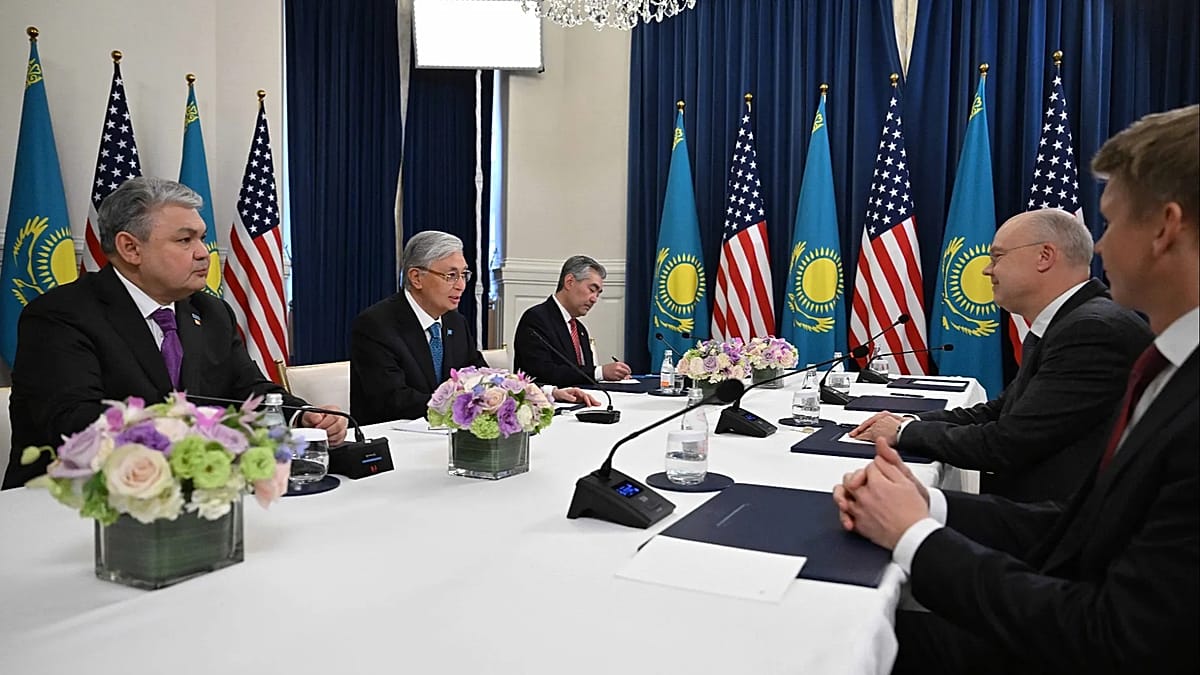 US deepens Central Asia ties, signing new investment deals
euronews.com
US deepens Central Asia ties, signing new investment deals
euronews.com
The US is trying to “de-risk” supply chains by deepening investment ties with Central Asia, but the deal-making on display in Washington this week looked less like a triumph of markets than a reminder that geopolitics now functions as an unofficial credit committee.
According to Euronews, Kazakhstan’s President Kassym‑Jomart Tokayev used a Washington visit—formally tied to Donald Trump’s newly created “Board of Peace”—to sign or promote a slate of agreements with US-linked firms worth “hundreds of millions” of dollars. The headline project is a $180 million investment agreement with Mars to build a pet food plant in Alatau, under Kazakhstan’s Agriculture Ministry. It is not exactly rare-earth alchemy, but it is a clean example of what governments love: a tangible factory, a press release, and the implied promise of jobs.
More strategically, Tokayev met Boeing executive Jeff Shockey to discuss delivery of Boeing 787 Dreamliners ordered by Air Astana, with the first expected in the second half of 2026, and to float a direct transatlantic connection. Euronews also reports that SCAT Airlines is considering additional Boeing purchases and exploring a joint maintenance and repair center at Shymkent Airport. Aviation is where “commercial” deals tend to come with export-credit logic and political signaling baked in; the plane is the product, but the relationship is the payload.
Healthcare also made the list: Ashmore Group is planning an “Ashmore Healthcare International” clinic in Kazakhstan with support from Samruk Kazyna Invest and New York’s Mount Sinai Health System, per Euronews. The interesting part is not the clinic; it’s the architecture of risk-sharing. Samruk‑Kazyna is Kazakhstan’s state holding structure, so private capital is being invited—on terms that are, by definition, not purely private.
The most explicit state-finance angle appears in Tokayev’s discussions with the US International Development Finance Corporation (DFC) on mining and transport investments. DFC exists precisely to do what private lenders hesitate to do when political risk, permitting uncertainty, and sovereign interference are not rounding errors. “De-risking” is often just nationalization of downside risk by another name.
Central Asia’s pitch is obvious: commodities, transit corridors, and an alternative to China/Russia-centric logistics. The US pitch is equally obvious: diversify supply chains without admitting that the price of diversification is frequently public balance sheets and diplomatic leverage.
What remains unclear—because press releases are allergic to term sheets—is where the risk premium lands: who bears currency risk, who guarantees offtake, what arbitration forum governs disputes, and how quickly a “strategic partnership” becomes a polite synonym for taxpayer-backed credit. Markets can handle risk. States, however, excel at pretending they can repeal it.