
Cuba blackouts accelerate rooftop solar and generator workarounds
US oil pressure and state grid rationing collide, Energy autonomy emerges as de facto private exit option
Images
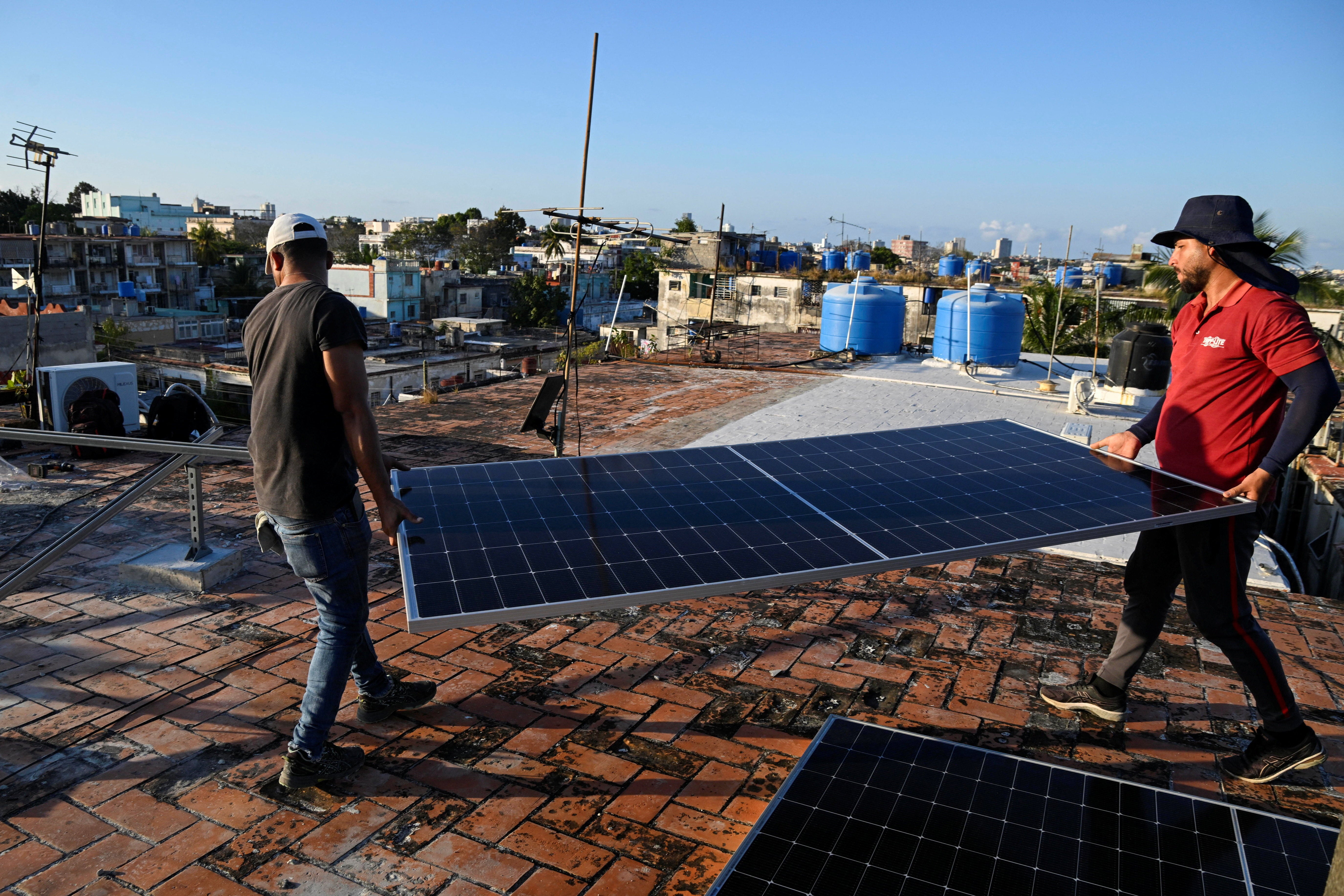 Solar panel technicians Denis Tamayo, 30, and Alejandro Guerra, 30, carry a solar panel on the rooftop of a building as Cubans grapple with an ongoing energy crisis exacerbated by fuel shortages (REUTERS)
REUTERS
Solar panel technicians Denis Tamayo, 30, and Alejandro Guerra, 30, carry a solar panel on the rooftop of a building as Cubans grapple with an ongoing energy crisis exacerbated by fuel shortages (REUTERS)
REUTERS
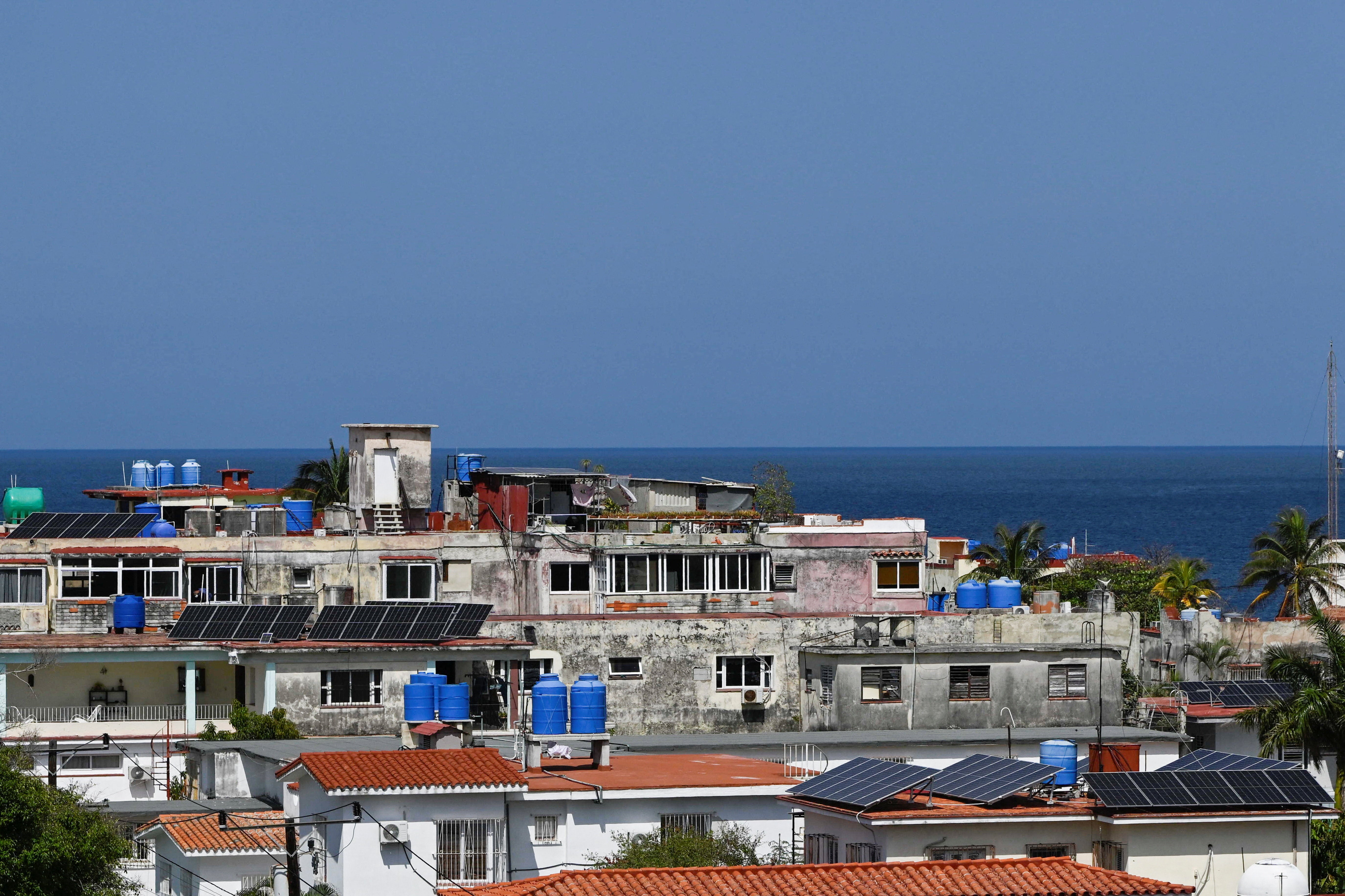 Solar panels are put on the rooftops of buildings as Cubans grapple with an ongoing energy crisis exacerbated by fuel shortages (REUTERS)
REUTERS
Solar panels are put on the rooftops of buildings as Cubans grapple with an ongoing energy crisis exacerbated by fuel shortages (REUTERS)
REUTERS
Cubans are increasingly building their own workarounds to the island’s collapsing electricity supply, turning rooftops, small businesses—and even vehicles—into ad hoc power plants. The proximate driver is fuel scarcity: according to Reuters reporting cited by The Independent, Washington’s tightening measures to block oil shipments to Cuba have compounded years of sanctions and an economic downturn that already left the state struggling to buy fuel and maintain generation.
The result is a two-layer failure. Layer one is geopolitical: US pressure aims to starve the system of inputs. The Trump administration argues the squeeze is meant to force political change; White House press secretary Karoline Leavitt said this week it is in Cuba’s “best interest to make very dramatic changes very soon,” The Independent reports. Layer two is domestic: a centralised grid operated as a rationing instrument, where electricity is distributed as a political priority rather than a service competing for customers.
In that gap, an informal energy economy is blooming. Havana resident Roberto Sarriga told Reuters he installed solar panels so his household can keep “the basics covered”—internet access, phone charging, and a television for his elderly mother—because outages “pretty much stop you from doing anything.” Installer Raydel Cano said demand has surged as diesel becomes harder to buy, leaving generator-dependent businesses stranded.
Solar is not a mass solution—yet. Panels are imported and sold in dollars, placing them beyond most households. But for the segment with remittances or hard-currency income, solar has become the new private property boundary: not land, but watt-hours. A Havana café manager told Reuters that with diesel increasingly scarce, solar’s higher upfront cost now looks like the cheaper operating model.
The Cuban state, facing a legitimacy problem it cannot black out, is trying to co-opt the trend. The government announced tax waivers of up to eight years for entrepreneurs who undertake renewable energy projects, The Independent reports. It also claims progress on utility-scale solar, saying it installed more than 1,000 megawatts of solar generation over the past year with Chinese financing and equipment, and plans to double capacity.
International organisations are warning about the downside of energy rationing. The UN has cautioned that unmet energy needs could trigger a humanitarian crisis, as Cuba already faces shortages of food, fuel, and medicine. The government has implemented rationing to protect “essential services”—a phrase that means the state keeps its own lights on first.
Meanwhile, Cuba is still searching for suppliers. Russia, one of the remaining sources, is reportedly preparing to send crude, according to Russia’s Izvestia, as cited by The Independent.
The deeper story is that Cuban society is quietly re-privatising resilience: households and small firms are converting capital into autonomy, creating parallel energy markets where the state’s monopoly can’t deliver. Sanctions may be the external villain, but the island’s real vulnerability is that a single grid—owned by the same entity that polices dissent—turns electricity into a lever. Cubans are responding like rational actors: they’re buying their way out, one panel at a time.