
Victoria bushfire triggers leave immediately orders near Gaffneys Creek
Police probe possible arson with three ignition points, State power peaks at push-notification governance
Images
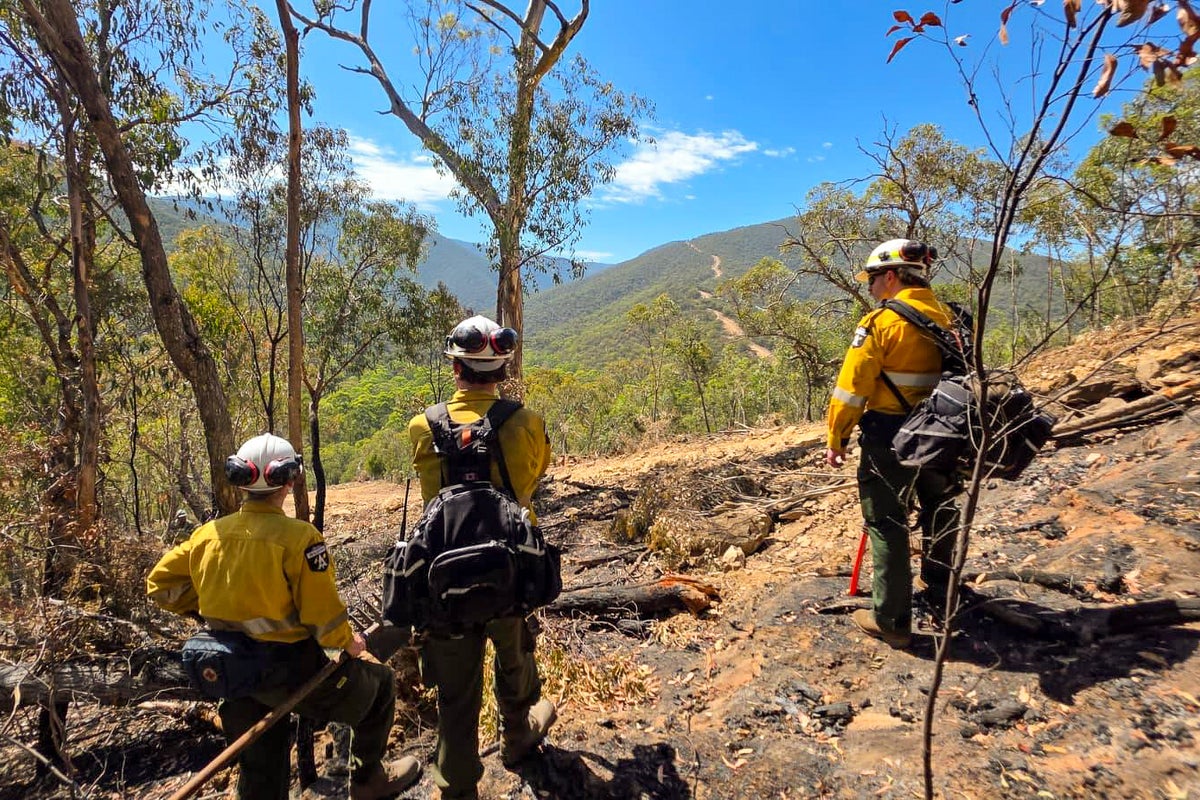 Residents in Australia’s Victoria state urged to flee out-of-control bushfire
independent.co.uk
Residents in Australia’s Victoria state urged to flee out-of-control bushfire
independent.co.uk
Residents in Victoria, Australia were told to “leave immediately” over the weekend as an out-of-control bushfire burned through steep terrain near Gaffneys Creek, about 50 km northeast of Melbourne. According to The Independent, Victoria Emergency issued its highest warning level for areas around the A1 Mine Settlement after the fire moved rapidly along ridgelines, forcing road closures and limiting ground access for crews.
State response controller Alistair Drayton told ABC News the blaze was burning in “remote mountainous terrain” that is difficult to reach, with firefighters relying on aircraft and heavy machinery to establish containment lines. Officials said the western edge had been contained, but crews were still working around the clock. The fire had burned more than 600 hectares, with roughly 35 vehicles deployed.
The most politically combustible detail is not the weather but the criminal investigation. Victoria Police said the fire is being treated as suspicious while the cause is investigated, with detectives from the Benalla Crime Investigation Unit leading the inquiry. A local volunteer firefighter told ABC News that crews initially believed the blaze may have been deliberately lit after finding three separate ignition points.
Possible arson plus “catastrophic” evacuation messaging puts the state’s strongest claim to legitimacy on its ability to issue orders. The rest is logistics and liability management. The public is expected to self-evacuate, self-provision, and absorb the economic hit, while the state’s primary deliverable is a push notification phrased like a legal disclaimer.
Drayton also warned that incoming weather could complicate the situation: thunderstorms and rain may bring both welcome moisture and new risks, including gusty winds that can drive fire spread and heavy rainfall that can trigger flash flooding. Saturday temperatures were expected to reach 38C in northern Victoria, with Sunday forecast to bring “gusty winds and moderate to locally heavy rainfall,” as cited by The Independent.
The episode arrives in the shadow of Australia’s recent fire seasons. The Independent notes that January saw thousands of firefighters mobilised across south-eastern Australia against dozens of blazes that razed homes, cut power, and burned large tracts of bushland—described as the worst since the 2019–2020 “Black Summer” fires.
If the current fire is confirmed as arson, it will likely be used as justification for more surveillance, tighter access controls, and expanded emergency powers. But the operational reality remains stubbornly decentralised: individuals decide when to flee, what to take, and how to rebuild—while the state issues orders to do what people were already going to do, only faster.