
Bilingual mothers keep neural synchrony with children while switching languages
University of Nottingham study uses fNIRS during play, 15 pairs and a proxy for bonding become a headline anyway
Images
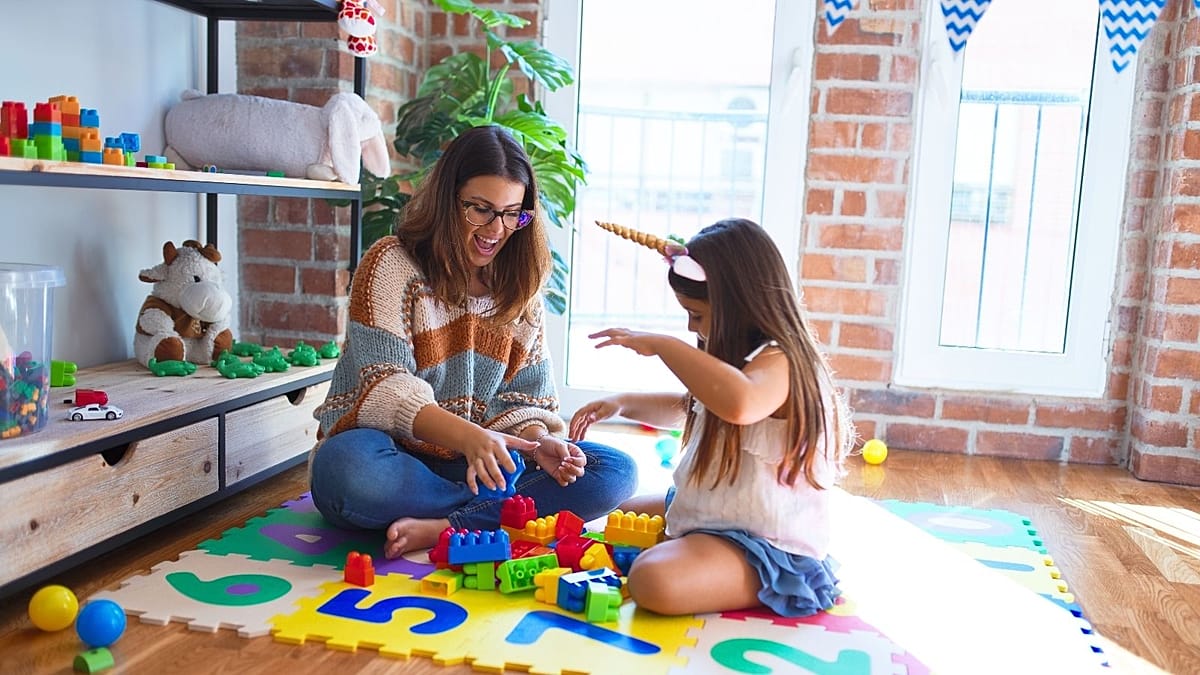 Does being bilingual affect the mother-child neural bond? Stu
euronews.com
Does being bilingual affect the mother-child neural bond? Stu
euronews.com
A small neuroscience study is being waved around as reassurance that bilingual parenting is harmless: mothers who switch languages do not somehow “break” bonding. According to Euronews, researchers at the University of Nottingham recorded “mother–child brain synchrony” while bilingual mothers played with their children, alternating between the mother’s native language and English. The paper, published in Frontiers in Cognition, reports no meaningful drop in synchrony when the dyad switches into the second language.
The design is straightforward and, in its own narrow way, interesting. Fifteen mother–child pairs participated in a 45‑minute session split into three phases: interactive play in the mother’s native language, interactive play in English, and then independent play in silence. Both mother and child wore caps measuring changes in oxygenated blood in the cortex—functional near‑infrared spectroscopy (fNIRS), a technique that infers neural activity indirectly via haemodynamics. Synchrony was stronger during interactive play than during independent play, particularly in frontal regions associated with executive control and emotion, and the headline result is that this synchrony did not differ much by language.
But the political and parenting-culture takeaway (“don’t worry, bilingualism doesn’t harm attachment”) rests on a stack of operational definitions. What the study actually measures is correlation between two fNIRS time series during a structured play task. That is not the same thing as attachment security, parental sensitivity, long-run child outcomes, or even how affectionate a parent feels while speaking a second language. The study is about a specific neurophysiological proxy for coordination under controlled conditions, not “bonding” as the word is used in everyday life.
Methodologically, the limitations matter. With n=15, statistical power is thin, heterogeneity is largely unobservable, and any subgroup questions—lower proficiency parents, children who are not bilingual from birth, emotionally charged conversations, discipline, conflict—are mostly speculative. Euronews notes the authors themselves discuss “emotional distancing” often reported by late second-language speakers, and call for research across different proficiency levels and contexts.
There is also a more basic issue: fNIRS is sensitive to motion and superficial blood flow; play sessions are not exactly motionless. Researchers can and do correct for artefacts, but the signal remains a proxy. “Synchrony” depends on preprocessing choices, time windows, and the statistical definition of coupling. Change the pipeline and you can change the story.
Still, the result cuts against a common bureaucratic instinct: treating non-dominant language use as a deficit requiring intervention. If anything, the study suggests bilingual families can coordinate just fine even when using a second language—at least when the parent is proficient and the interaction is cooperative play. The point is not that neuroscience has certified bilingual parenting, but that thin evidence is often used to justify thick intrusions into family life.
Source: Euronews; study published in Frontiers in Cognition.