
Trump schedules three-day China visit after Supreme Court tariff defeat
Murdoch Wall Street Journal calls it worst moment of presidency, foreign-policy stage doubles as domestic escape hatch
Images
 Trump to make three-day visit to China next month, White House says
aljazeera.com
Trump to make three-day visit to China next month, White House says
aljazeera.com
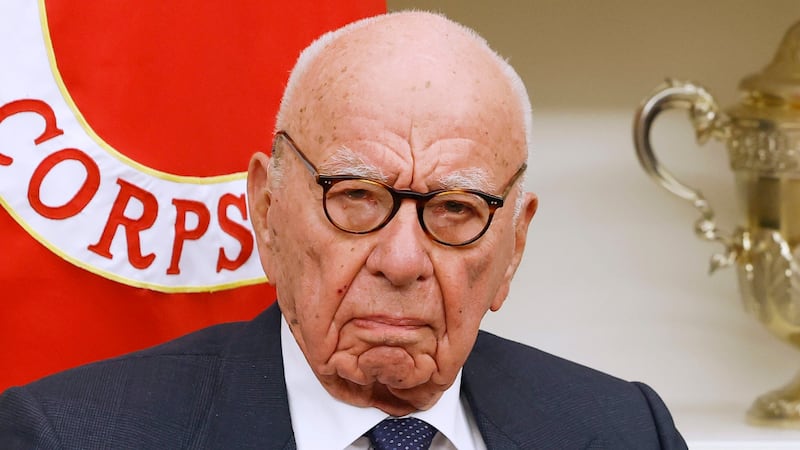 Rupert Murdoch. Anna Moneymaker/Getty Images
Anna Moneymaker/Getty Images
Rupert Murdoch. Anna Moneymaker/Getty Images
Anna Moneymaker/Getty Images
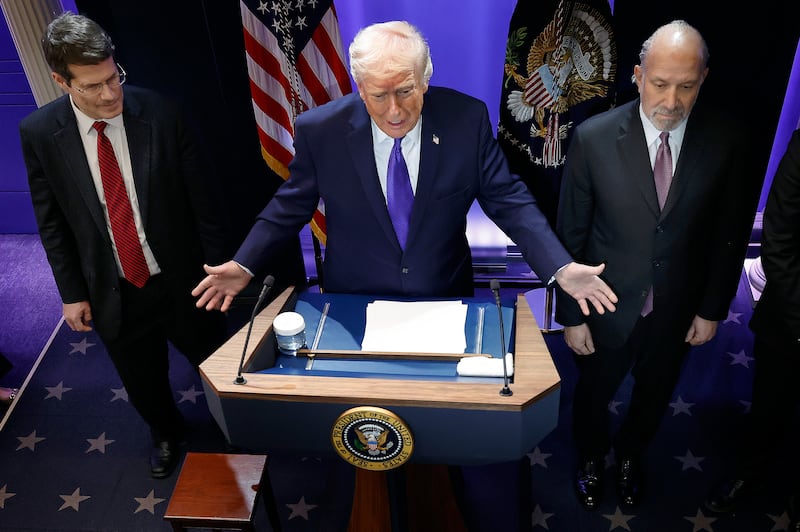 The White House Press Briefing Room was hardly recognizable with its lighting significantly dimmed. Kevin Dietsch/Getty Images
Kevin Dietsch/Getty Images
The White House Press Briefing Room was hardly recognizable with its lighting significantly dimmed. Kevin Dietsch/Getty Images
Kevin Dietsch/Getty Images
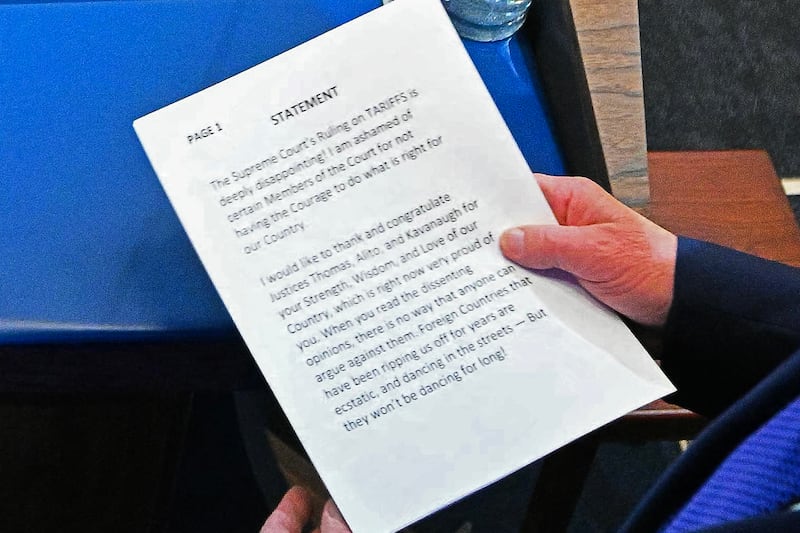 President Donald Trump holds his statement during a press conference in the Brady Press Briefing Room of the White House in Washington, DC, on Feb. 20, 2026. MANDEL NGAN/Mandel Ngan/AFP via Getty Images
MANDEL NGAN/Mandel Ngan/AFP via Getty Images
President Donald Trump holds his statement during a press conference in the Brady Press Briefing Room of the White House in Washington, DC, on Feb. 20, 2026. MANDEL NGAN/Mandel Ngan/AFP via Getty Images
MANDEL NGAN/Mandel Ngan/AFP via Getty Images
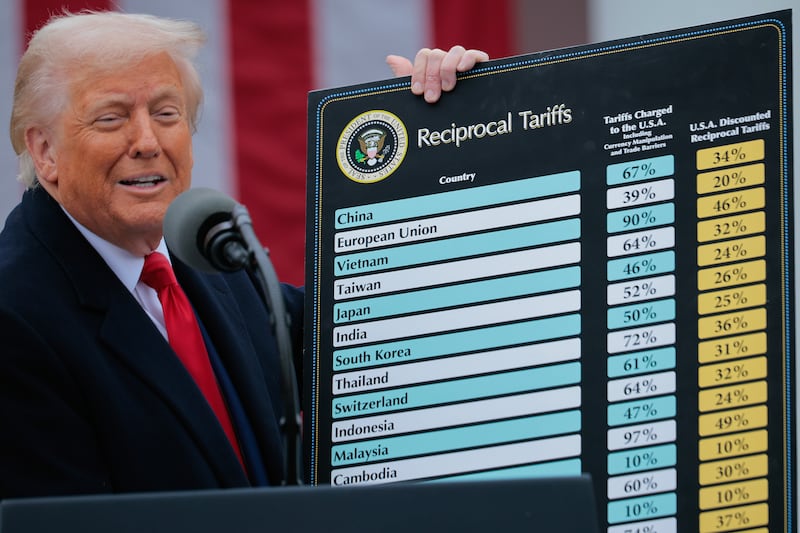 Donald Trump announced his “Liberation Day” tariffs in April 2025, targeting countries worldwide. Chip Somodevilla/Getty Images
Chip Somodevilla/Getty Images
Donald Trump announced his “Liberation Day” tariffs in April 2025, targeting countries worldwide. Chip Somodevilla/Getty Images
Chip Somodevilla/Getty Images
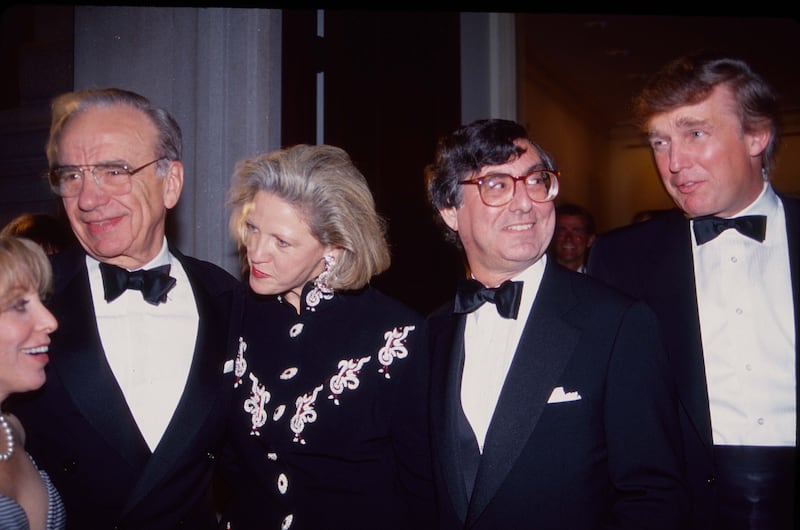 Australian publisher Rupert Murdoch, journalist Anna Murdoch, New York Magazine Editor-in-Chief Ed Kosner, and American businessman and ex-president Donald Trump attend the 25th Anniversary of New York Magazine party on April 19, 1993, in New York City. Sonia Moskowitz/Getty Images
Sonia Moskowitz/Getty Images
Australian publisher Rupert Murdoch, journalist Anna Murdoch, New York Magazine Editor-in-Chief Ed Kosner, and American businessman and ex-president Donald Trump attend the 25th Anniversary of New York Magazine party on April 19, 1993, in New York City. Sonia Moskowitz/Getty Images
Sonia Moskowitz/Getty Images
Donald Trump will make a three-day visit to China next month, the White House said, as his signature tariff policy runs into legal limits at home and his media allies sharpen their knives.
According to Al Jazeera, the trip is scheduled for next month and will be framed as a high-level engagement with Beijing at a moment when US–China relations remain tense over trade and security. The timing is conspicuous. Only hours earlier, the Supreme Court ruled 6–3 that Trump lacked authority to impose sweeping global tariffs under the 1977 International Emergency Economic Powers Act, a core legal theory behind last year’s “Liberation Day” tariff blitz.
Domestically, the setback produced the predictable tantrum. Trump attacked the Court—including Trump-appointed justices—after the ruling. But the more interesting reaction came from inside the nominally friendly ecosystem. The Daily Beast reports that the Wall Street Journal editorial board, owned by Rupert Murdoch, called it “arguably the worst moment of his Presidency,” describing Trump’s attack on the justices as “ugly even by Mr. Trump’s standards,” and praising the decision as a rare reassertion of separation of powers.
This is the modern executive branch’s version of an “exit ramp”: when courts or Congress complicate the preferred domestic route, move the action to foreign-policy theater, where the president’s discretion is wider and the accountability mechanisms thinner. Trade policy is particularly suited to this pivot. Even after the Court’s ruling, Trump immediately sought alternative statutory hooks to keep tariffs alive—demonstrating that Washington’s real constraint is rarely legality, but which legal workaround is currently available.
A China trip offers several advantages. It can be sold as statesmanship to voters, as “tough but dealmaking” to business, and as a distraction to media. It also allows concessions to be packaged as “historic breakthroughs” rather than retreats forced by domestic institutions. In practice, any bargain over tariff levels, export controls, or investment restrictions becomes a currency for the administration to trade—without the friction of a legislative process that is formally responsible for tariffs but habitually abdicates.
The punchline is grimly familiar: the same state that cannot reliably restrain itself in domestic economic regulation can still project power abroad with minimal internal resistance. If Trump’s tariff authority is trimmed at the margins, the executive’s capacity to reframe the dispute as geopolitics—and to bargain away private interests in the name of “national strategy”—remains intact.
Murdoch’s Journal may mock “Liberation Day,” but the deeper continuity is that American trade and security policy is increasingly run through executive improvisation. The venue changes—from the Supreme Court to Beijing—but the central premise does not: the presidency is treated as a roving mandate to manage the economy by decree, then launder the consequences through diplomacy.