
South African game Relooted makes museum repatriation a heist mechanic
Nyamakop uses real artefacts and Africanfuturist setting, restitution politics becomes frictionless entertainment
Images
 Relooted, created by Nyamakop, has been developed amid a growing campaign to repatriate culturally and spiritually significant items to their homelands. Illustration: Nyamakop
theguardian.com
Relooted, created by Nyamakop, has been developed amid a growing campaign to repatriate culturally and spiritually significant items to their homelands. Illustration: Nyamakop
theguardian.com
 In this South African-made game the job is to liberate African artefacts from Western museums
theguardian.com
In this South African-made game the job is to liberate African artefacts from Western museums
theguardian.com
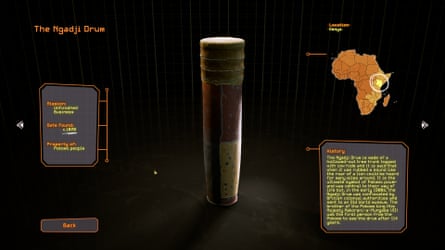 The Ngadji drum, which is currently in the British Museum. Illustration: Nyamakop
theguardian.com
The Ngadji drum, which is currently in the British Museum. Illustration: Nyamakop
theguardian.com
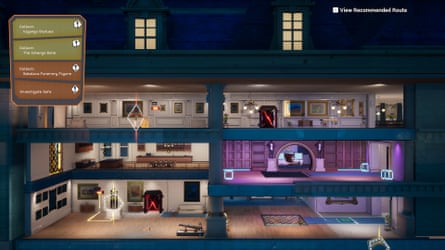 A museum heist scene from the game. Illustration: Nyamakop
theguardian.com
A museum heist scene from the game. Illustration: Nyamakop
theguardian.com
A new South African video game, Relooted, turns the museum restitution debate into a playable heist fantasy: you break into Western museums and “take back” African artefacts. According to The Guardian, players control Nomali, a South African sports scientist and parkour specialist, and steal 70 real-world objects—among them an Asante gold mask looted after the British army destroyed Kumasi, and the skull of Tanzanian king Mangi Meli, taken to Germany after his execution in 1900.
The studio, Nyamakop, says the point is not to litigate provenance case-by-case but to give players a “hopeful, utopian feeling” about artefacts “finally coming home,” as CEO Ben Myres puts it. The game’s narrative director, Mohale Mashigo, frames the world as “Africanfuturist”—a late-21st-century Africa that functions for its people rather than as an exotic backdrop. Meanwhile, “Europe” and “the United States” are intentionally flattened into “The Old World” and “The Shiny Place,” a deliberate parody of how Western media often renders Africa as a single, generic place.
The timing is not subtle. The Guardian notes the broader repatriation campaign and cites the 2018 Sarr–Savoy report commissioned by Emmanuel Macron, which estimated that more than 90% of Africa’s material cultural heritage is held outside the continent. Some institutions have returned objects—Benin bronzes from Berlin’s Ethnologisches Museum and Cambridge University are mentioned—while others, notably the British Museum, remain structurally resistant.
Relooted’s core political move is also its core design constraint: it converts a messy, document-heavy, jurisdiction-dependent process into a clean mechanic of moral certainty. Real restitution is a tangle of treaties, domestic museum law, donor restrictions, conflicting claims by postcolonial states, and the awkward fact that “the community” is rarely a single legal entity. A game can’t adjudicate those disputes without becoming a courtroom simulator, so it does what entertainment does best: it picks a side, then optimizes for flow.
That may be precisely why it will land. In the real world, states and museums bargain; in Relooted, an individual acts. The game’s appeal—direct action, personal agency, bypassing institutions—arrives wrapped in the moral language of collective ownership and historical repair. It’s a protest poster that runs at 60 frames per second.
Whether you see that as catharsis or propaganda depends on your priors. But as a media object, it’s a neat case study in how culture-war politics migrates into interactive form: not by arguing, but by training the player’s reflexes. The “repatriation debate” becomes muscle memory.