
UK tourist with valid visa held six weeks by ICE
Detention quotas and budget boom turn border discretion into revenue stream, Trump Iran strike talk makes emergency logic portable
Images
 Karen Newton: ‘I am not a dangerous criminal. I don’t even have parking tickets.’ Photograph: Lydia Goldblatt/The Guardian
theguardian.com
Karen Newton: ‘I am not a dangerous criminal. I don’t even have parking tickets.’ Photograph: Lydia Goldblatt/The Guardian
theguardian.com
 Illustration: Edel Rodriguez/The Guardian
theguardian.com
Illustration: Edel Rodriguez/The Guardian
theguardian.com
 The Northwest ICE Processing Center, Tacoma, Washington. Photograph: Jason Redmond/AFP/Getty Images
theguardian.com
The Northwest ICE Processing Center, Tacoma, Washington. Photograph: Jason Redmond/AFP/Getty Images
theguardian.com
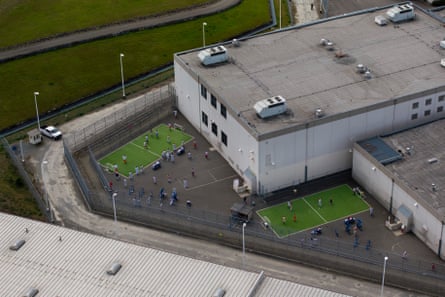 Detainees exercise in an outdoor recreation area at the Northwest ICE Processing Center. Photograph: David Ryder/Getty Images
theguardian.com
Detainees exercise in an outdoor recreation area at the Northwest ICE Processing Center. Photograph: David Ryder/Getty Images
theguardian.com
 British backpacker Rebecca Burke. Photograph: Francesca Jones/The Guardian
theguardian.com
British backpacker Rebecca Burke. Photograph: Francesca Jones/The Guardian
theguardian.com
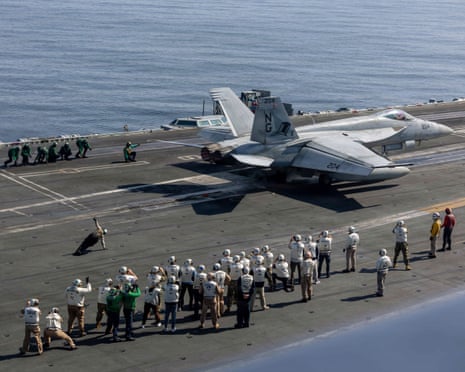 Flight operations on the aircraft carrier USS Abraham Lincoln in the Arabian Sea amid the US military buildup and fears of an attack on Iran. Photograph: Hannah Tross/US NAVY/AFP/Getty Images
theguardian.com
Flight operations on the aircraft carrier USS Abraham Lincoln in the Arabian Sea amid the US military buildup and fears of an attack on Iran. Photograph: Hannah Tross/US NAVY/AFP/Getty Images
theguardian.com
A British retiree with a valid US tourist visa spent six weeks in Immigration and Customs Enforcement (ICE) custody after a border mix‑up, according to the Guardian — America’s most reliable export is not Hollywood but procedural power.
Karen Newton, 65, entered the US legally and toured the West with her husband, Bill, on a two‑month road trip. The trouble began at the Canada–US border when Canadian officials said the couple lacked paperwork to bring their car into Canada. They were turned back to the US side, where Bill’s visa had expired but Newton’s had not. Newton says she was then handcuffed, shackled, held in a locked cell, transported overnight, and ultimately detained for weeks.
The Guardian reports Newton heard repeatedly from guards that ICE officers receive bonuses tied to detentions — an allegation that fits uncomfortably well with the agency’s recent budgetary trajectory and performance culture. Under Trump’s second term, ICE’s budget has reportedly ballooned to $85bn from about $6bn a decade ago, alongside recruitment bonuses as high as $50,000 and internal arrest targets pushing daily arrests into the 1,200–1,500 range.
In theory, this is an immigration story. It is about incentives: when an agency is funded like a wartime bureaucracy and measured in “heads,” tourists become raw material.
On the same day Newton’s account ran, Reuters reported via the Guardian that the US is again escalating rhetoric and military planning toward Iran. Iran’s foreign minister Abbas Araqchi said Tehran is preparing a nuclear counterproposal after indirect talks in Geneva, while Donald Trump publicly floated “limited military strikes” and gave Tehran 10–15 days to make a deal or face “really bad things.” Two US officials told Reuters that planning is at an advanced stage, with options including targeting individuals and even pursuing leadership change.
The juxtaposition is not accidental. “Crisis” abroad and “enforcement” at home are the same administrative muscle, simply pointed at different targets. A state that can plausibly describe a cruise‑missile strike as “limited” will not struggle to describe shackling a grandmother as “standard procedure.”
Araqchi warned that military action would complicate diplomacy; the UN reiterated concern about heightened rhetoric and regional military activity. Meanwhile, Newton’s warning is simpler: “Don’t go to the US – not with Trump in charge.” Her point is less partisan than structural. When rights are treated as revocable permissions — contingent on database flags, quotas, and mood — everyone is a temporary exception.
If Washington wants the world to believe it can calibrate violence with adjectives, it might start by proving it can run a border without turning lawful visitors into collateral damage.