
Dark-matter-dominated dwarf galaxy confirmed
Stellar velocity dispersion and distance systematics drive mass-to-light inference, ΛCDM and MOND both inherit a nuisance datapoint
Images
 A Galaxy Composed Almost Entirely of Dark Matter Has Been Confirmed
wired.com
A Galaxy Composed Almost Entirely of Dark Matter Has Been Confirmed
wired.com
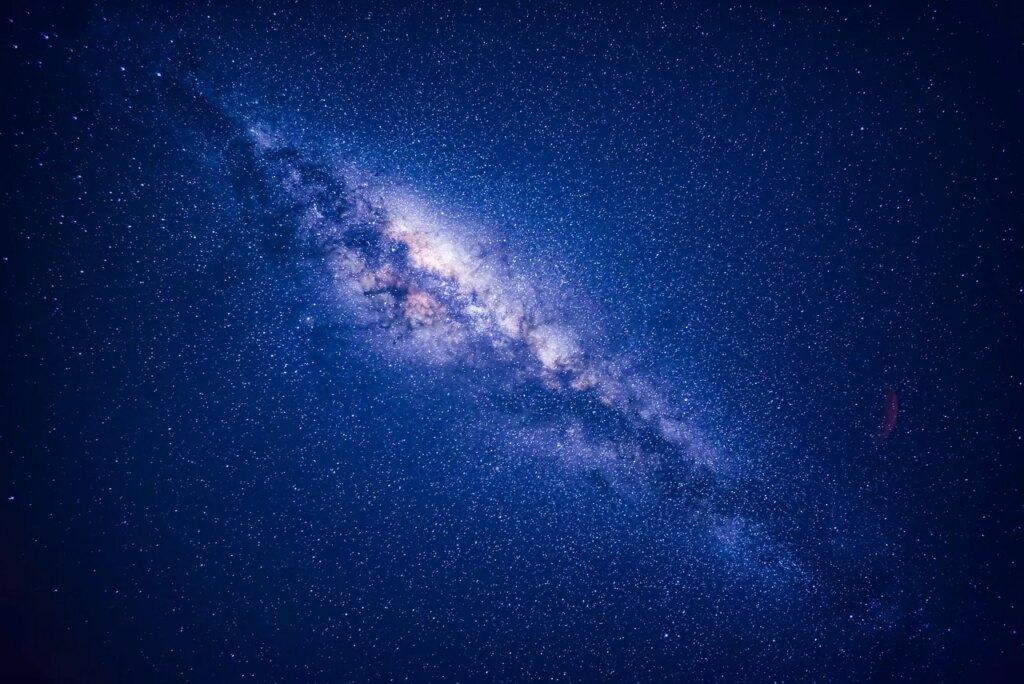 A Galaxy Composed Almost Entirely of Dark Matter Has Been Confirmed
dnyuz.com
A Galaxy Composed Almost Entirely of Dark Matter Has Been Confirmed
dnyuz.com
Astronomers have now firmed up one of the more awkward objects in extragalactic astronomy: a diffuse dwarf galaxy whose mass appears to be dominated by dark matter to an extreme degree. Wired reports that follow-up observations have “confirmed” the galaxy’s dark-matter-heavy nature after earlier debate over whether the original claim was an artifact of bad distance estimates, contaminated star samples, or optimistic modeling.
The key point is that nobody measures dark matter directly. What observers actually have are (1) photometry—how much starlight the system emits and how that light is distributed on the sky—and (2) stellar kinematics—line-of-sight velocities of individual stars that are assumed to be gravitationally bound to the galaxy. From these, they infer a dynamical mass via the velocity dispersion (how fast stars are moving relative to the system’s mean) and a characteristic size scale. The result is typically summarized as a mass-to-light ratio: if the stars are too few to explain the gravitational potential implied by their own motions, the missing mass is labeled “dark matter.”
That pipeline is conceptually simple and practically treacherous. In ultra-faint or diffuse dwarfs, a small number of misclassified stars can dominate the inferred dispersion. Foreground Milky Way stars masquerading as members, unresolved binaries inflating apparent velocities, or tidal debris from an interaction can all mimic a high dispersion without requiring an enormous bound halo. Distance is another lever: if the galaxy is closer or farther than assumed, its physical size and luminosity shift, changing the mass-to-light ratio and the interpretation of whether the system is even in equilibrium.
According to Wired, the new work addresses the earlier criticisms by improving membership selection and the quality/quantity of velocity measurements, strengthening the case that the dispersion is real and not just statistical noise or contamination. The implied conclusion is an unusually large dynamical mass for a very small stellar component—an object that looks like a “failed galaxy” in which star formation was inefficient while the dark halo remained.
Cosmologically, this is uncomfortable in two directions at once. For ΛCDM, dwarfs are supposed to live in dark-matter subhalos, but the detailed mapping between halo mass and visible stars is already strained by the “missing satellites” and “too-big-to-fail” problems. An extreme dark-matter-dominated dwarf is not impossible, but it pushes models to explain how baryons were so thoroughly prevented from forming stars without disrupting the halo. For MOND-like modified-gravity frameworks, which try to reproduce galaxy dynamics with little or no dark matter, a galaxy that appears to require a huge mass discrepancy in a low-acceleration regime is also an irritant—unless one can plausibly blame non-equilibrium dynamics, external-field effects, or measurement systematics.
With systems this faint, the scientific dispute is often about whether the assumptions (bound, equilibrium, clean membership) are justified. The confirmation matters because it narrows the space for those escape hatches—and forces both camps to argue about physics rather than bookkeeping.