
Floreana giant tortoises return to Galápagos after 180 years
Back-breeding produces hybrids with 40–80% ancestry, conservation becomes genetic engineering by committee
Images
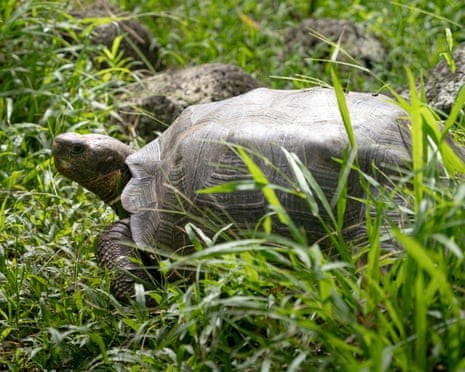 The Floreana giant tortoise. By the time Charles Darwin landed on the island in 1835, the subspecies was already in its death throes. Photograph: Carlos Espinosa /PR
theguardian.com
The Floreana giant tortoise. By the time Charles Darwin landed on the island in 1835, the subspecies was already in its death throes. Photograph: Carlos Espinosa /PR
theguardian.com
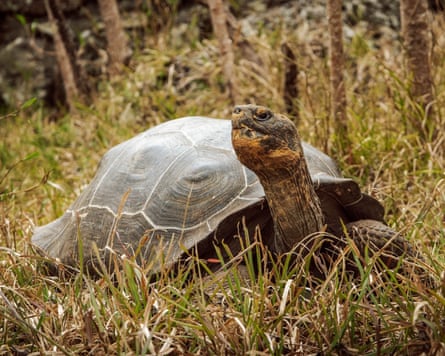 The Floreana giant tortoise. Photograph: PR
theguardian.com
The Floreana giant tortoise. Photograph: PR
theguardian.com
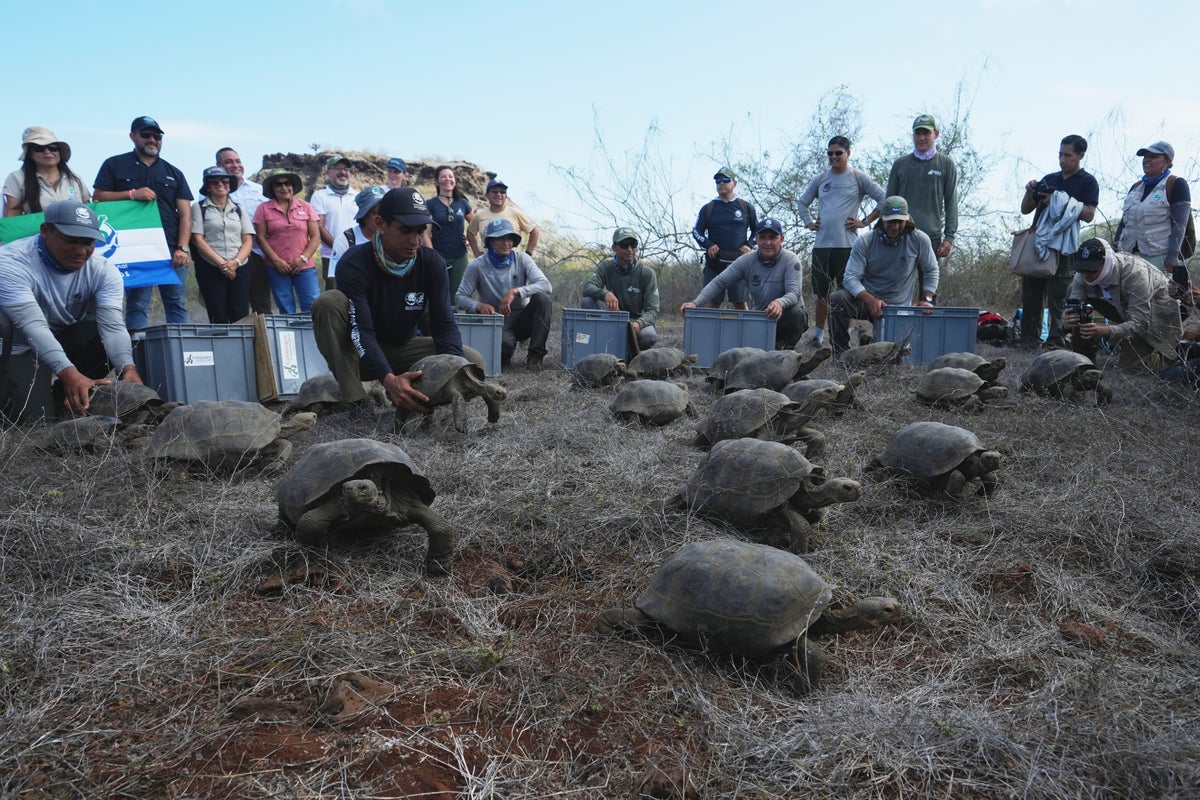 Galápagos park releases 158 juvenile hybrid tortoises on Floreana to restore the ecosystem
independent.co.uk
Galápagos park releases 158 juvenile hybrid tortoises on Floreana to restore the ecosystem
independent.co.uk
Giant tortoises have returned to Ecuador’s Floreana Island in the Galápagos for the first time in roughly two centuries—though the animals stepping onto the volcanic ground are not a resurrected species so much as a carefully curated approximation.
The Guardian reports that 158 juvenile tortoises descended from the extinct Floreana giant tortoise (Chelonoidis niger niger) were released as part of the Floreana Ecological Restoration Project, after whalers wiped out the original population in the 1840s by removing thousands as shipboard food stores. The Associated Press, via The Independent, adds that the released animals are hybrids carrying roughly 40% to 80% of the genetic makeup of the extinct lineage, with ages between 8 and 13.
The technical trick is “back-breeding”: selecting living tortoises with partial Floreana ancestry and breeding them in captivity to concentrate that ancestry over generations. According to The Guardian, a relic population on Wolf volcano (Isabela Island) discovered in 2008 included individuals with saddleback shells reminiscent of Floreana tortoises. A captive program began in 2017 using 23 hybrids judged most closely related to the Floreana subspecies. By 2025, more than 600 hatchlings had been produced, and several hundred were large enough for eventual release.
The Independent quotes Galápagos National Park officials describing the selection of “best specimens with the strongest lineage,” and notes that the return will be staged—700 juveniles are planned for Floreana over time. Park staff argue the juveniles are now big enough to better survive threats from introduced predators.
None of this is “letting nature be.” It is conservation as engineered reassembly: genetics, captive breeding logistics, biosecurity, and the political choreography of a restoration partnership involving the national park, charities, and Floreana’s roughly 160–200 residents (figures vary between the reports). The Guardian notes invasive-species eradication begun in 2023 has reduced rats and feral cats, with locals reporting improved harvests—an ecological intervention that conveniently also functions as a development program.
The risks are the ones PR brochures omit. Hybrid lineages can reintroduce traits that were not part of the original Floreana population; genetic bottlenecks can harden into permanent limitations; and selection criteria—shell shape, ancestry percentages, survivability—are human choices that will shape the island’s future ecology. Even the “purity” goal described to AP (gradually pushing the line closer to the extinct type) is a value judgment disguised as biology.
Still, the project shows a broader shift: biodiversity policy is migrating from protection to reconstruction. When extinction becomes reversible “enough,” institutions gain a new mandate—and a tempting excuse to manage ecosystems like portfolios. Floreana’s tortoises may indeed restore grazing patterns and seed dispersal. They also restore something else: the conservation industry’s confidence that it can fix what it, or its predecessors, helped break.