
72 captive tigers die in northern Thailand
Officials dispute cause between canine distemper and feline panleukopenia, tiger selfie industry discovers biology ignores branding
Images
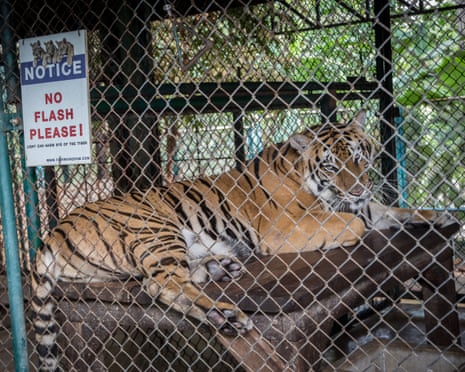 A tiger before the outbreak at the Tiger Kingdom zoo in Chiang Mai, where the exact cause of the deaths remains unclear. Photograph: Anadolu/Anadolu Agency/Getty Images
theguardian.com
A tiger before the outbreak at the Tiger Kingdom zoo in Chiang Mai, where the exact cause of the deaths remains unclear. Photograph: Anadolu/Anadolu Agency/Getty Images
theguardian.com
Thai authorities are scrambling to explain — and contain — the sudden death of 72 captive tigers in northern Thailand, an event so abnormal that even officials are admitting the numbers don’t fit the usual “zoo incident” script. According to The Guardian, the die-off hit facilities in Chiang Mai’s Mae Rim and Mae Taeng districts after animals began showing symptoms around February 8. The most visible site, Tiger Kingdom Chiang Mai — a tourist attraction that markets the chance to “hug, touch, and take photos up close with tigers” — has been temporarily closed.
The state’s own messaging can’t decide what killed the animals. The regional livestock office (Region 5) said the tigers were infected with canine distemper virus (CDV), with mycoplasma bacteria identified as a secondary infection, The Guardian reports. But Somchuan Ratanamungklanon, director-general of the Department of Livestock Development, told Thai outlet Matichon the culprit was feline panleukopenia — a different pathogen entirely.
That contradiction matters. CDV is a morbillivirus with a long record of spilling into non-canine carnivores, including big cats; panleukopenia is a parvovirus with different transmission dynamics and control strategies. “We don’t know yet” is a defensible position. Announcing competing diagnoses while “teams urgently disinfect enclosures” and “prepare to vaccinate surviving animals” signals activity when the underlying model is the problem.
The vulnerability isn’t just which virus it is; it’s what a tiger petting-and-photo business requires. High animal density, constant human traffic, shared staff and equipment, and the logistical temptation to cut corners on feed and quarantine are not accidental — they’re the revenue model. When the product is proximity to an apex predator, biosafety becomes a cost center.
Thailand has seen this movie before. The Guardian recalls a 2004 bird-flu outbreak at Sriracha Tiger Zoo in Chonburi province, where 147 of 441 tigers died or were euthanized; investigators pointed to raw chicken carcasses as the likely source. More recently, 47 tigers and three leopards reportedly died in Vietnam in 2024 after contracting avian influenza. Concentrated private menageries plus cheap supply chains can amplify pathogens.
The state response has been to treat the outbreak as a containment and public-relations exercise — disinfect, vaccinate, reassure tourists — rather than an incentives problem. The incentives are what scale these operations from “conservation” branding into megafarms of large carnivores.
Thailand is unlikely to avoid mass die-offs through press releases alone. Measures could include strict liability for outbreaks, independent veterinary audits with closure powers, transparent ownership and animal-movement records, and enforcement that targets the business model rather than the symptom.