
NASA targets March 6 Artemis II launch
First crewed SLS-Orion lunar flyby after fueling test, Calendar milestone meets unresolved abort and re-entry failure modes
Images
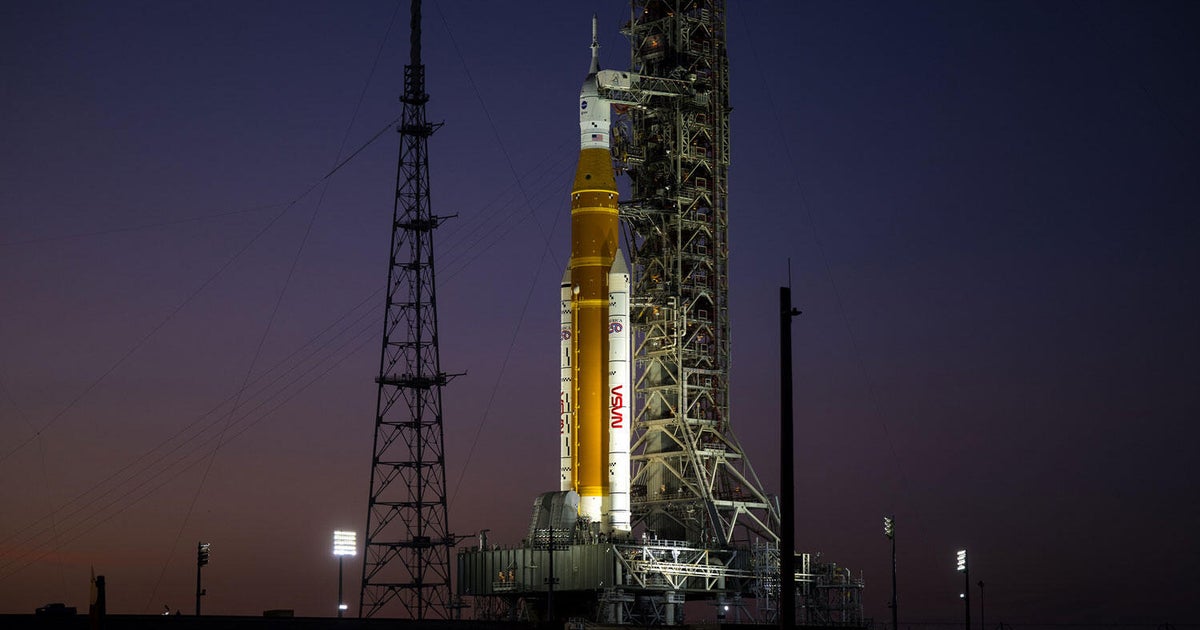 NASA targets March 6 for launch of long-awaited Artemis II moon mission
cbsnews.com
NASA targets March 6 for launch of long-awaited Artemis II moon mission
cbsnews.com
NASA has set March 6 as the target launch date for Artemis II, the first crewed mission of the Artemis program, after completing a key “fueling test” of the Space Launch System (SLS) core stage at Kennedy Space Center, according to CBS News. The mission is planned as a lunar flyby: four astronauts in an Orion capsule will loop around the Moon and return to Earth without landing.
The headline date is the easy part. The hard part is the remaining technical work that tends to get translated, in Washington, into “schedule pressure.” Artemis II still has to demonstrate that SLS/Orion works as an integrated system that can keep humans alive, abort safely, and survive re-entry—while being assembled by a supply chain and certification bureaucracy that often look like the real program managers.
On the rocket side, the recent cryogenic loading exercise is meant to validate ground systems, propellant conditioning, and countdown procedures for the SLS core stage. But a successful wet dress rehearsal does not close out the big failure modes: engine start transients on four RS-25s, propulsion and avionics interactions, stage separation dynamics, and the reliability of the solid rocket boosters’ ignition and thrust profile. SLS is a “heritage” rocket in the way a Frankenstein is a “heritage” human.
On the spacecraft side, Orion’s life-support system and cabin environment management must prove stable for a multi-day crewed flight. Thermal control is not a press-release bullet point; it’s what keeps electronics and humans inside operational margins when the vehicle cycles between sunlight and shadow. Navigation and communications must work through a long free-return trajectory, and the capsule’s fault-detection and autonomy logic must behave predictably when sensors disagree.
Then there are abort modes—the part of human spaceflight that exists precisely because rockets fail. Artemis II must show that Orion can separate from SLS fast enough, under the right conditions, and still bring the crew home. That means validated separation systems, robust guidance, and enough power and consumables to support contingencies.
Finally, re-entry remains the most unforgiving test. Orion’s heat shield has to tolerate lunar-return velocities and heating loads, while parachute deployment and splashdown dynamics must be reliable across a range of off-nominal conditions. If that sounds like a lot of “musts,” that’s because it is.
CBS News frames the March 6 target as a milestone for a long-delayed program. It is. It’s also that Artemis is not just a physics problem—it’s a political economy problem, where schedule and industrial policy routinely compete with engineering reality. The Moon will still be there on March 7; the question is whether the program’s incentives are aligned with that simple fact.